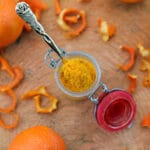
How To Make Dried Orange Peel Powder
Learn how easy it is to make dried orange peel and how to use it in your kitchen.
Servings: 12 servings
Calories: 0kcal
Cost: $5
Equipment
- 1 dehydrator (or oven)
Ingredients
- 4 oranges
Instructions
- Before you begin, make sure to thoroughly wash the oranges, especially if they're store-bought. You'll want to remove any pesticides that may be on the peel. If you can use organic oranges, or homegrown oranges, even better!
- Use a vegetable peeler to peel oranges, tangelos, or tangerines into very thin strips. Avoid cutting into the white pith.
- If you have a food dehydrator, arrange the orange peels on the trays. Make sure to keep them in a single layer so that the air can circulate around them. Choose the 135°F setting and dehydrate for approximately one hour or until the peels are dry and crispy. The small pieces will start to curl as they dry.
- An even easier and faster option is to use the oven. Spread the orange peels on a parchment-lined baking sheet in a single layer. Bake for 30 minutes in a 200°F oven. If after 30 minutes the peels are not crispy, turn the oven off and place the tray back in the oven for 15 minutes or so.
- Make sure the peels are completely cooled before blending them into a powder. Store them as is in a spice jar or airtight container for up to a year.
How to Make Dried Orange Powder
- Once the orange peels are completely dry, simply add them to a spice grinder or a food processor and pulse until the dried peels turn into a powder. Store dried orange powder in a spice jar and store away from direct sunlight.
Notes
- If the orange peels retain any of their moisture, they will eventually mold.
- When ready, the dried orange peels should not be pliable. Instead, they should be crispy, brittle, and easily snap when bent.
- Another option is to grind the peels into an orange powder that can be used when baking cookies, cakes, and more.
- It's important to make sure the orange peels are completely dry before grinding them into a powder. If there is any hint of moisture remaining, it can promote mold growth.
- The same process can be used with lemons to make dried lemon peel and dried lemon powder.
Nutrition
Serving: 1teaspoon | Calories: 0kcal | Carbohydrates: 0g | Protein: 0g | Fat: 0g | Saturated Fat: 0g | Cholesterol: 0mg | Sodium: 0mg | Fiber: 0g | Sugar: 0g
