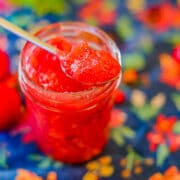
Welcome Fall Crabapple Jam (no pectin)
A mixture of crabapples and rosehips in one tasty fall-flavored jam!
Servings: 48 servings
Calories: 54kcal
Ingredients
- 8 cups crabapples (approximately 3 lbs)
- 2 cups granulated white sugar
- ½ cup rosehips (optional)
- 2 slices fresh or dehydrated orange slices
- 1 cinnamon stick
- 6 cardamom pods
- 4 whole cloves
- 1" fresh ginger (peeled and sliced)
- 3 tablespoon lemon juice
- ¾ cups water (or apple juice)
Instructions
- Chop apples into small pieces and add to a medium-sized pot. Sprinkle with sugar. If adding rosehips, pinch off the blossom end, slice in half, and remove the seeds and tiny irritating hairs. Add the processed rosehips to the pot.
- Place cinnamon, cardamom pods, whole cloves, and sliced ginger into a soup bag and place into the pot. Tie the bag to the handle of the pot for easy removal. Add orange slices.
- Add lemon juice and water/apple juice and simmer over low heat, uncovered, until the sugar begins to dissolve. Cover for 5 minutes and simmer over low heat. Meanwhile, prepare the jars by sterilizing them in boiling water.
- Uncover the jam and smash with a wooden spoon or a masher to get the right consistency. Press down on the spices as well to extract their flavor. The jam will thicken after approximately 10 minutes. Remove the orange slices.
- Ladle crabapple jam into sterilized jars, using the proper canning tools. Leave ½ inch headspace, then wipe the rims and add lids. Hand tighten collars.
Canning Instructions
- Lower the jars back into the boiling water and process for 15 minutes. Cool on a rack or dishtowel on the counter until they seal. Store in a cool, dark place for up to one year.
Notes
- When processing the apples, keep your eyes open for worm damage, which can be common in crab apples.
- For a smoother, apple-sauce texture, use an immersion blender prior to canning.
- If using rosehips, keep in mind that they are sweeter when picked after the first frost.
- Crabapple jam gets thick quick. If it gets too thick, just add additional liquid (water or juice).
- Any jars that don't seal should be consumed first or stored in the fridge.
Nutrition
Serving: 2tablespoons | Calories: 54kcal | Carbohydrates: 14g | Protein: 0g | Fat: 0g | Saturated Fat: 0g | Cholesterol: 0mg | Sodium: 0mg | Fiber: 1g | Sugar: 8g
