
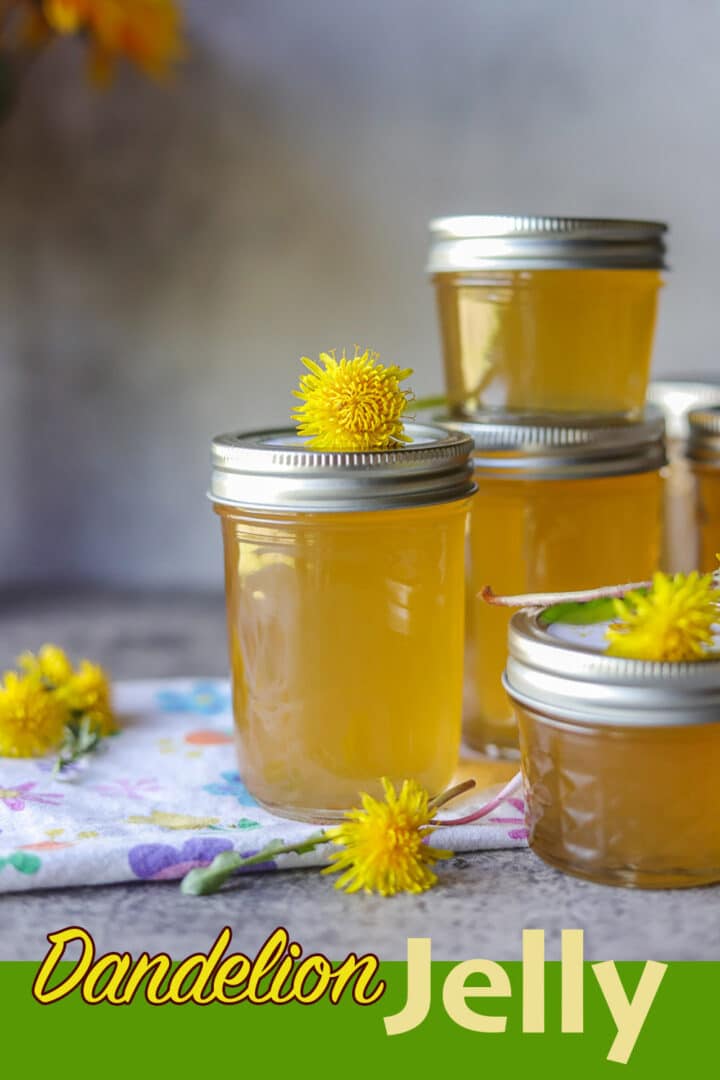
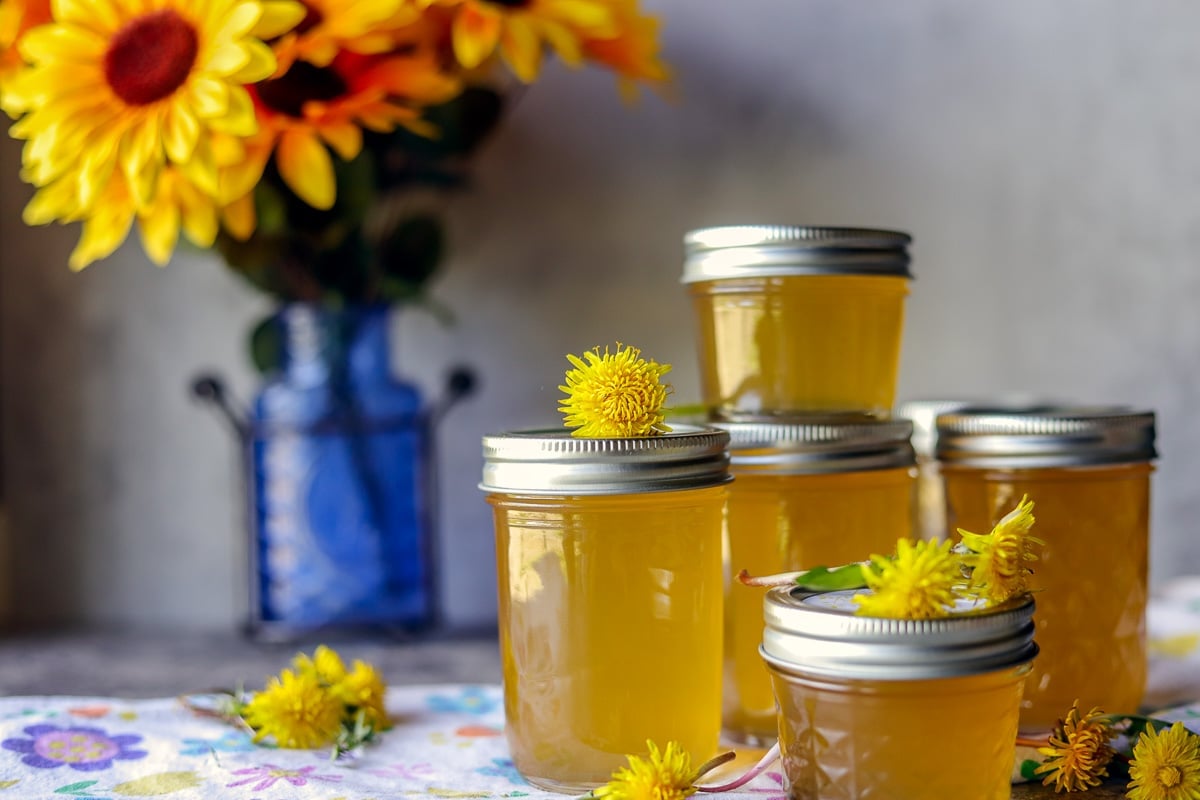
This Dandelion Jelly has a honey-like lemony flavor. It's fun to make and makes a wonderful gift! However, don't give all the jars away! Save a few jars for yourself to enjoy on buttered toast or learn how to make sourdough in this basic sourdough bread recipe! Then enjoy a little taste of spring anytime of year!
Would you like to save this recipe?
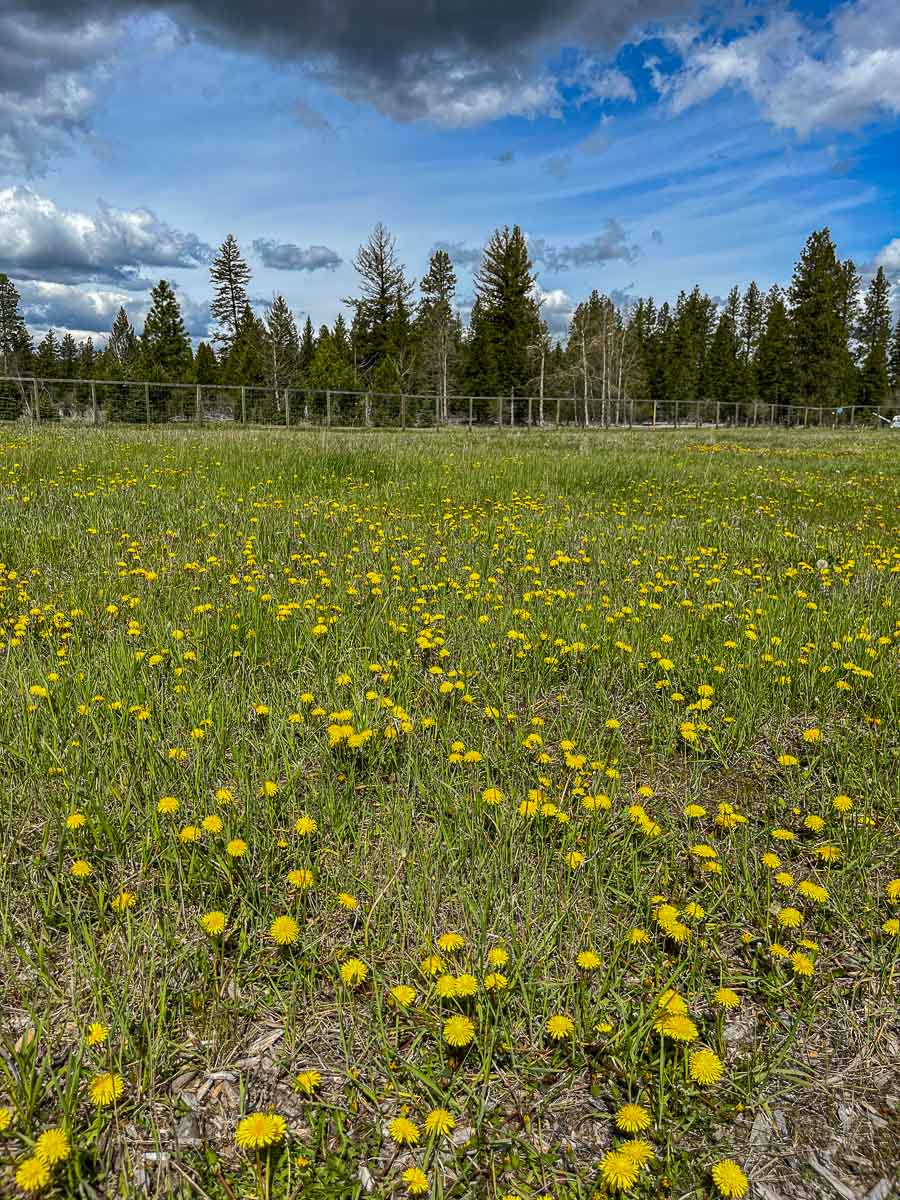
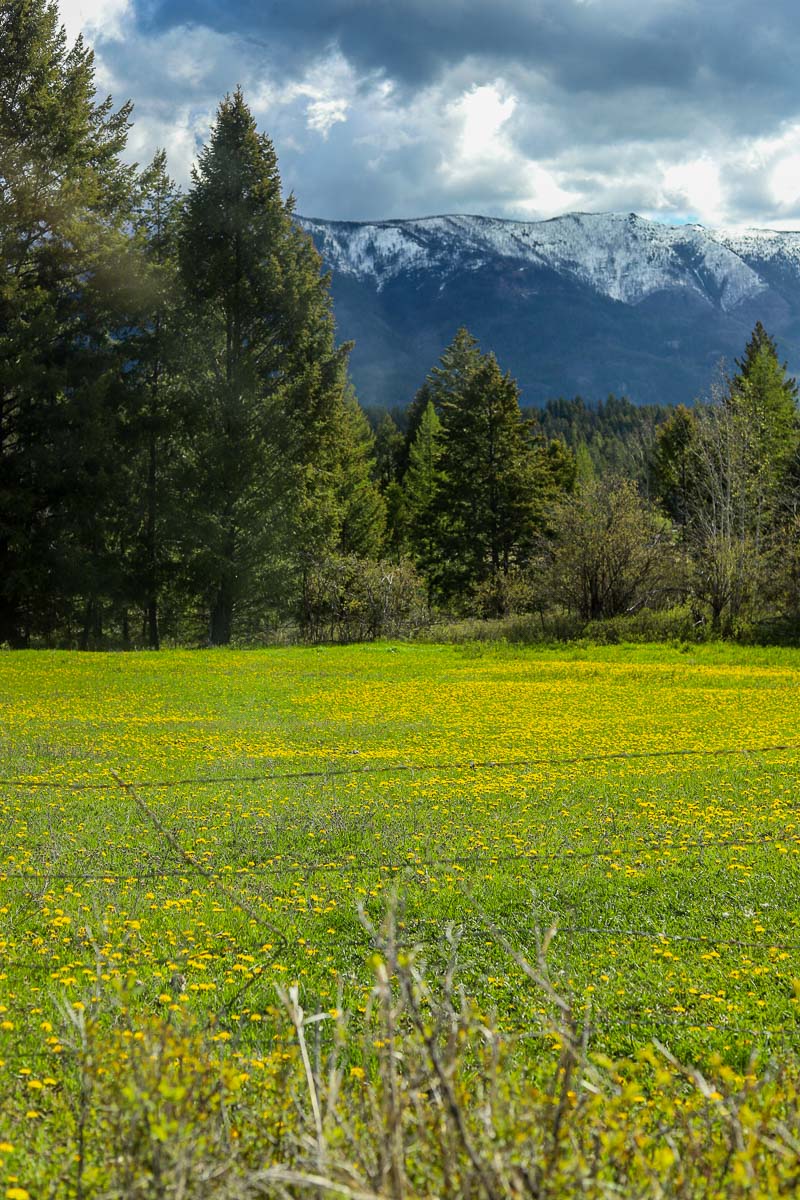
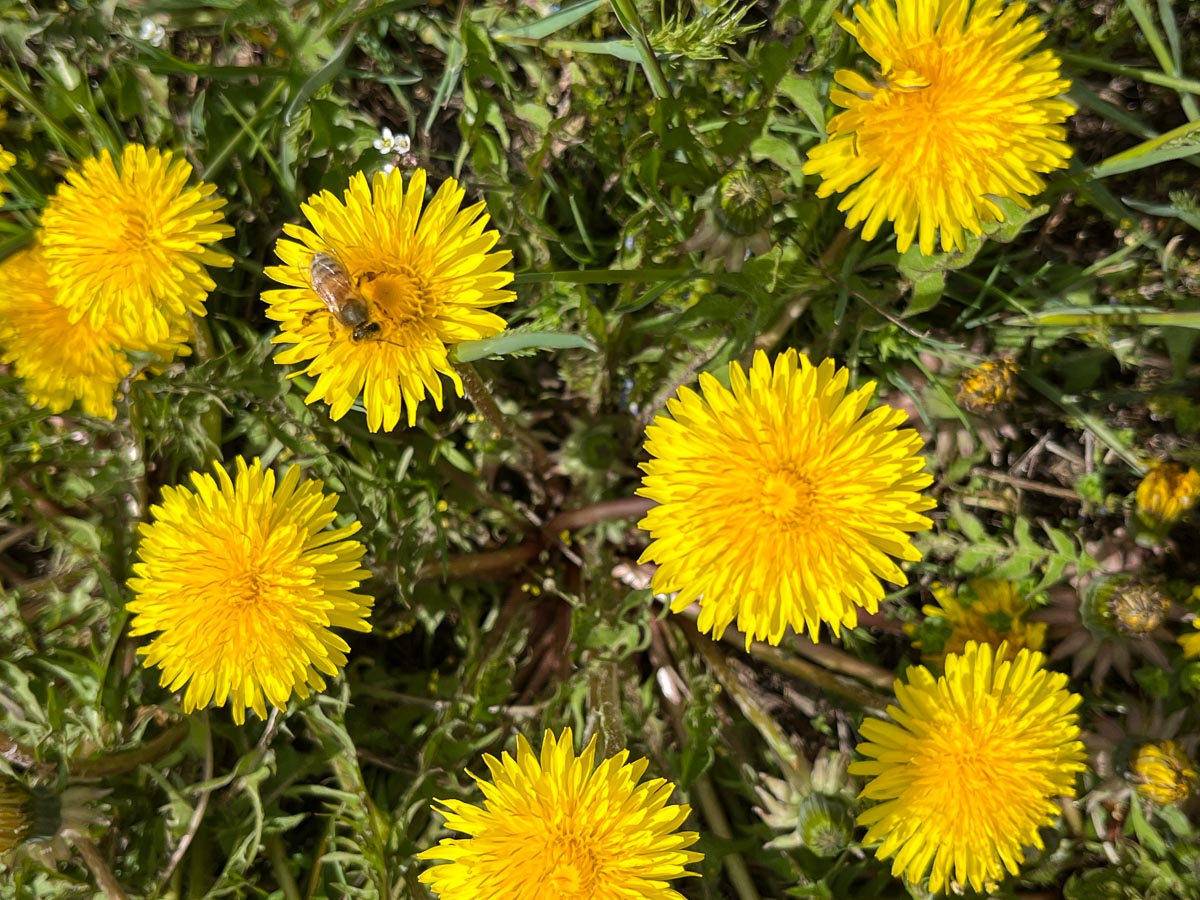
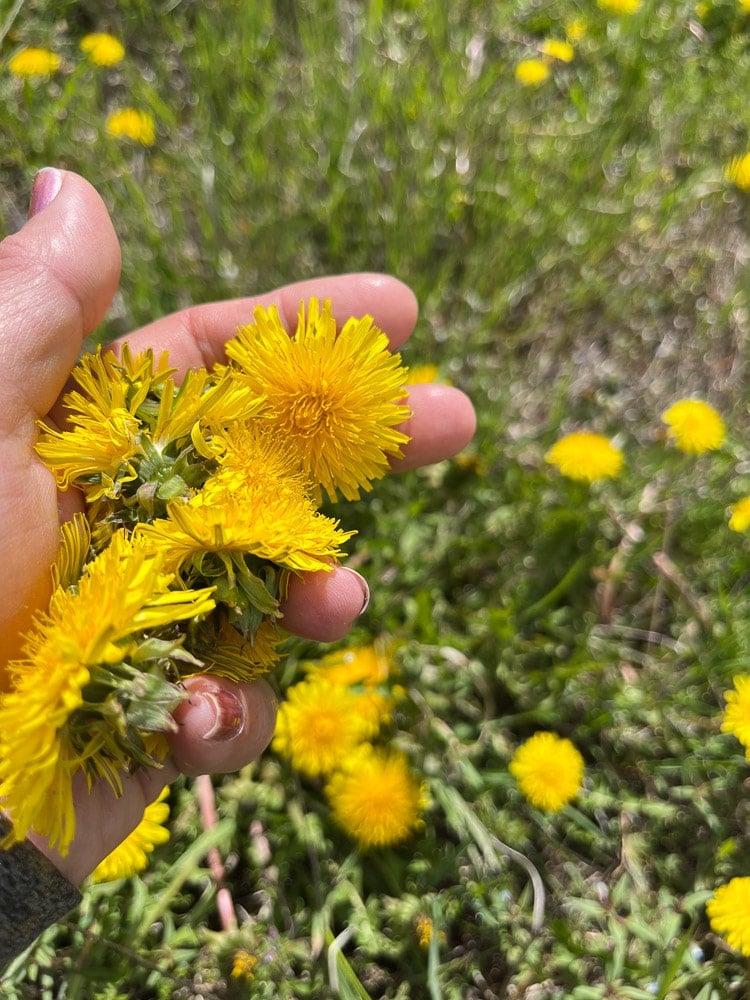
Ahhhh, it finally feels like spring in Montana, also known as foraging time! The birds are fighting over the birdhouses dotting our property, the male turkeys are strutting around trying to impress the ladies, and everywhere you look, bright yellow dandelions are popping up.
This year, I decided to pick some of the dandelions to make wild dandelion jelly, dandelion salve, and I roasted the roots to make dandelion coffee! Now, before anyone suggests that I should save the dandelions for the bees, please understand that there is an abundance of dandelions here in Montana.
For every dandelion blossom I pick, there are thousands left behind. Not to mention, the dandelion buds waiting under the dandelion blossoms, eagerly waiting for their turn to bloom! 🌼🌼🌼 That's why I also made some dandelion salve, it's amazing for your skin!
The flavor of this gorgeous dandelion jelly is often compared to the taste of honey. It's sweet, mild, lemony, with wonderful floral notes.
Jump to:
😍 Why You'll Love This Recipe
Unlike some other complicated recipes, Dandelion Jelly is easy and fun to make! If you have little ones, have them help you pick the dandelion blossoms. They'll have a ball, as you teach them how to forage for wild edibles!
The simple ingredients list means you probably already have the ingredients in your cupboard and your backyard. Once you taste this delicious Dandelion Jelly, you'll want to make it a yearly spring tradition!
🔖 Ingredients & Substitutions
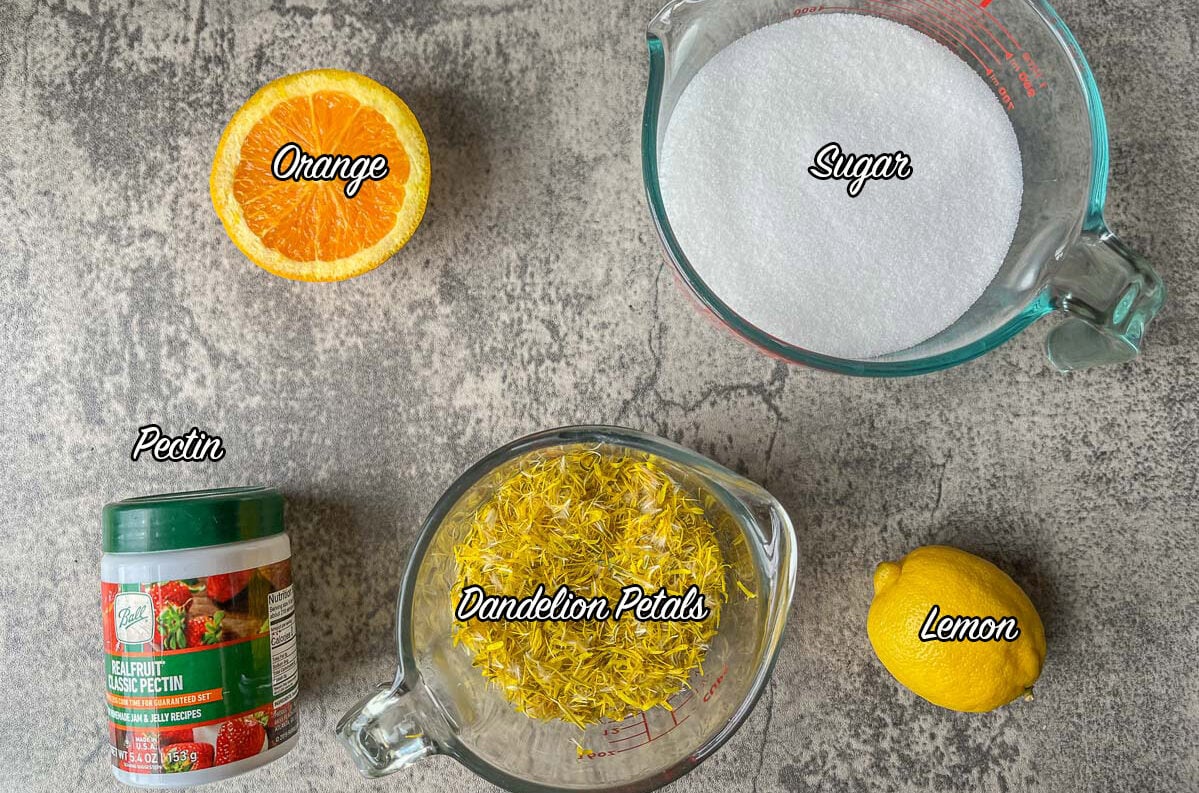
- Dandelion Flowers: You will need 2 cups of dandelion petals or approximately 4 cups of dandelion flowers. Choose the largest dandelions, which have more petals. More petals mean you'll need fewer flowers. Make sure the flowers are fresh and have not been sprayed with pesticides.
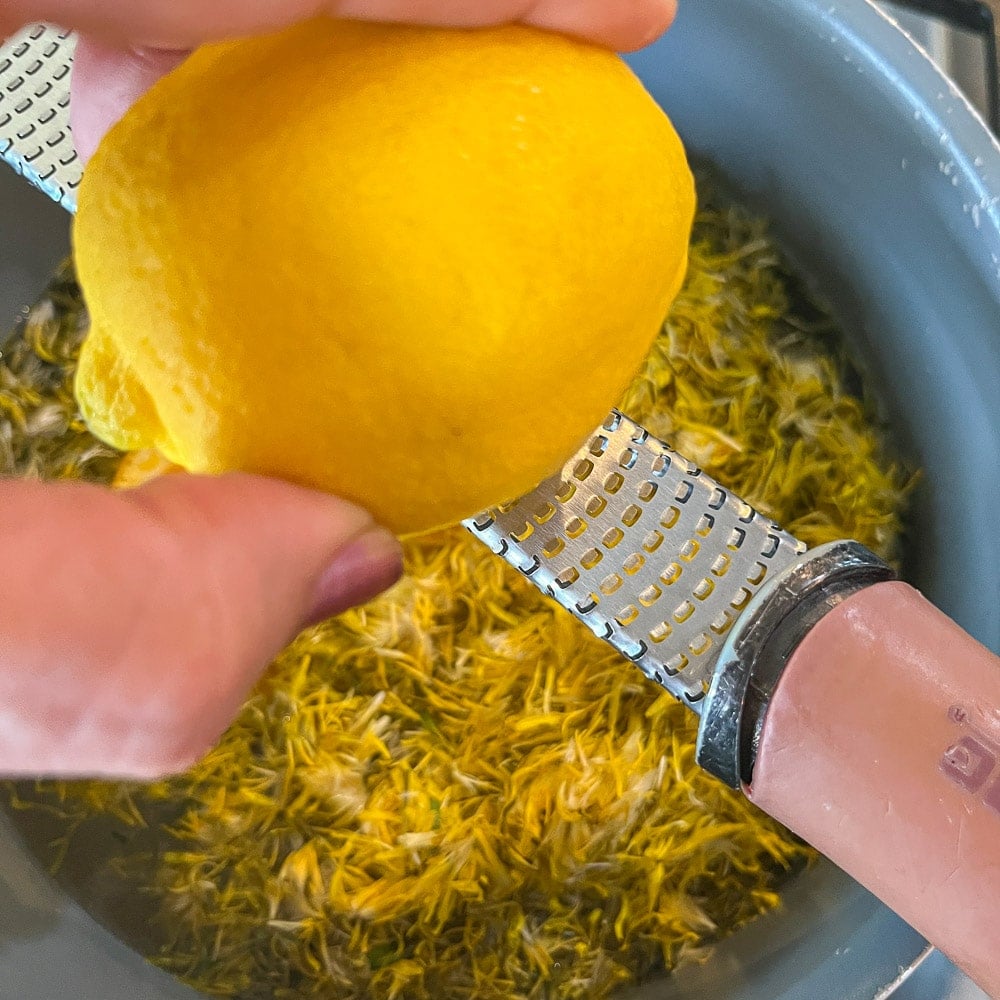
- Citrus: You'll need the juice and zest of one small lemon (approximately 3-4 tablespoons of juice), and a fresh orange slice.
- Pectin: I used 4½ tablespoons RealFruit Classic Pectin powder in this recipe. That's the same amount in 1 packet of pectin (1.75 ounces). If you use liquid pectin or a different brand of pectin, the amount might need to be adjusted.
- Sugar: Granulated sugar not only helps to sweeten the jelly, but it also aids in preserving and jelly and helping it to gel!
🔪 Tools Required For This Recipe
- Saucepan
- Canning equipment
- 6 half-pint jelly jars
- 1-quart canning jar
🌼 How to Make Wild Dandelion Jelly
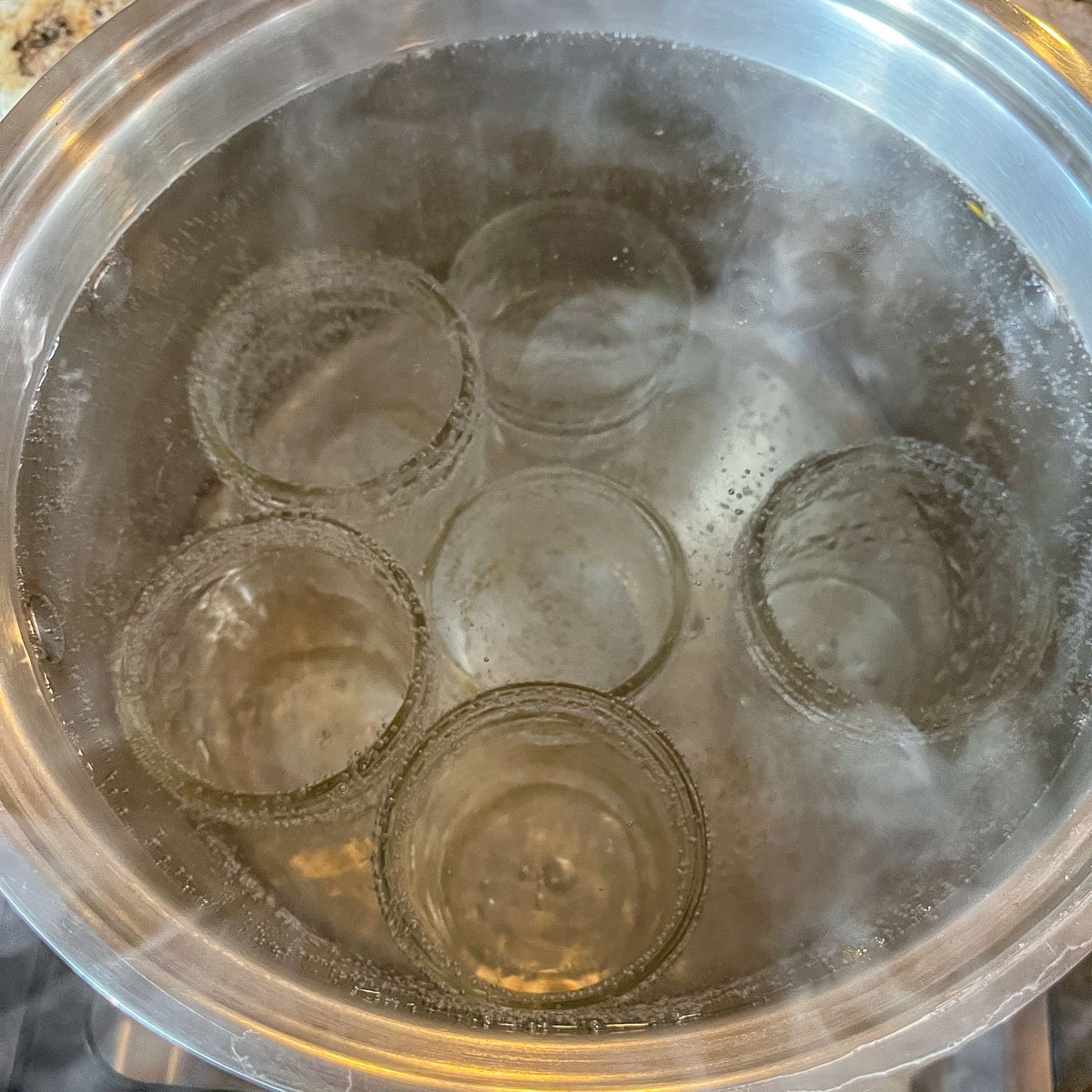
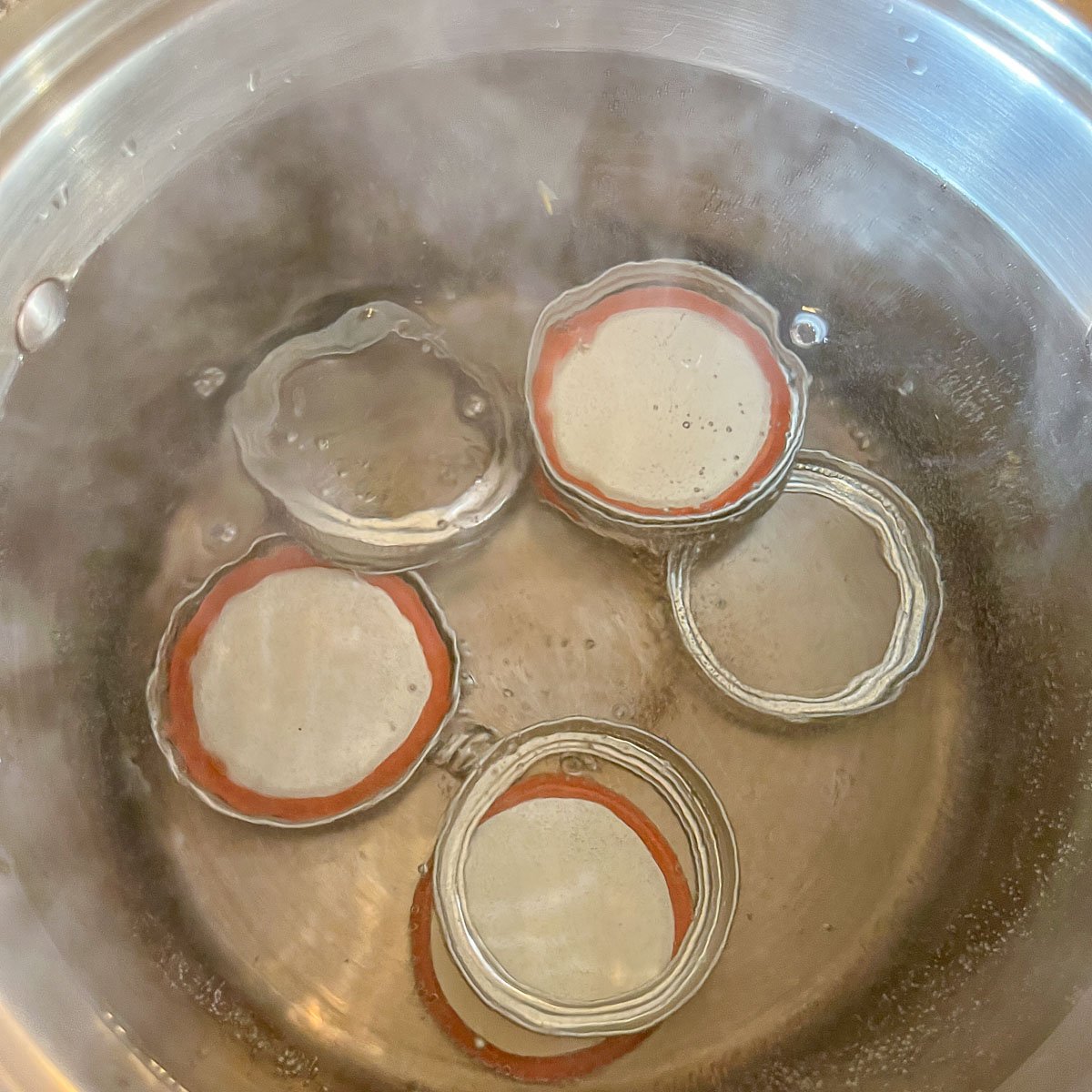
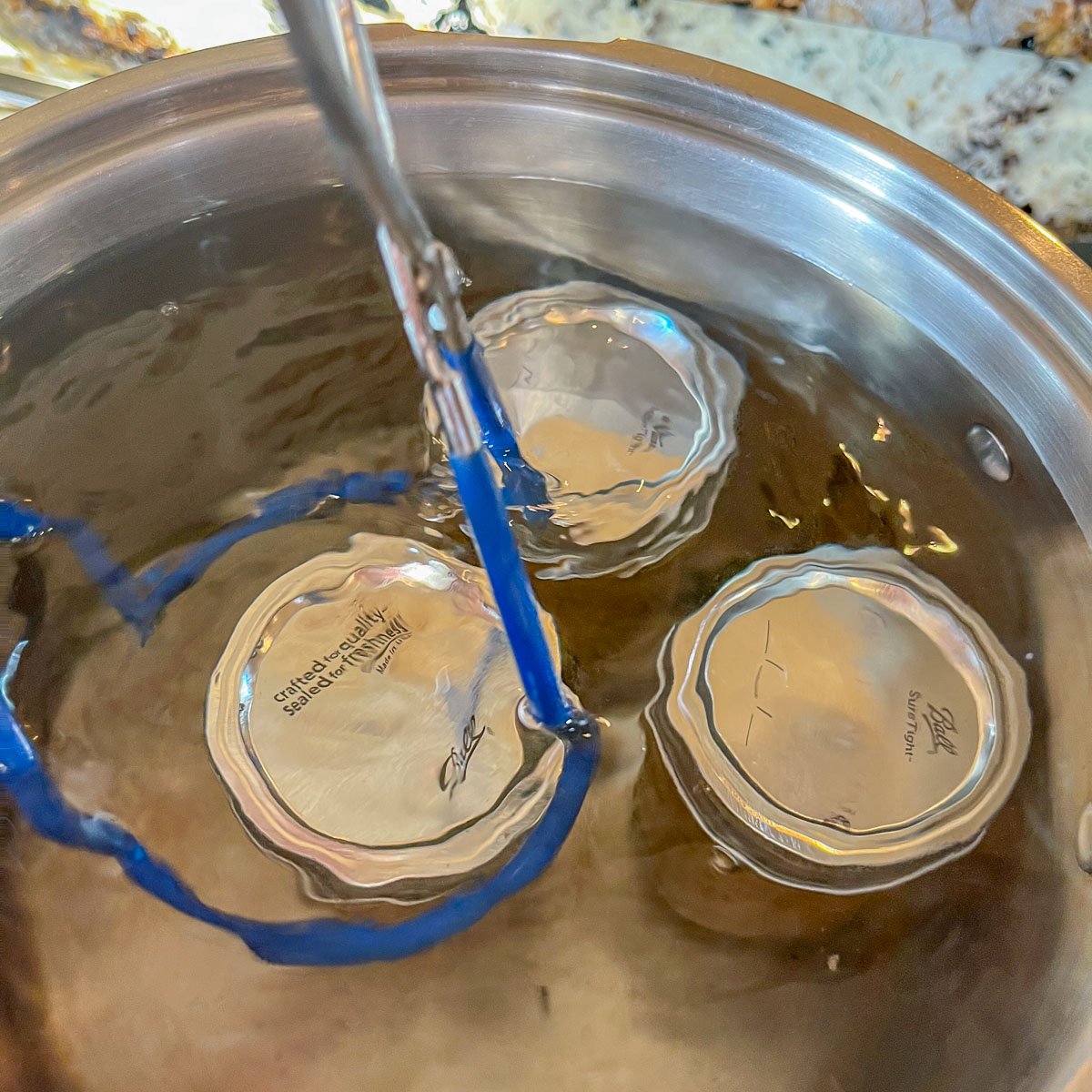
Prepare a water bath canner or fill a large pot with water and add six half-pint jars. Bring to a boil and set a timer for 10 minutes. After 10 minutes, turn off the stove and keep the jars in the hot water until needed. Once you remove the jars, you can add the bands and lids for a few minutes until needed.
Using kitchen scissors, snip off the stems and green petals of the blossoms at the base of the flower. You only want to use the yellow petals. Give the petals a quick rinse; you don't want to wash away the flavor or their beautiful color.
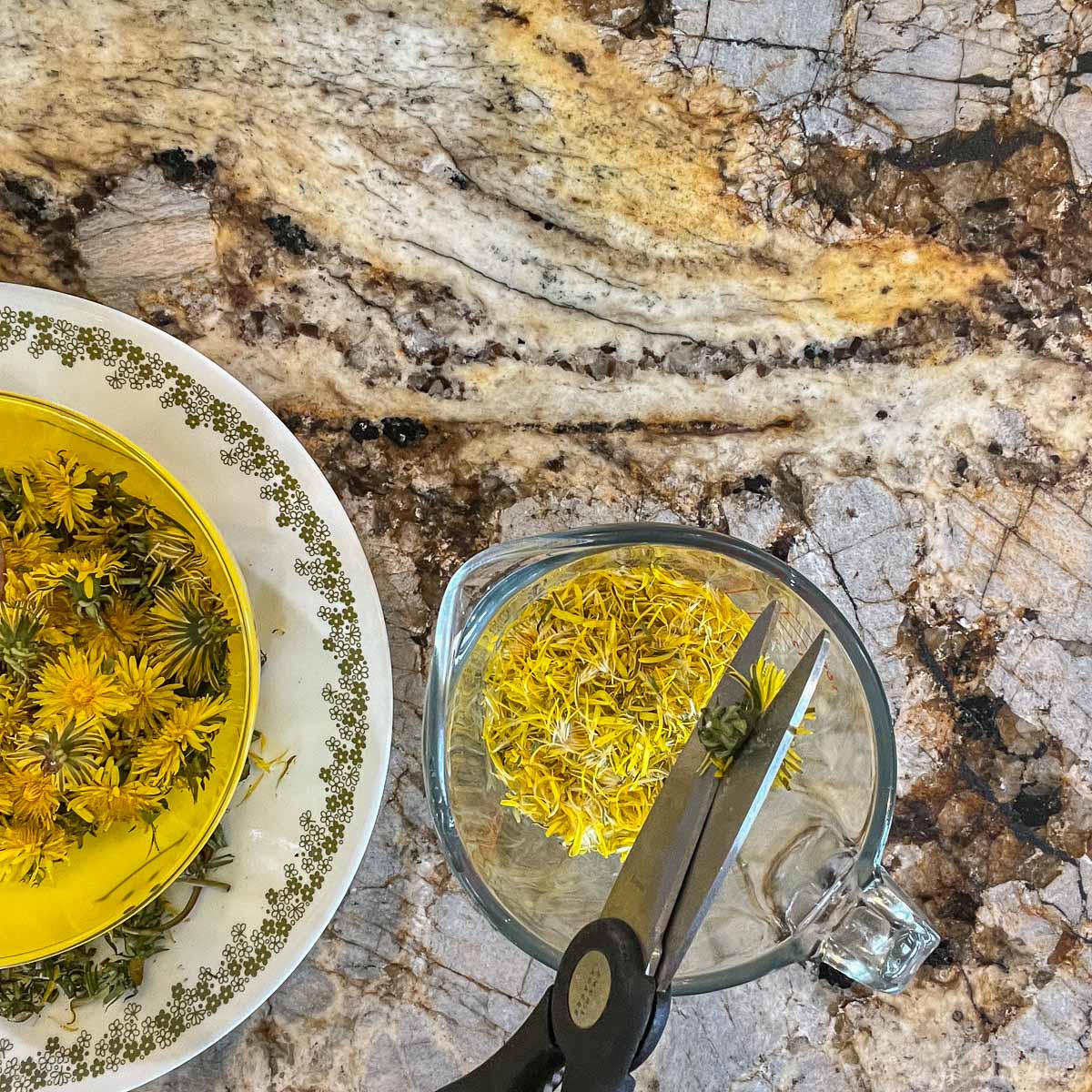
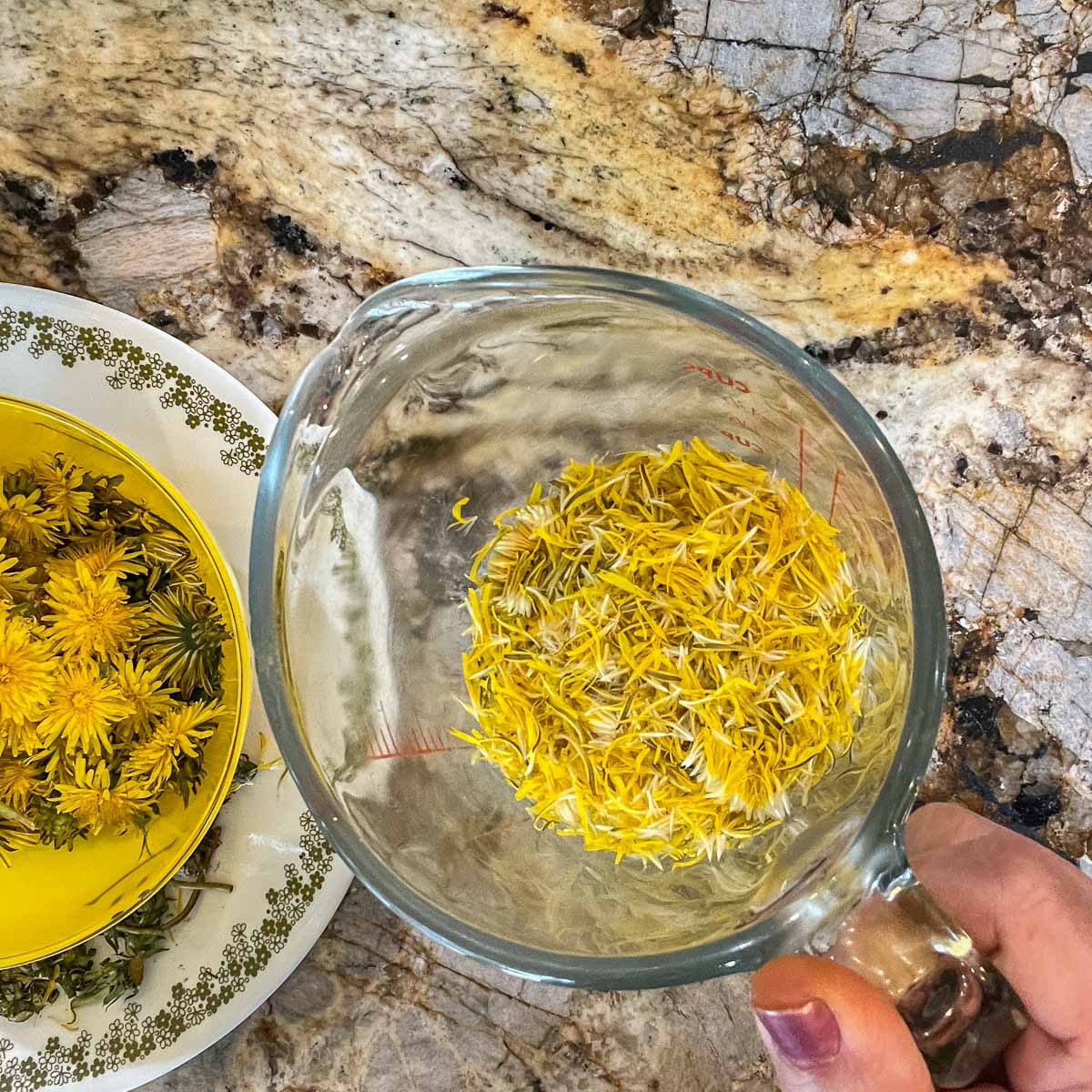
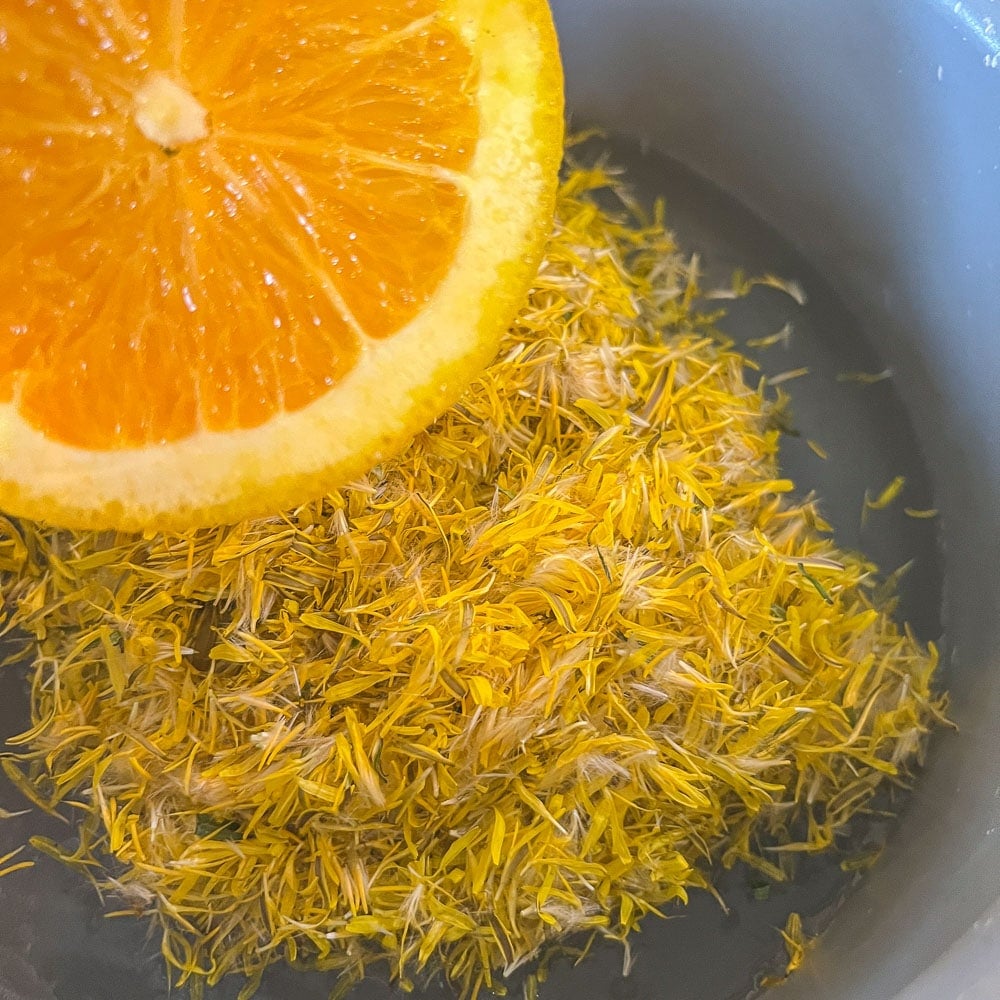
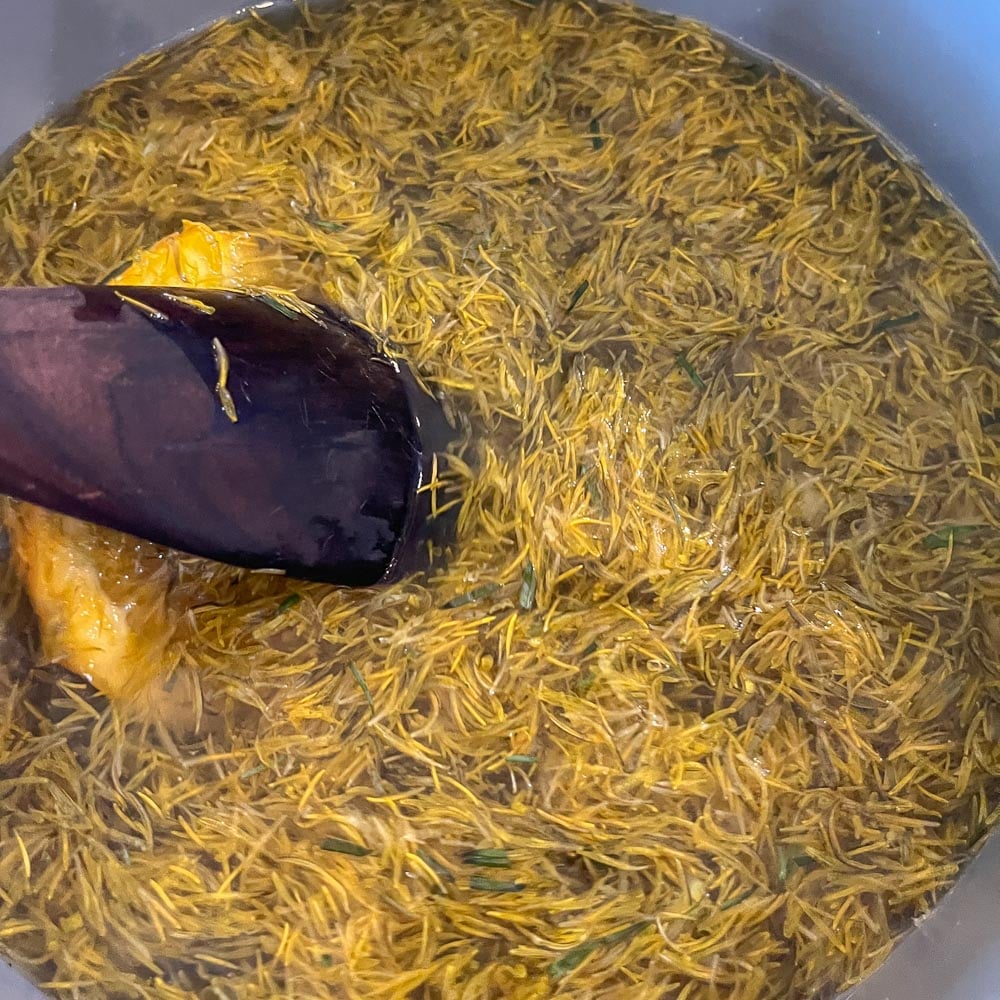
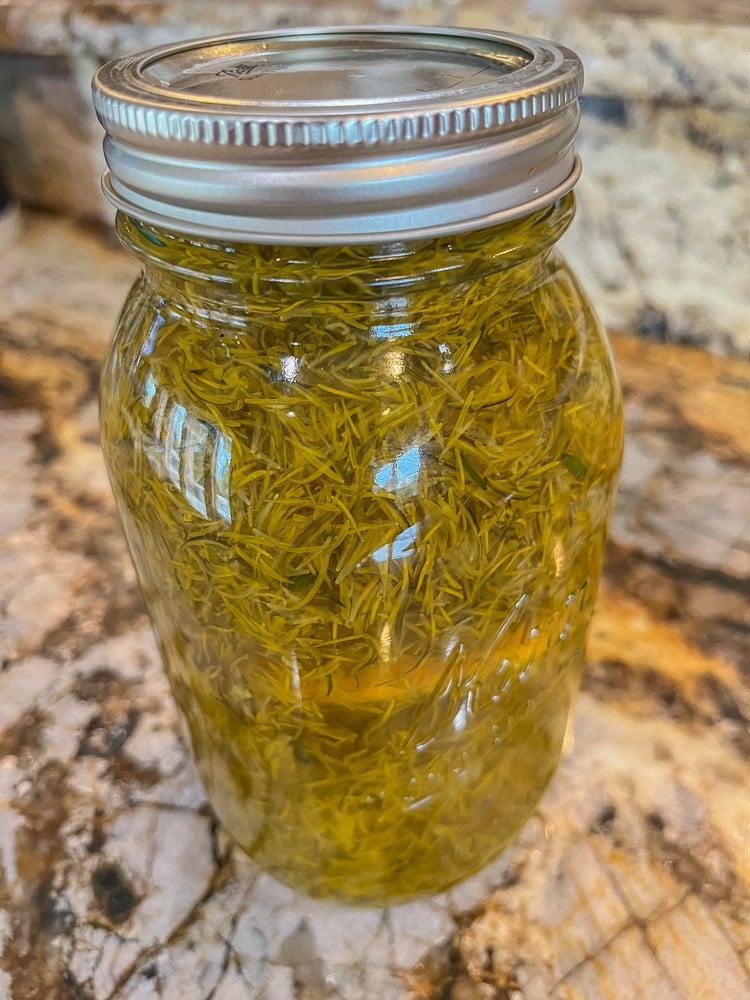
Pour 3-½ cups of cold water into a large pot and add petals, orange slice, and lemon zest. Simmer over low heat for 5 minutes; remove from heat. Once the tea is room temperature, pour it into a 1-quart mason jar or another container. Screw the lid on and steep the tea for a few hours or preferably overnight. You don't have to place the jar in the refrigerator.
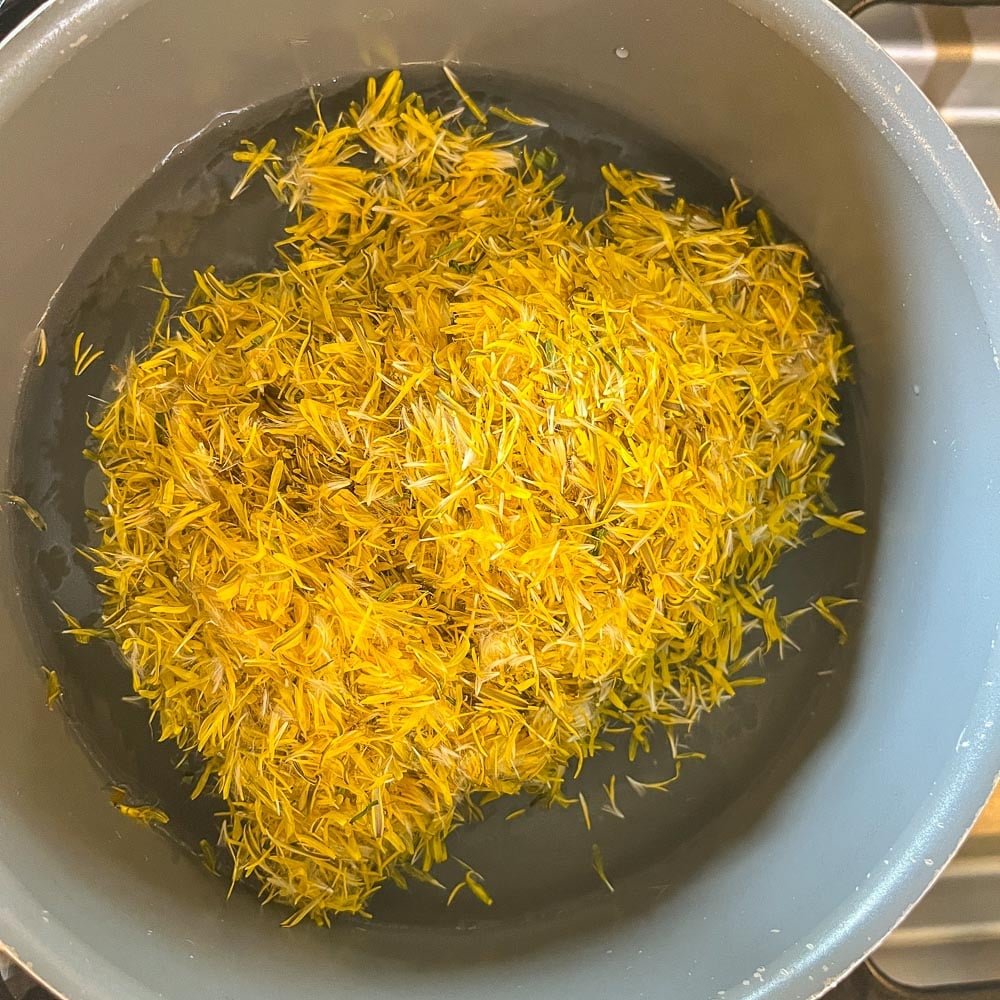
Strain the steeped tea using a fine-mesh sieve, coffee filter, or my personal favorite, a soup bag. Squeeze all the liquid and flavor out of the petals and citrus, and get every last drop! Discard the flower petals and citrus peels.
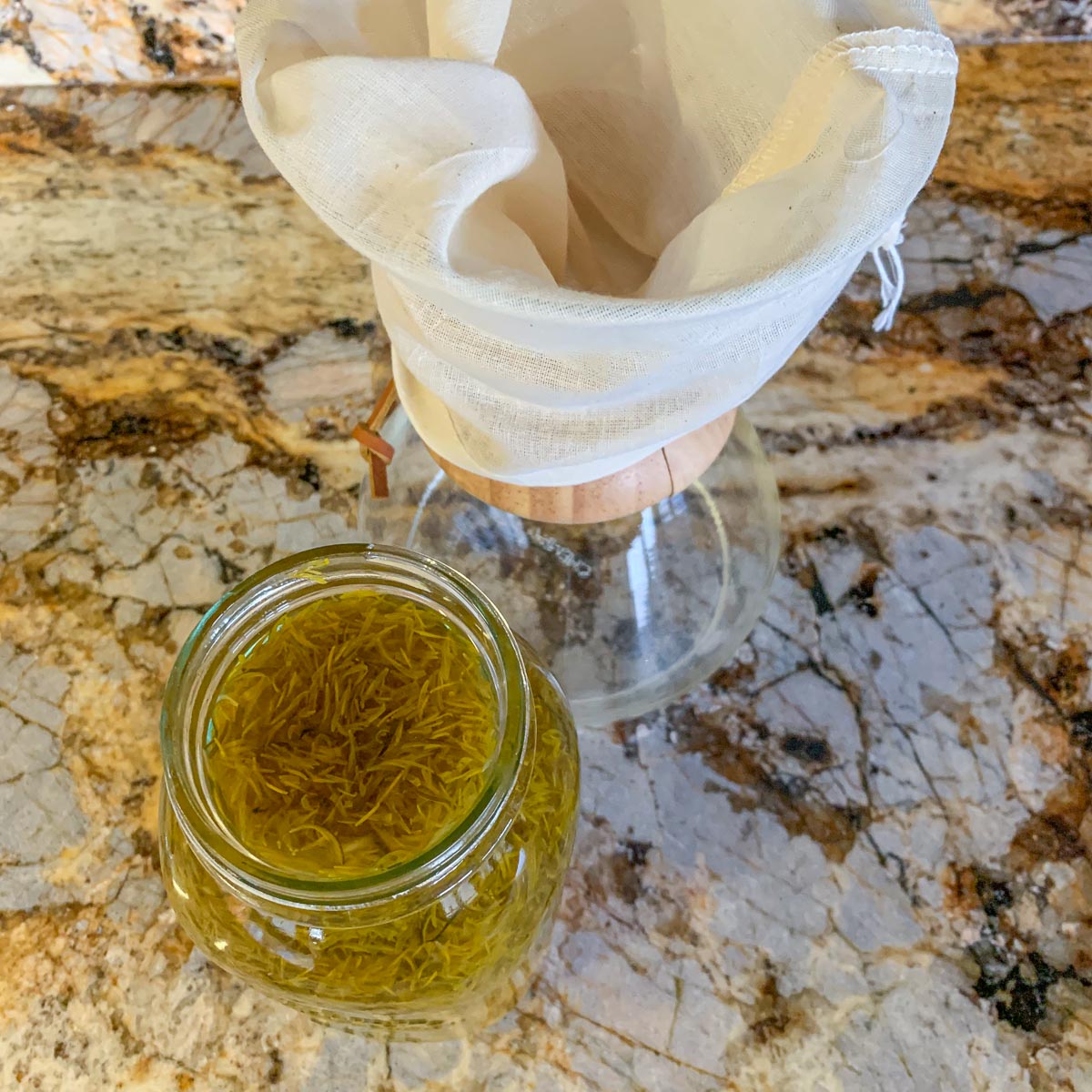
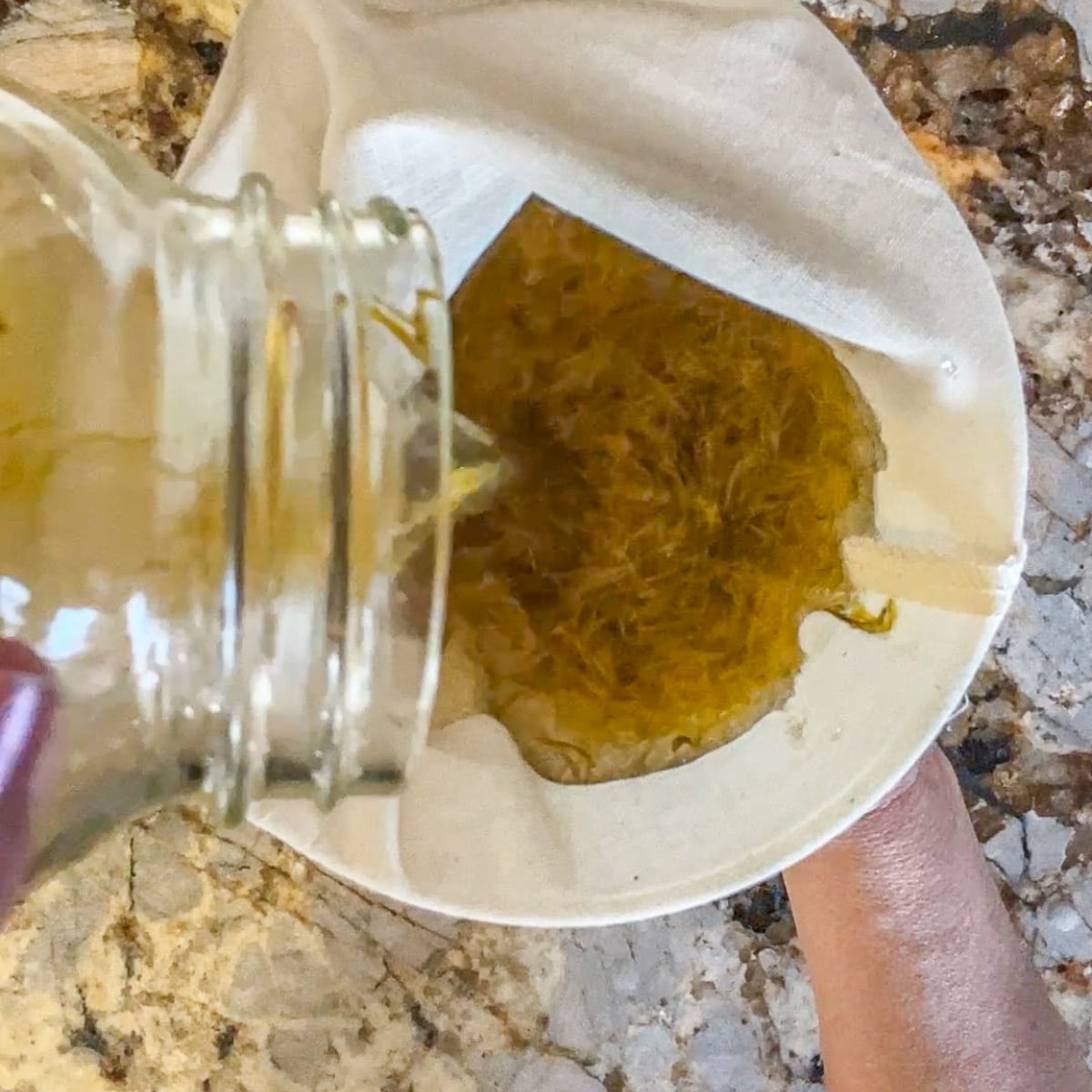
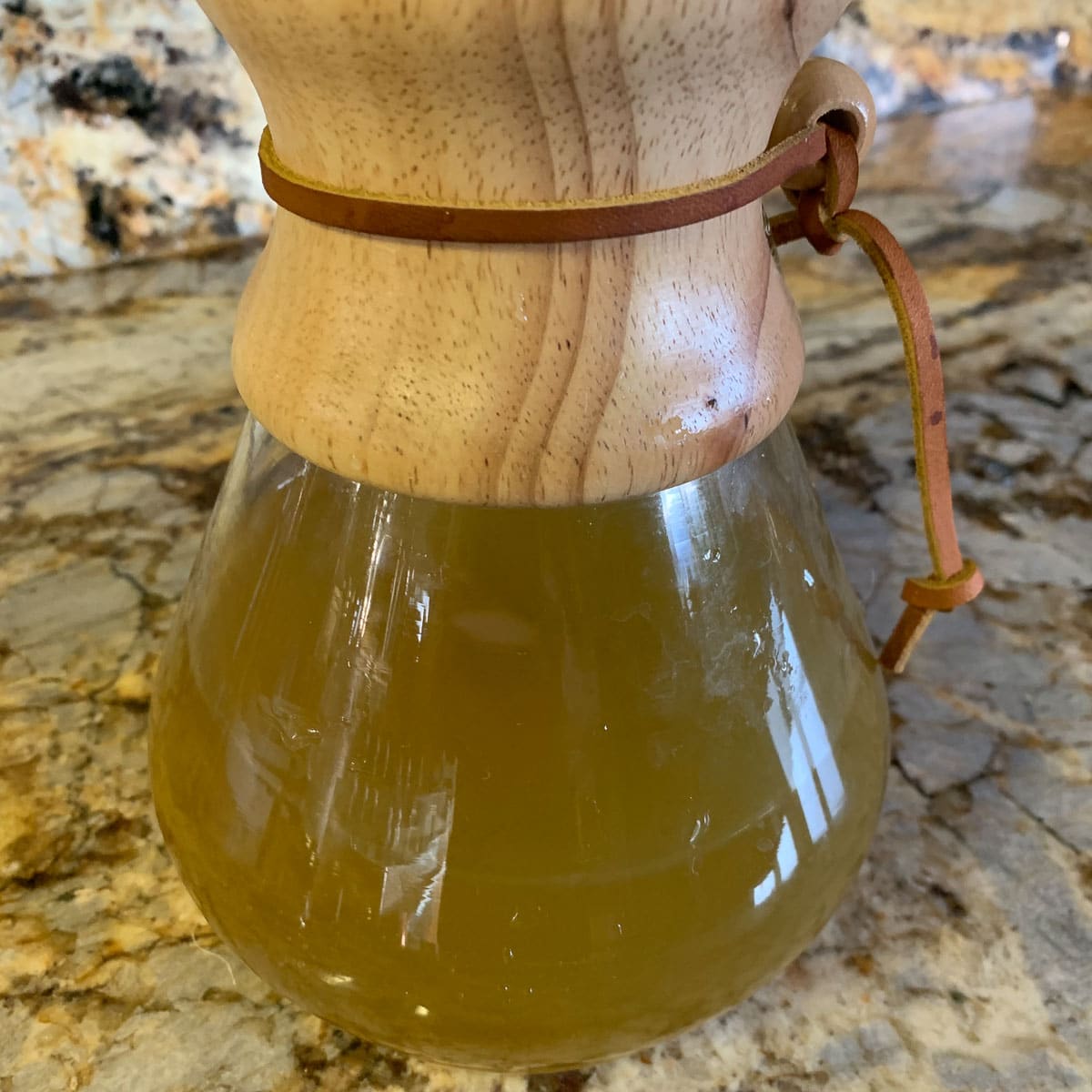
Measure the liquid and make sure you have 3½ cups of liquid. If not, add some water to bring it up to 3½. Pour the tea back into a large saucepan and add lemon juice, pectin, and sugar, and whisk. Once the mixture comes to a rolling boil, set a timer for 2 minutes. After 2 minutes, remove from the heat.
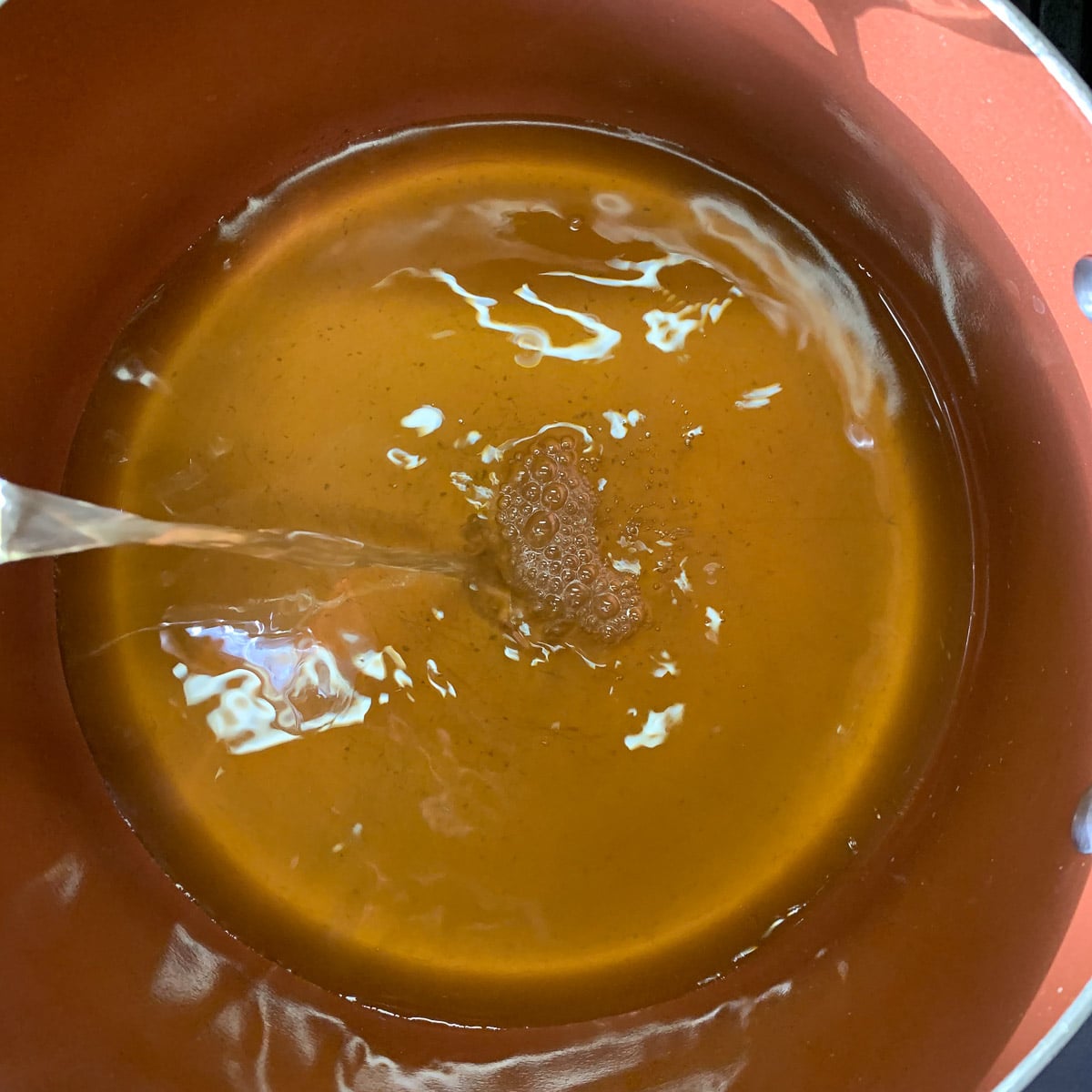
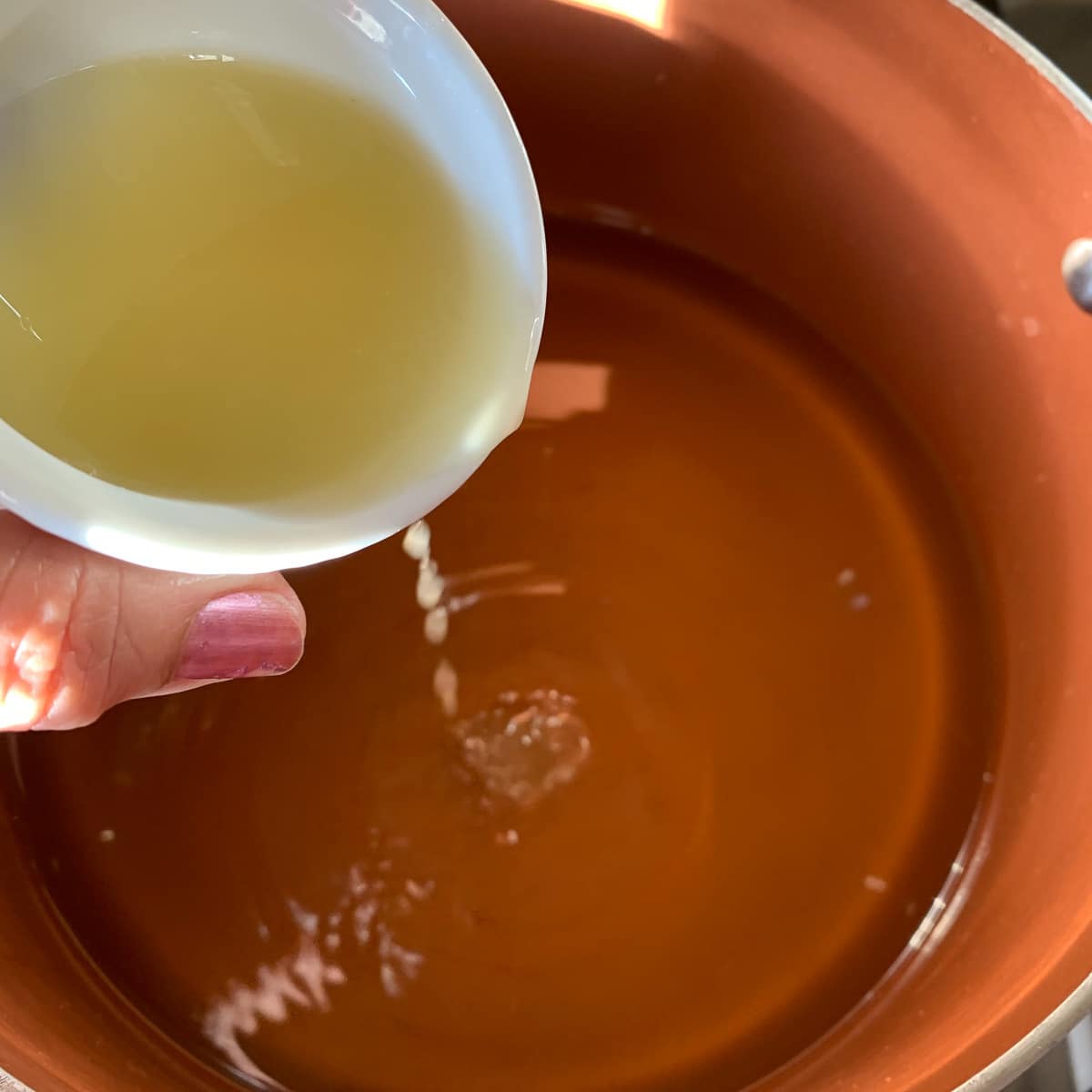
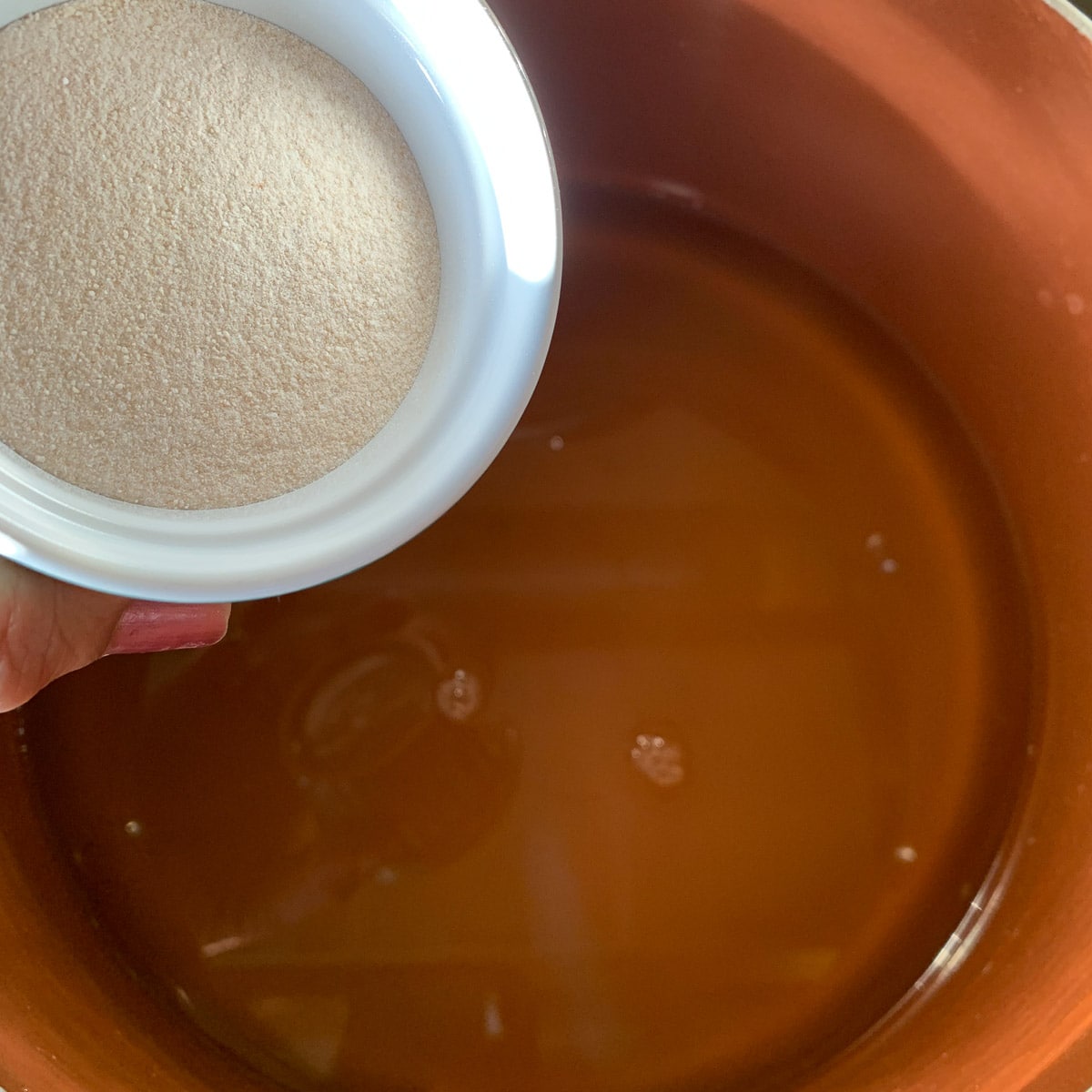
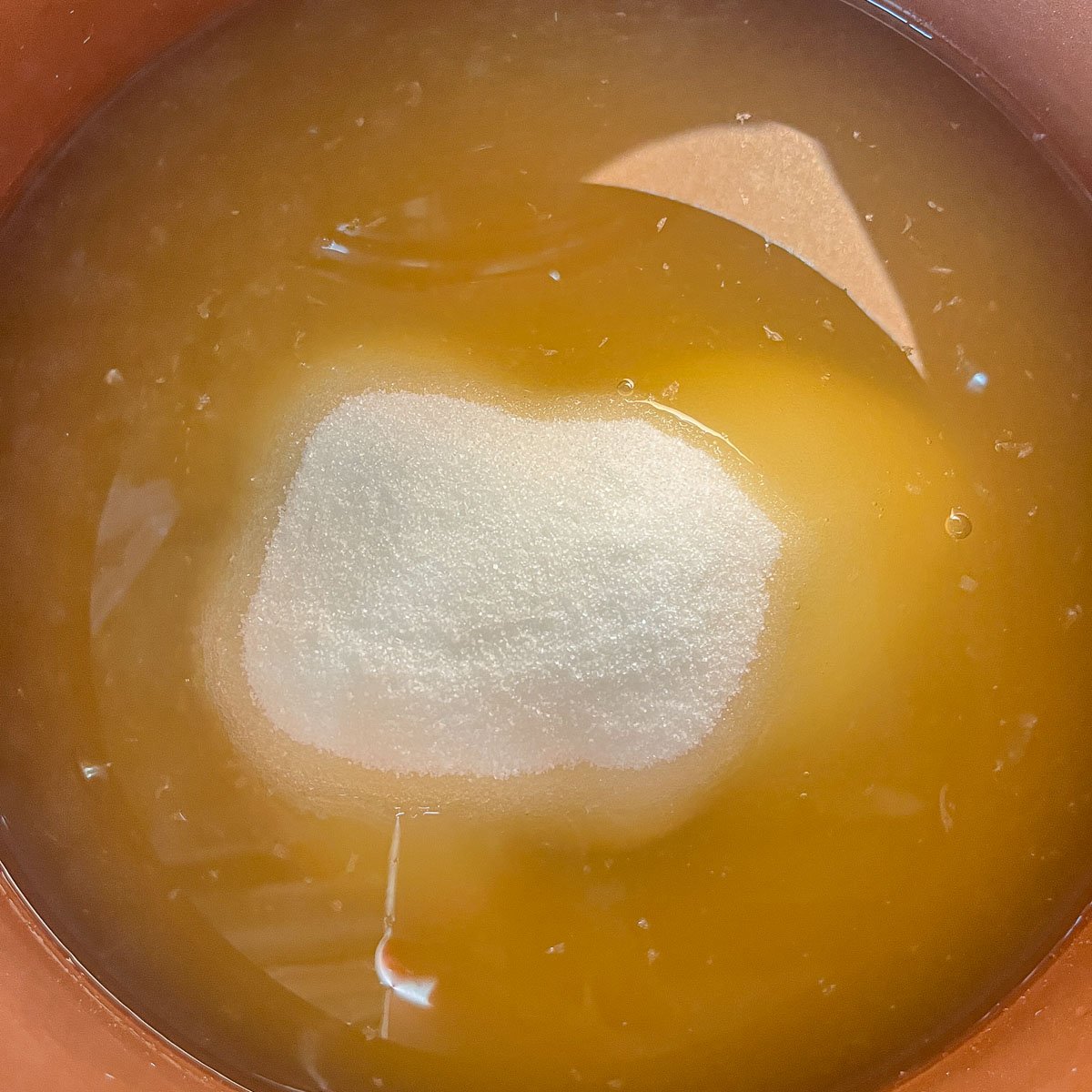
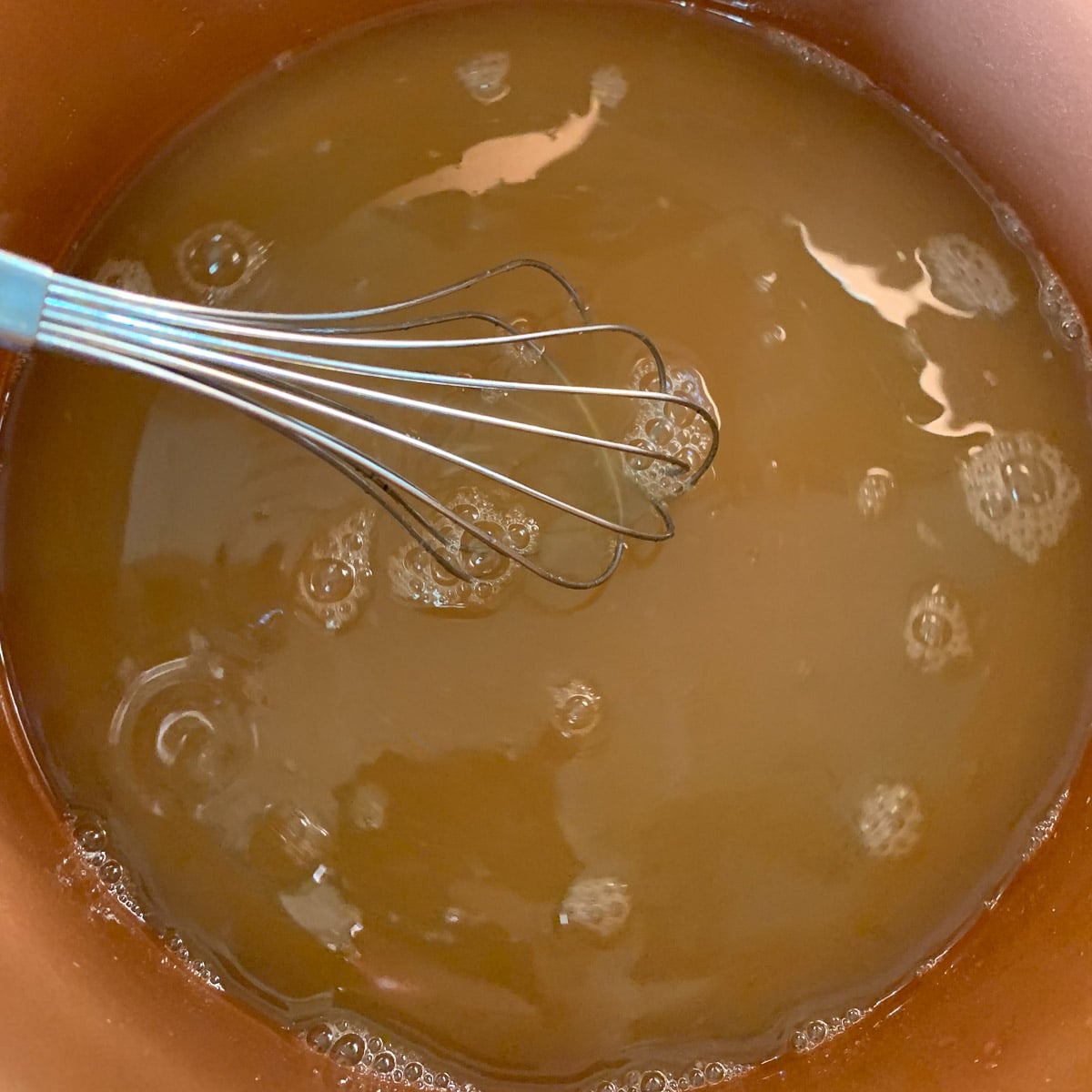
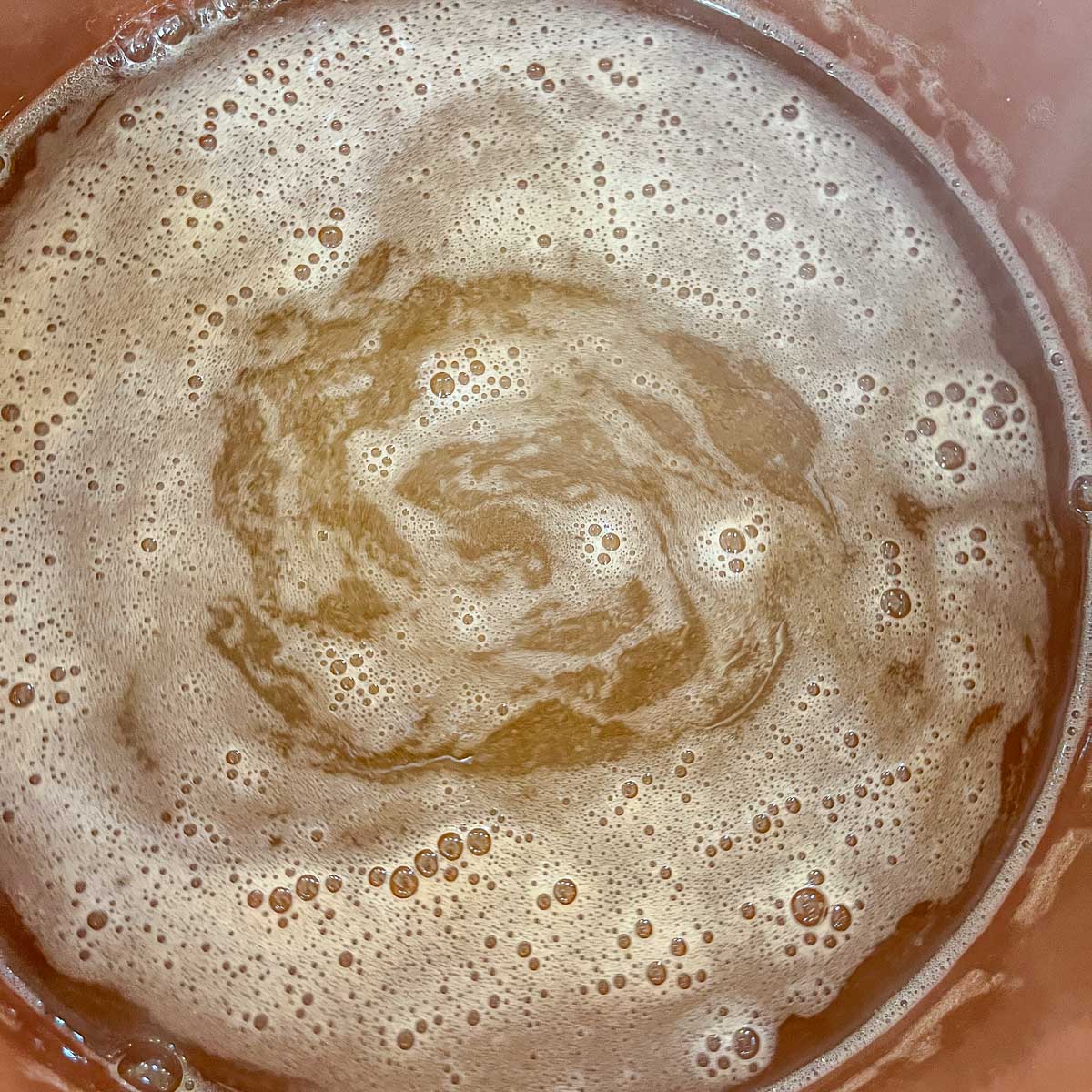
Pro Tip: Make sure to immediately whisk the pectin into the tea to keep it from clumping.
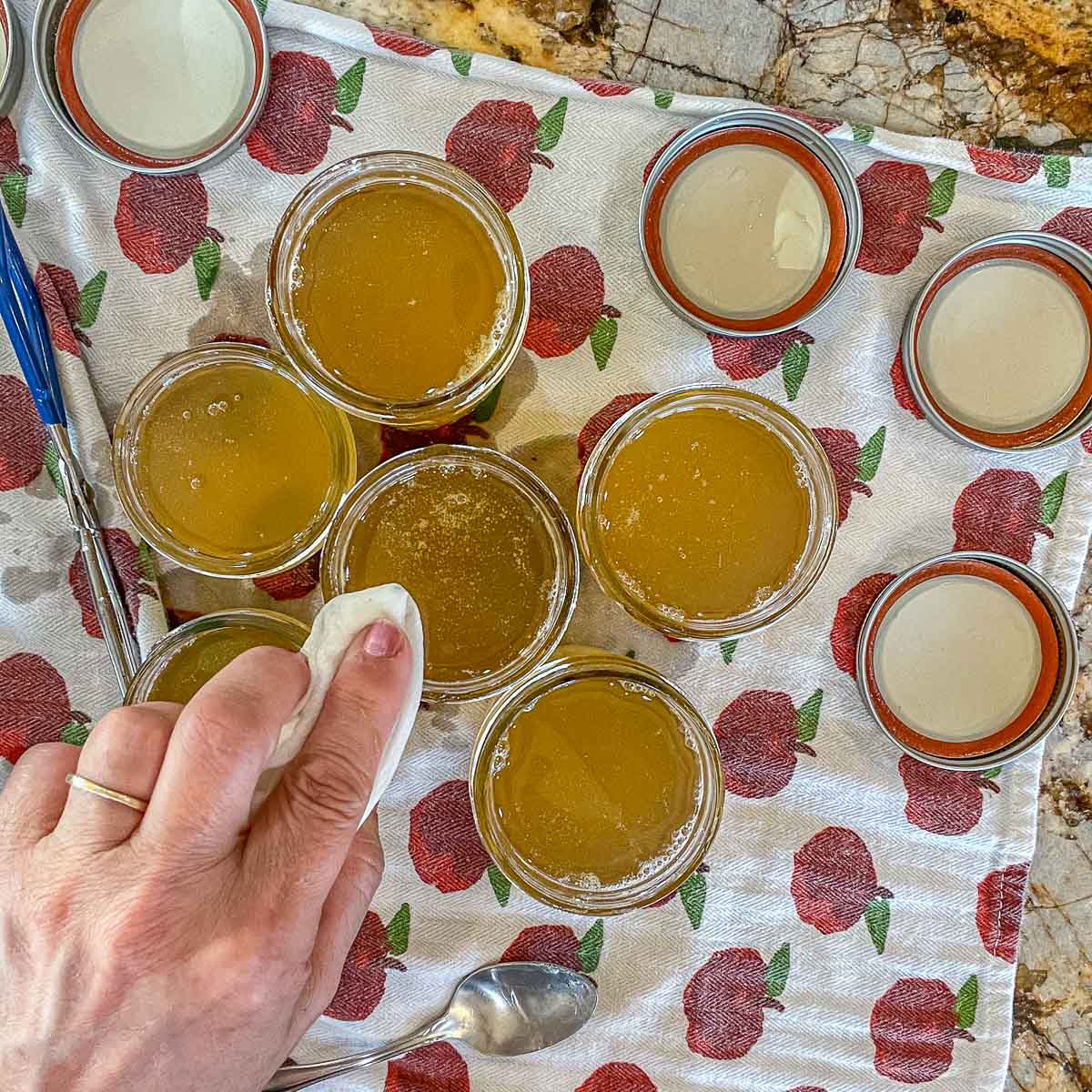
Skim foam, if necessary, then ladle the dandelion jelly into sterilized jars, leaving ¼" headspace. Run a small knife along the edges of the jars to release any trapped air bubbles. Wipe the rims of the jars with a damp cloth or a wet paper towel and hand-tighten the lids. Avoid over-tightening.
🫙 Water Bath Canning
Add filled canning jars to the water bath canner. Make sure the water level is at least a few inches over the jars. Process the dandelion jelly jars in boiling water based on the chart below:
| Altitude | Gel Point |
|---|---|
| 1000'-3000' | 5 minutes |
| 3001'-6000' | 10 minutes |
| 6001'-8000' | 15 minutes |
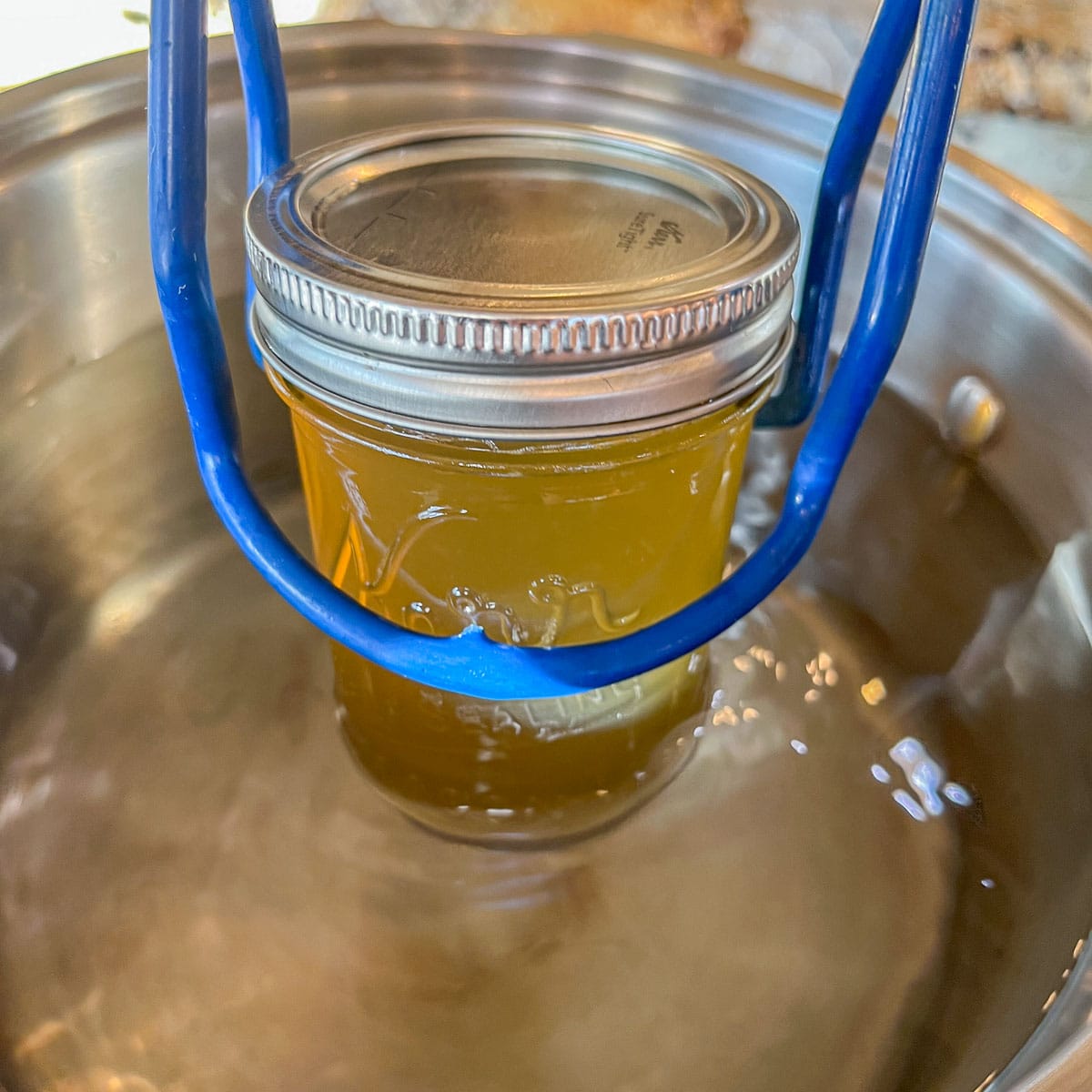
Remember that jelly can take up to 12 hours to set. It's important not to move the jars once removed from the canner. Moving them can affect the gel.
🥄 Spoon or Sheet Test
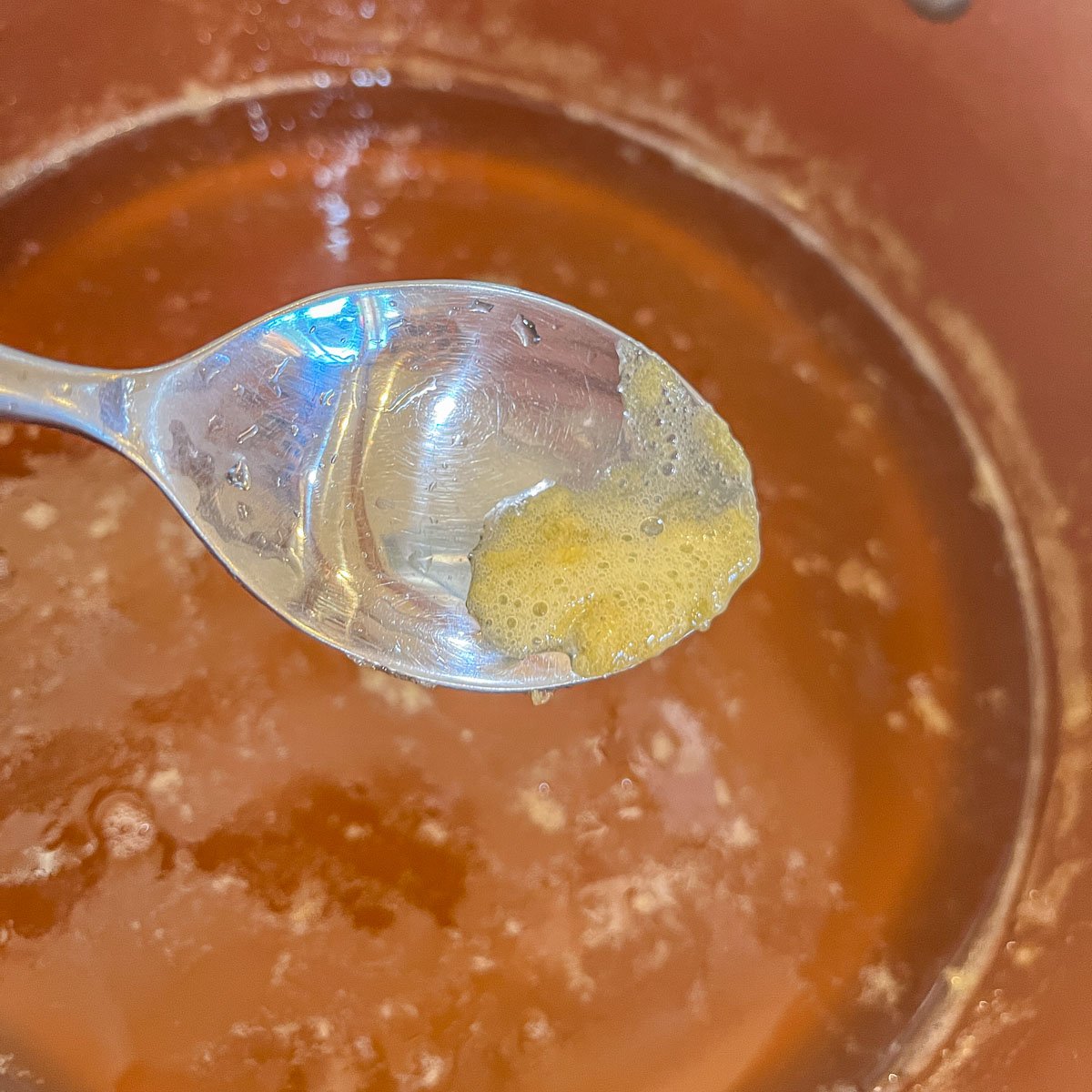
Place a spoon in the freezer for a couple of hours before you start. When ready to test the jelly to see if it's ready, dip the spoon into the boiling jelly, then lift it over the pot. Turn the spoon so that the jelly runs off the side. If the jelly forms two drops that flow together and fall off the spoon in a sheet, the jelly should be ready.
🤷🏻♀️ Recipe FAQs
Dandelion Jelly is divine! It is sweet like honey, with a hint of lemon flavor, and a touch of floral tones. 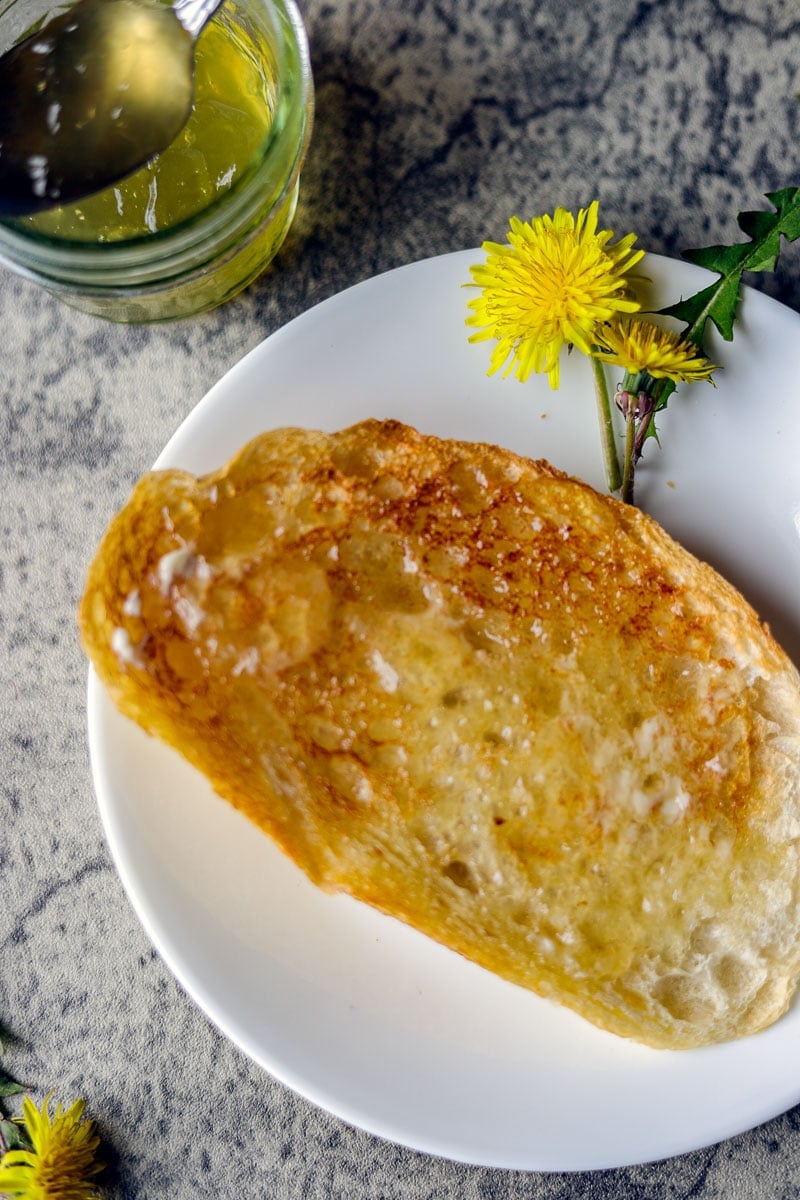
Dandelion Jelly is made by adding dandelion blossom petals in hot water to prepare a dandelion tea. The tea is then steeped, strained, and boiled with sugar, lemon juice, and pectin to make a delicious Dandelion Jelly recipe.
Wild dandelions can indeed be eaten as long as they are not sprayed with pesticides. The flowers, stems, leaves, buds, and roots are not only edible but highly nutritious.
The green parts of the plant are sometimes compared to mustard greens and have a slightly bitter taste. The only part of the plant that you can't eat is the seeds!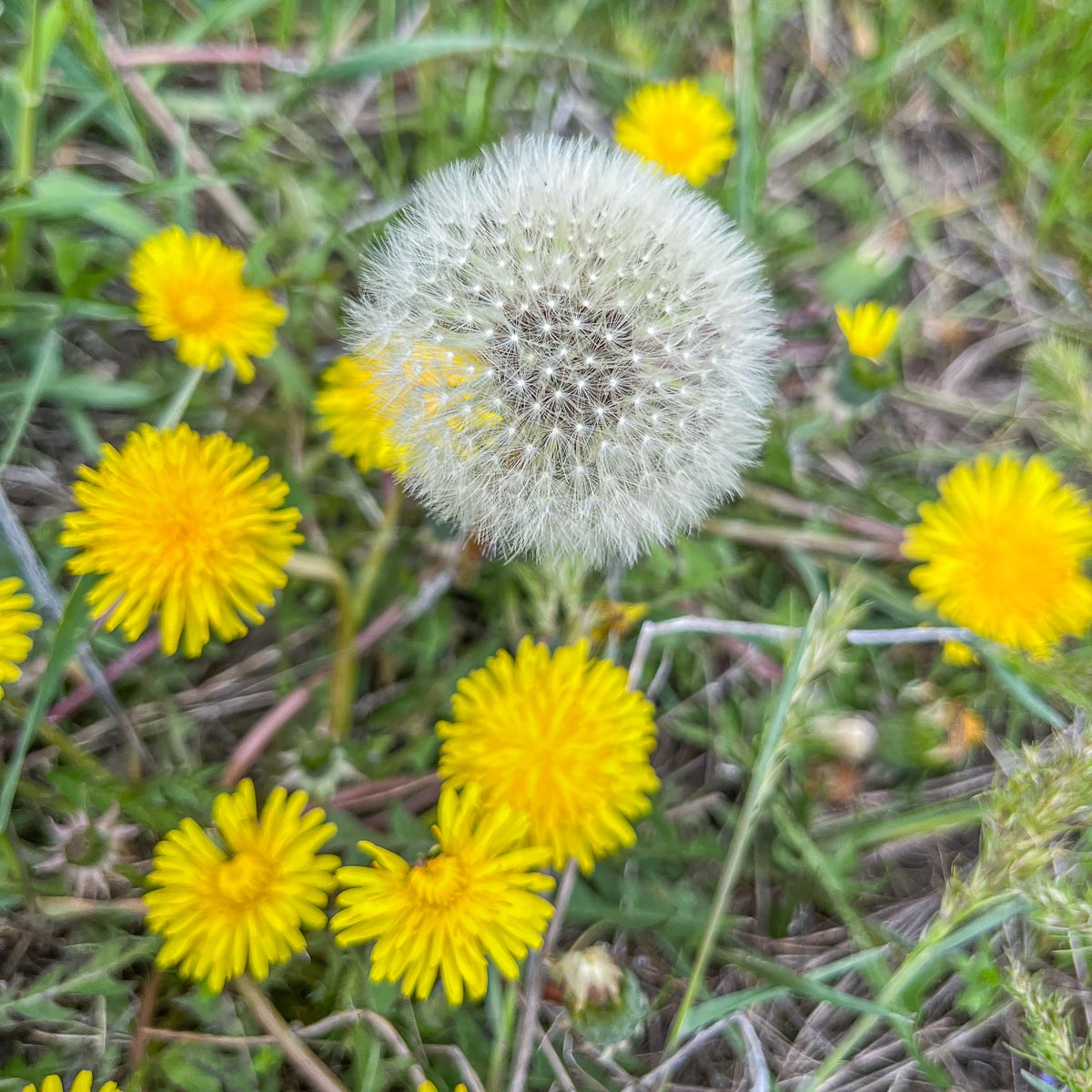
The entire dandelion plant is edible. The flowers and leaves can be stir-fried or added to a salad. The roots are medicinal and used to make dandelion salves and bitters for cocktails.
The flowers are milder in flavor and great for making dandelion wine, mead, jelly, syrup, and dandelion tea. The flowers can even be battered and fried. The unopened buds can also be pickled to make poor man's capers.
👩🏼🍳 Pro Tips
- Pick the dandelions midday when they are open and choose the largest ones, which have more petals, which means you'll need fewer dandelions.
- The dandelions should be picked from somewhere that has not been sprayed with pesticides or that pets have access to.
- Lightly rinse the petals after you pluck them from the blossoms. Do not wash the blossoms beforehand. If the blossoms are wet, it will be hard to separate the outer green part from the petals.
- Some dandelion jelly recipes suggest adding a drop or two of yellow food coloring to make the jelly's color more vibrant. Personally, I don't feel it's necessary.
- If you garden, add the strained petals and citrus slices to your compost bin.
- Store open dandelion jelly in the fridge for up to a few months or until consumed.
- Sealed and processed dandelion jelly can be stored in the pantry for up to a year.
🍇 More Foraging Recipes
Did you make this recipe?
📖 Recipe
Would you like to save this recipe?

Wild Dandelion Jelly
Ingredients
Equipment
Method
- Prepare a water bath canner or fill a large pot with water and add six half-pint jars. Bring to a boil and set a timer for 10 minutes. After 10 minutes, turn off the stove and keep the jars in the hot water until needed. Once you remove the jars, you can add the bands and lids for a few minutes until needed.
- Using kitchen scissors, snip off the stem and green petals of the blossoms at the base. You only want to use the yellow petals. Give the petals a quick rinse, you don't want to wash away the flavor, or their beautiful color.
- Pour cold water into a large pot and add petals, orange slice, and lemon zest. Simmer over low heat for 5 minutes; remove from heat. Once the tea is room temperature, pour it into a 1-quart mason jar or another container. Screw the lid on and steep the tea for a few hours or preferably overnight. It does not need to be kept in the refrigerator.
- Strain the steeped tea using a fine-mesh sieve, coffee filter, or my personal favorite, a soup bag. Squeeze all the liquid and flavor out of the petals and citrus, and get every last drop! Discard the flower petals and citrus peels.
- Measure the liquid and make sure you have 3½ cups of liquid. If not, add some water to bring it up to 3½. Pour the tea back into a large saucepan and add lemon juice, pectin, and sugar, as you whisk. Once the mixture comes to a rolling boil, set a timer for 2 minutes. After 2 minutes, remove from heat.
- Skim foam, if necessary, then ladle the dandelion jelly into sterilized jars, leaving ¼" headspace. Run a small knife along the edges of the jars to release any trapped air bubbles. Wipe the rims of the jars with a damp cloth or a wet paper towel and hand-tighten the lids. Avoid over-tightening.
- Add filled canning jars to the water bath canner. Make sure the water level is at least a few inches over the jars. Process the dandelion jelly jars in boiling based on the times in the chart found in this post.
- Remember that jelly can take up to 12 hours to set. It's important not to move the jars once removed from the canner. Moving them can affect the gel.
Nutrition
Video
Notes
- Pick the dandelions midday when they are open and choose the largest ones, which have more petals, which means you'll need fewer dandelions.
- The dandelions should be picked from somewhere that has not been sprayed with pesticides or that pets have access to.
- Lightly rinse the petals after you pluck them from the blossoms. Do not wash the blossoms beforehand. If the blossoms are wet, it will be hard to separate the outer green part from the petals.
- Some dandelion jelly recipes suggest adding a drop or two of yellow food coloring to make the jelly's color more vibrant. Personally, I don't feel it's necessary.
- If you garden, add the strained petals and citrus slice to your compost bin.
- Store open dandelion jelly in the fridge for up to a few months or until consumed.
- Sealed and processed jars can be stored in the pantry for up to a year.
Alicia says
Hi,
I don't have pectin in the packets. How many ounces of pectin should be used if I'm using bulk powdered pectin?
Thanks
Hilda Sterner says
Hi Alicia, Great question! 4 tablespoons of RealFruit Classic Pectin, is equal to the amount in one packet of pectin. If you're using regular powdered pectin (like Sure-Jell or Ball equivalent), one standard packet equals about 1.75 ounces (or 49–50 grams). I hope that helps!
Laura Hilton says
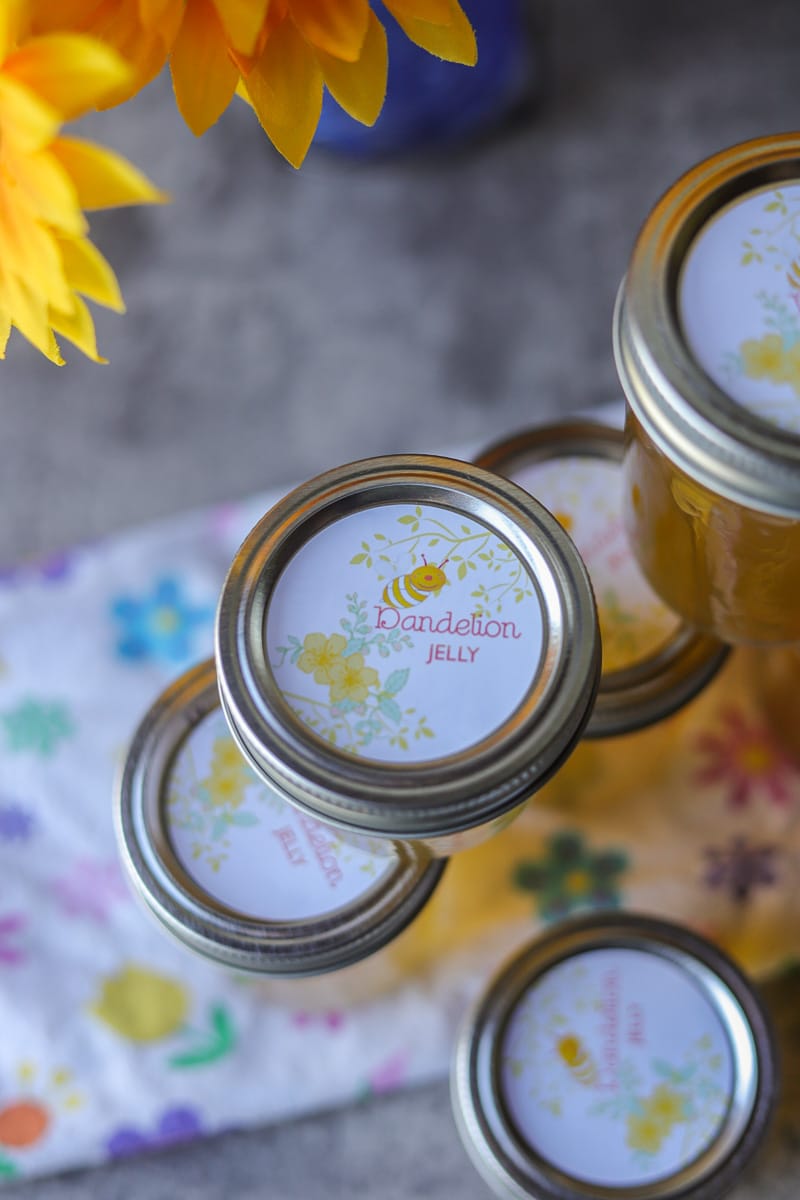
I want to try to make Dandelion Jelly this year. I would love to know where you got your canning labels from.
Hilda Sterner says
Hi Laura, I design them myself and print them on Avery labels. I sell them too, if you're interested. Here is the link: https://payhip.com/b/3XSoW