

If you've never made dehydrated orange slices, you're in for a treat! Unlike other dried fruits, dried oranges have so many uses. I use them to dress up gifts, add flavor to soups and stews, and toss them into mulling spices. I always include them on my fall charcuterie board! And if you don't have a dehydrator, I've included oven directions too.
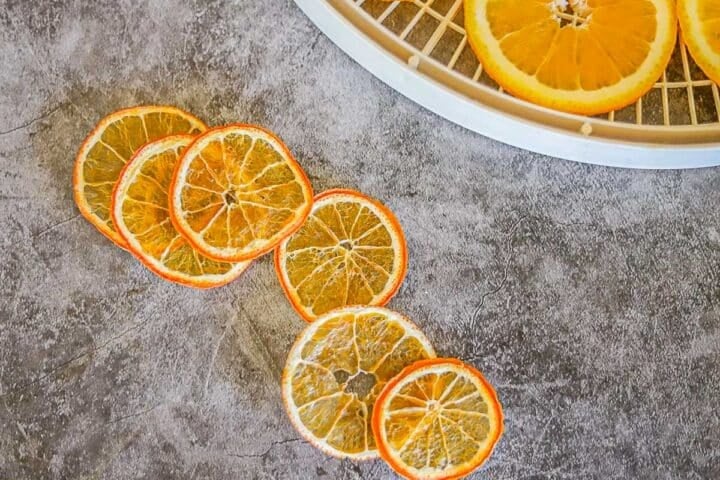
I feel silly even calling this a "recipe." After all, it has one single ingredient: fresh oranges! However, I also don't want anyone out there to miss out on this cool way of preserving citrus, especially oranges.
When I first started dehydrating fruit, I gifted my niece some dehydrated orange slices when I visited them in Chicago. Ninva loved them so much that she and my sister got on their laptop and ordered a food dehydrator.
Judging by their reaction, I thought others may want to know how to dehydrate oranges too. Dried orange slices keep for months and make a great pick-me-up snack. If you hike, toss a handful in a Ziploc bag and take them along for a quick boost of energy.
Once you own a dehydrator, you can make pineapple chips, dehydrated apple chips, dehydrated watermelon jerky, and dried lemons!
Jump to:
- Ingredients & Substitutions
- Helpful Tools
- How to Make Dehydrated Orange Slices
- How to Make Dried Orange Slices in the Oven
- How to Tell When They're Done
- How to Store Dried Oranges (and How Long They Last)
- What Can You Do with Dried Oranges?
- How to Make a Dried Orange Garland
- Recipe FAQs
- Pro Tips
- More Dehydrator Recipes
- Recipe
- Comments
Ingredients & Substitutions

- Oranges: Seedless oranges are best to dehydrate. Not only are they easy to cut with a mandoline, but the orange slices come out prettier. And you won't have large holes in the slices where the seeds were. Smaller oranges fit on the surface of the mandoline blade better than larger oranges.
- Other Citrus Fruit: This method of dehydrating oranges can also be applied to other citrus fruits. Think lemons, limes, tangerines, tangelos, and grapefruit.
Helpful Tools
- You will need a dehydrator to dehydrate the orange slices, or a baking sheet and parchment paper if you're using the oven.
- Although not absolutely required, a mandoline slicer makes slicing the oranges so much easier.
- If you don't have a mandoline, a sharp knife is helpful.
How to Make Dehydrated Orange Slices
Step 1: Slice oranges with a mandoline so that they are anywhere from ⅛" to ¼" in thickness. Keep in mind that the thinner they are, the less time they'll need to dehydrate.

Step 2: Arrange orange slices on the dehydrator trays, leaving room for air circulation.
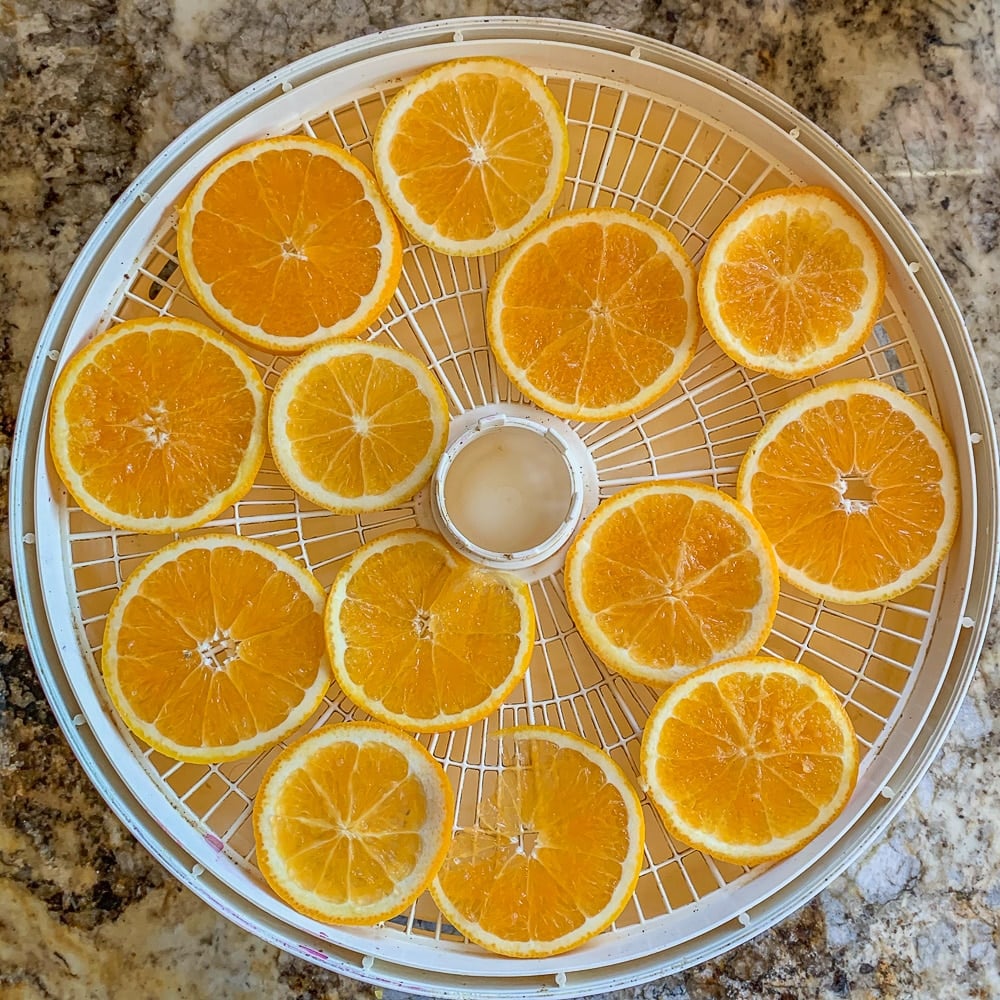
Step 3: Set the dehydrator to 135°F (fruit/vegetable setting). Start checking the orange slices after 2 hours. Sometimes it's helpful to flip the orange slices to the other side halfway through the process.
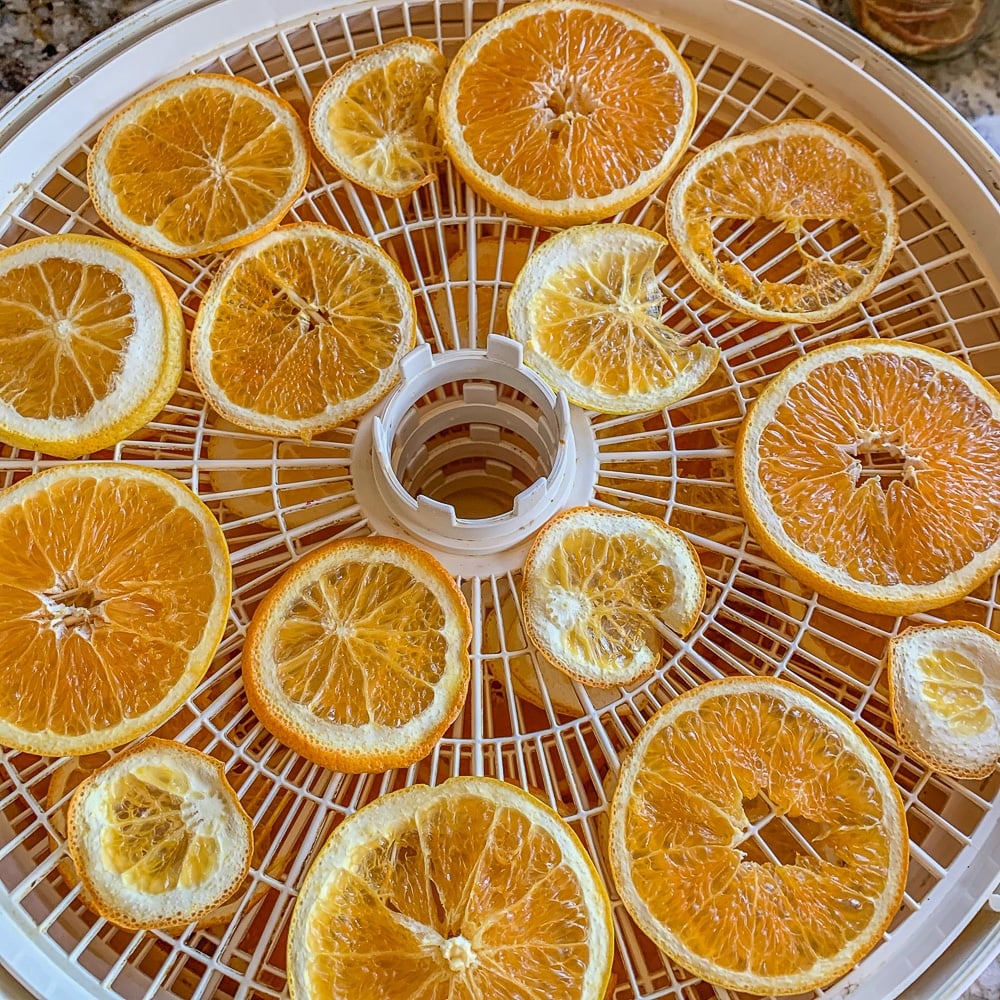
Pro Tip: Depending on the thickness of the slices, it can take anywhere from 3 to 7 hours for the slices to completely dry.
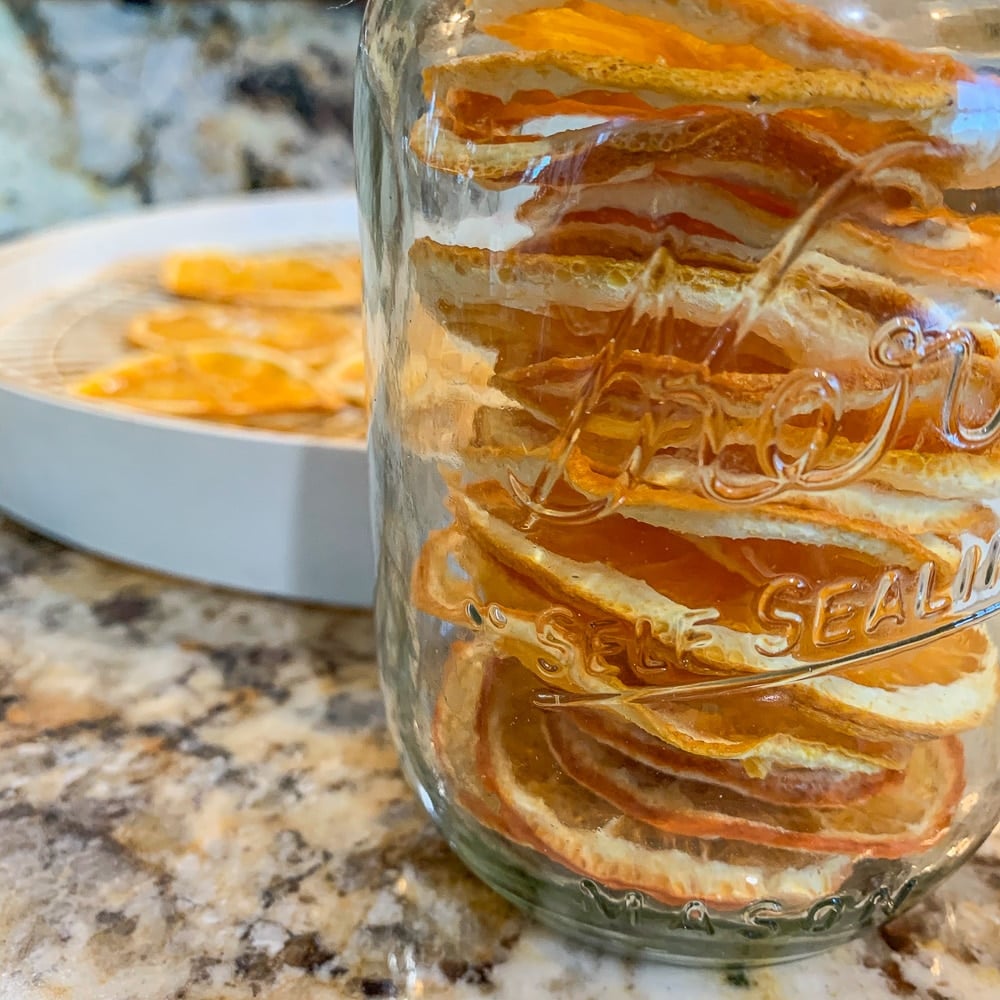
Step 4: Once the orange slices are completely dehydrated and no moisture remains, cool them completely, then store them in mason jars.
How to Make Dried Orange Slices in the Oven
Slice the oranges into thin slices, somewhere between ⅛" and ¼" thick.
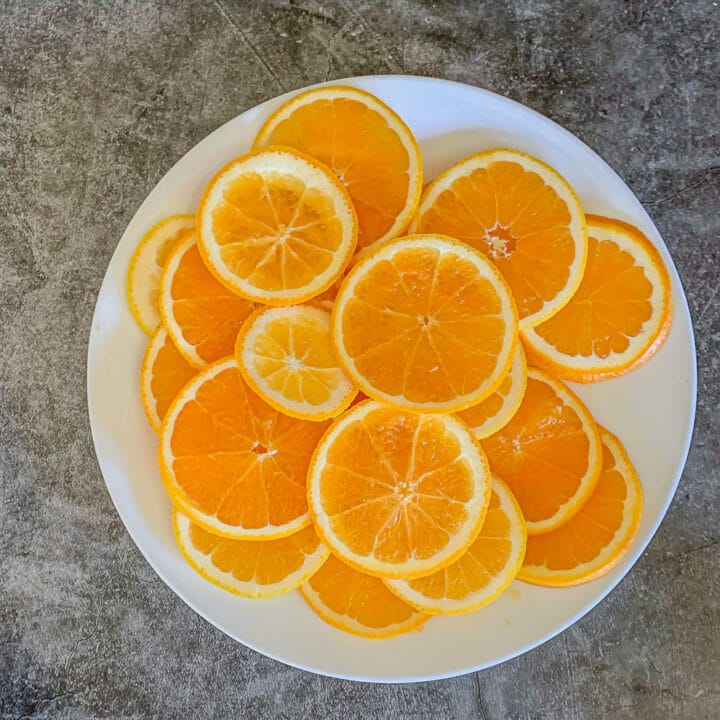
Arrange in a single layer on a baking sheet lined with parchment paper.
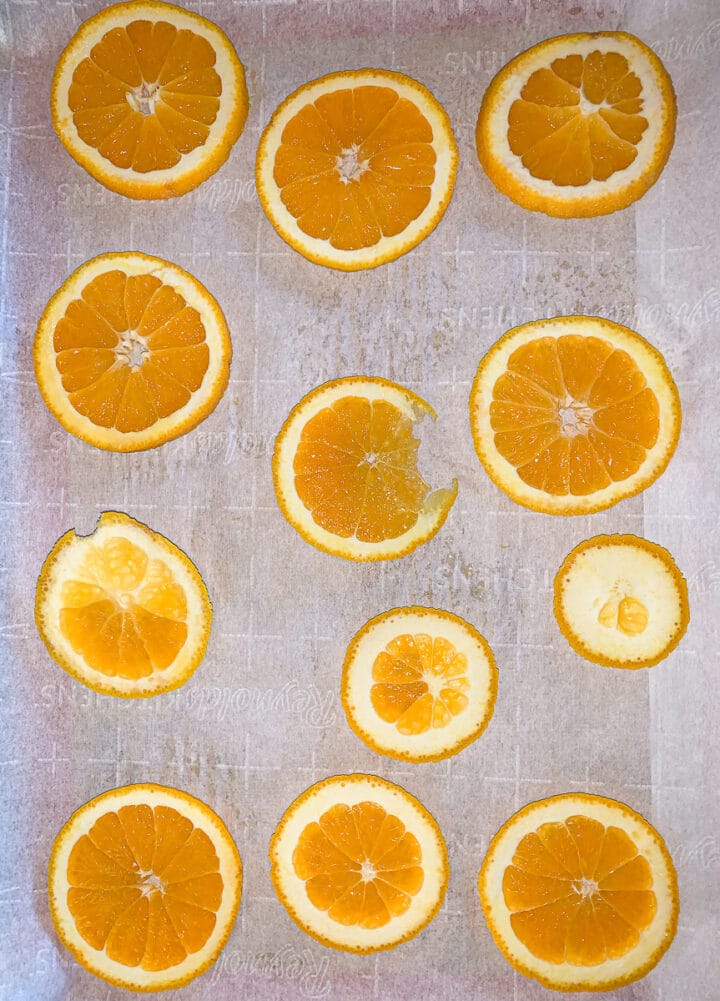
If you want to make the orange slices even sweeter, you can sprinkle the slices with some brown sugar and your favorite spices. If you know me at all, you know that I use cardamom.
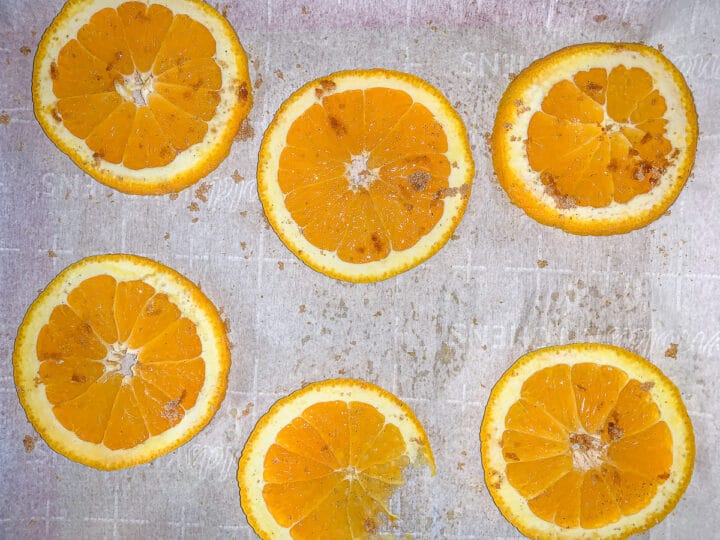
Bake the orange slices in the oven at 200°F for 3 to 4 hours, depending on their thickness, flipping them about halfway through. They're ready when the orange slices feel dry and not tacky.
How to Tell When They're Done
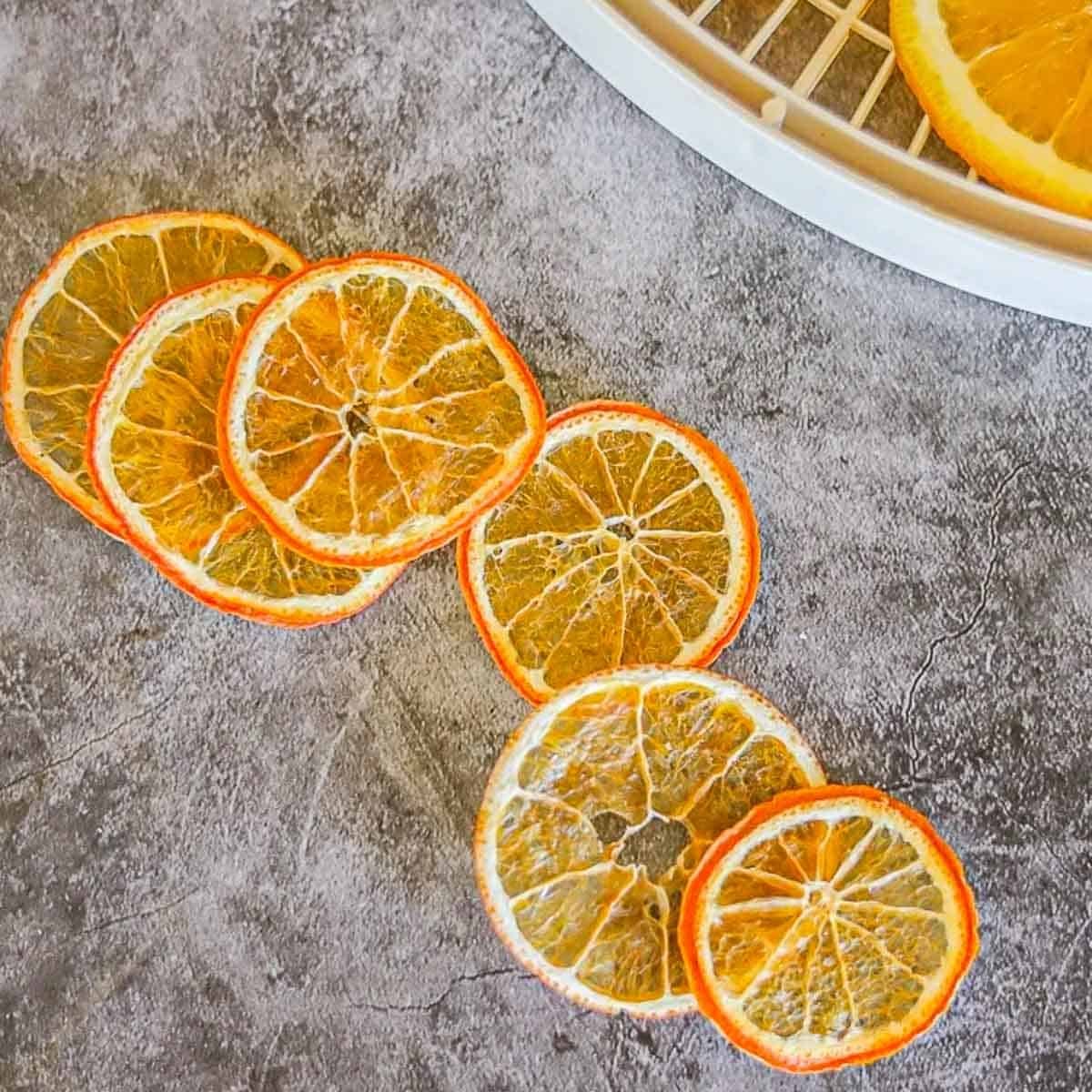
The slices are done when the peel feels firm, the flesh looks almost see-through, and nothing feels sticky when you touch it. Pull one out and let it cool for a few minutes before you decide. They crisp up as they cool, so a slice that's still a little bendy while warm is usually fine. If you see any wet spots in the center, give them more time.
How to Store Dried Oranges (and How Long They Last)
Let the slices cool completely, then store them in an airtight container or mason jar in a cool, dark place. Check the jar a few times during the first week. If the slices start to soften or stick together, they still have moisture, so put them back in the dehydrator for another hour or two.
Throw out any slices that show signs of mold. When properly dried, they keep for up to a year. Adding an oxygen absorber to the jar or using a mason jar vacuum sealer can help them last even longer. Slices used only for decorations can last much longer.
What Can You Do with Dried Oranges?
Dried orange slices are just as handy in the kitchen as they are for decorating. Here are some of my favorite ways to use them:
- Add them to zucchini stew or any stew that calls for lemons.
- Drop a few into iced tea, lavender lemonade, samovar tea, or a glass of ice water.
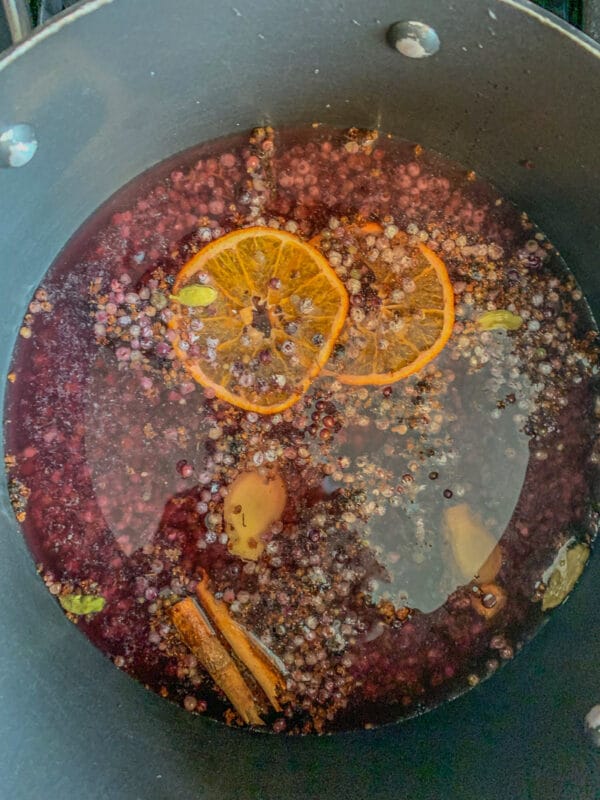
- Simmer them with cinnamon sticks and cloves in spiced apple cider.
- Garnish cocktails like my Christmas whiskey cocktail. Just cut a small slit on one end of the slice and slip it over the rim of the glass.
- Use them to flavor lavender syrup, elderberry syrup, or an elderberry shrub.
- Add them to simmer pots and potpourri.
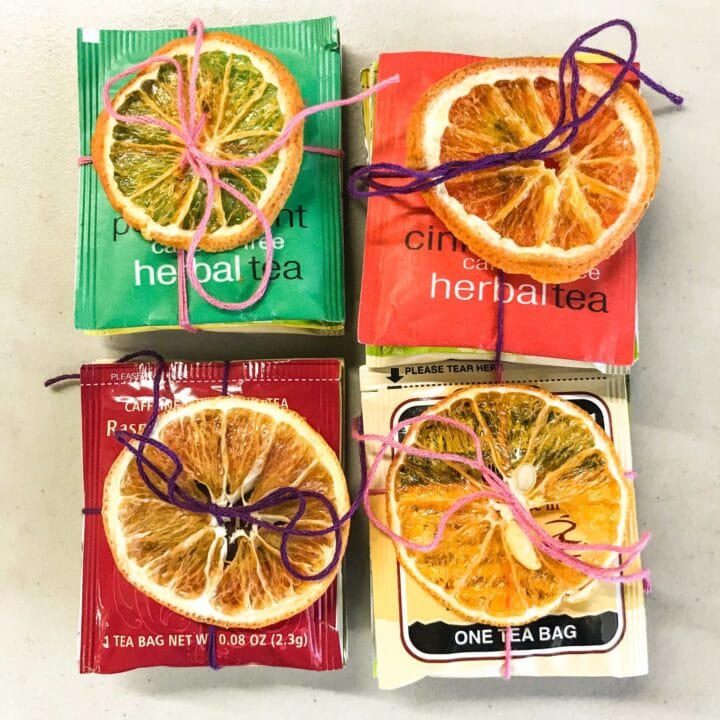
- Tie them onto gifts and tea bags with a little twine and a cinnamon stick.
How to Make a Dried Orange Garland
You can dry the slices for a garland in the dehydrator or the oven. If you're using the oven, skip the brown sugar so the slices don't get sticky, and keep them on the thinner side (about ⅛") so they dry evenly and let more light shine through.
Thread a large needle with twine or baker's string and push it through each slice, just inside the peel. Add cinnamon sticks, bay leaves, or dried cranberries between the slices if you like. Hang it on the Christmas tree, across a mantel, or in a window. For ornaments, tie a loop of string through single slices instead.
Recipe FAQs
Can you eat dehydrated orange slices?
Yes, you can! Dried oranges have an intense citrusy flavor and make a healthy snack. The peel is edible too, though it's a little more bitter and chewier than the rest of the slice.
Why Did My Dried Oranges Turn Brown?
This happens most often in the oven. The natural sugar in the oranges starts to caramelize when the heat is too high, and a sprinkle of brown sugar browns them even faster. Keep the oven at 200°F or lower and check on them often toward the end. If you want bright, pretty slices for decorations, the dehydrator at 135°F keeps the color much better.
Do dried orange slices need to be refrigerated?
No. As long as they're completely dry, they're fine at room temperature in a sealed jar.
Pro Tips
- Whenever possible, use firm oranges. They are easier to slice, especially when using a mandoline, and will require less drying time if they're not overly juicy.
- Another reason to use small oranges when possible is that once the oranges are dried, they can fit inside the mason jars more easily, including jars with regular-sized mouths.
- Blood oranges are by far the most beautiful when dehydrated. If you can get your hands on some, I highly recommend it!
- Although it's often suggested that you should dehydrate oranges at a lower temperature for a longer length of time, I prefer using the fruit setting, which is 135°F. Instead of taking 12 hours or longer, the dehydrating time can be cut down to 3 to 7 hours, depending on how thick the orange slices are.
- I also dry the end pieces that I slice off the oranges and use them to make orange powder, which I substitute in place of orange zest in baked goods.

More Dehydrator Recipes


Did you make this recipe?
Recipe
Would you like to save this recipe?
Ingredients
Equipment
Method
- Slice oranges with a mandoline so that they are anywhere from ⅛" to ¼" in thickness. Keep in mind the thinner they are, the less time they'll need to dehydrate.
- Arrange orange slices on dehydrator trays, leaving room for air circulation.
- Set the dehydrator to 135°F (fruit/vegetable setting). Start checking the orange slices after 2 hours.
- Depending on the thickness of the slices, it can take anywhere from 3 to 7 hours for the slices to completely dry. Sometimes it's helpful to flip the orange slices over to the other side halfway through the process.
- Slice the oranges into thin slices (⅛" to ¼") in thickness.
- Arrange in a single layer on a cookie sheet lined with parchment paper.
- If you want to make the orange slices even sweeter, you can sprinkle the slices with some brown sugar and your favorite spices. If you know me at all, you know that I use cardamom.
- Bake in the oven at 200°F for 3 to 4 hours, depending on the thickness, flipping them about halfway through. They're ready when they feel dry and not tacky.
Nutrition
Notes
- Whenever possible, use firm oranges. They are easier to slice, especially when using a mandoline, and will require less drying time if they're not overly juicy.
- Another reason to use small oranges when possible is that once the oranges are dried, they can fit inside the mason jars more easily, including jars with regular-sized mouths.
- Blood oranges are by far the most beautiful when dehydrated. If you can get your hands on some, I highly recommend it!
- Although it's often suggested that you should dehydrate oranges at a lower temperature for a longer length of time, I prefer using the fruit setting, which is 135°F. Instead of taking 12 hours or longer, the dehydrating time can be cut down to 3 to 7 hours, depending on how thick the orange slices are.
- I also dry the end pieces that I slice off the oranges and use them to make orange powder, which I substitute in place of orange zest in baked goods.
- Storage: Cool the slices completely, then store them in an airtight container or mason jar in a cool, dark place. When properly dried, they keep for up to a year. Adding an oxygen absorber or using a mason jar vacuum sealer can help them last even longer.
Vic says
Easy recipe. Great tips. Thank you
Hilda Sterner says
Thanks, Vic, appreciate the review!
Lisa Hernandez says
Can I use these on a cake?
Hilda Sterner says
Absolutely!
Dee says
What a wonderful way to make hiking sweetly enjoyable! Thank you
Hilda Sterner says
Thanks, Dee. I appreciate your review.
Jeanette says
I've been wanting to try this. Thank you for all the great information.
Hilda Sterner says
Thank you, Jeanette, I appreciate it!
CJ says
Thank you Hilda's Kitchen for the wonderful tips on how to dehydrate the oranges... someone gave me a whole box and it's just me and didn't want to waste any.... I love this. MUCH APPRECIATED.
Hilda Sterner says
Thank you CJ!
Conny says
Hi thanks for all the good advice. I want to use my orange slices to decorate the Christmas tree and some garland but I do not want to draw any bugs to my tree. Will these dried oranges attract bugs?
Hilda Sterner says
Hi Conny,
I've never had an issue with bugs being attracted to the orange slices. Just make sure they are completely dehyrdeted and no longer tacky.
Sharon says
Can I dehydrate orange sections instead of using a mandolin and make slices?
Hilda Sterner says
Hi Sharon, I've never dehydrated orange sections and would imagine it would take quite a while to do. If you don't have a mandolin to make the slices you can use a sharp knife, as long as the oranges aren't too juicy.