
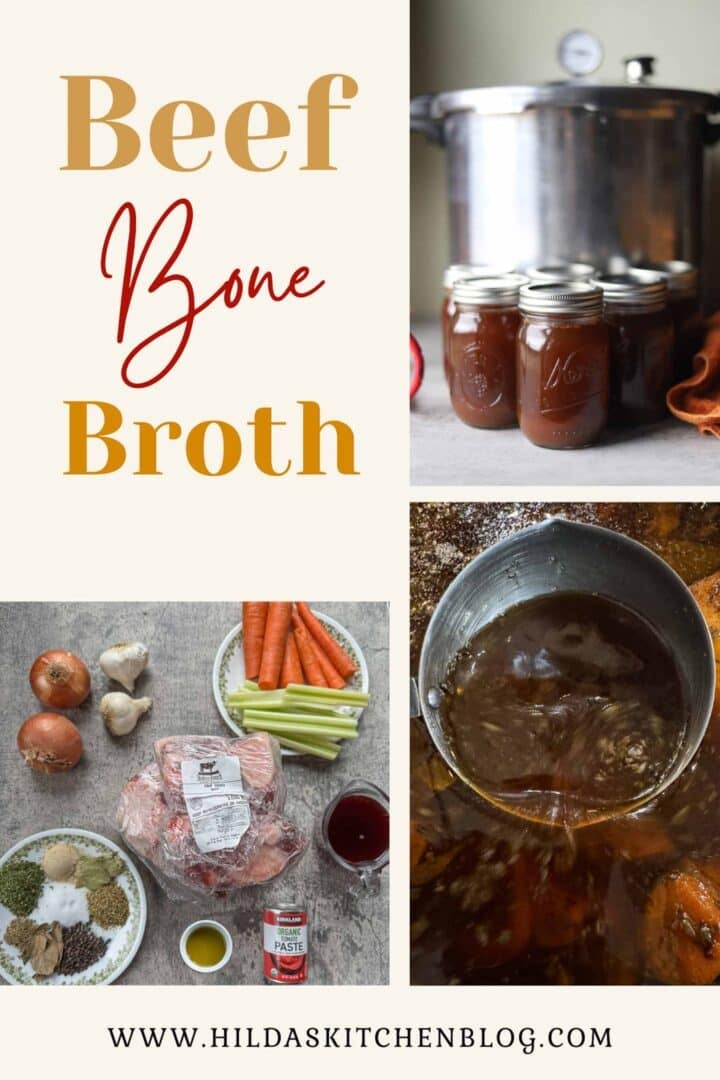
This easy crockpot beef bone broth recipe yields a rich, nourishing staple that's surprisingly easy to make. The bones and vegetables are roasted first to build deeper flavor, then simmered slowly in a crockpot to create a deeply savory broth. It's perfect for soups, stews, sauces, or even sipping on its own. It's also a perfect addition to elk chili!
Would you like to save this recipe?
Many years ago, I had a blog post titled "Bone Broth 101", in which I shared how I made bone broth at home. Somewhere along the line, the post was deleted with the intention of updating it later.
Since then, I've improved the recipe by switching to a slow cooker instead of the stovetop. This method reduces evaporation and yields a few extra jars. It also makes a richer and more flavorful beef bone broth. This crockpot bone broth recipe should yield approximately 8 pints if you make a second batch by reusing the bones. More about that later!
It may have taken me a few years to update this post, but I'm still over here killing it, haha.
Jump to:
🤔 What is Bone Broth?
Bone broth is a savory liquid made by simmering animal bones, vegetables, and seasonings in water for an extended time. As the bones slowly cook, they release flavor, gelatin, and minerals into the broth, creating a rich and nourishing base for soups, stews, sauces, and gravies. It's also a nourishing drink!
Bone Broth Benefits
Many people enjoy beef bone broth not only for its rich flavor but also for its potential nutritional benefits. Because the bones simmer for a long time, the broth becomes rich in naturally occurring nutrients, making it both comforting and nourishing.
- Rich in protein: Bone broth contains gelatin and collagen-derived amino acids that contribute to its protein content.
- Supports joint health: Collagen and gelatin found in bone broth are often associated with supporting healthy joints.
- May support skin health: Collagen is also a major structural component of skin and connective tissue.
- Easy to digest: The gelatin in bone broth gives it a smooth texture that many people find gentle on the stomach.
- Versatile and nourishing: Bone broth can serve as a base for soups, stews, and sauces, or be enjoyed warm on its own.
🥘 Bone Broth vs Stock?
Although people sometimes use the terms interchangeably, bone broth and stock are slightly different.
- Bone broth: This nutrient-dense broth is simmered for a long time (often 12-24 hours or more). The extended cooking time helps extract collagen and gelatin from the bones, giving bone broth a richer flavor and a thicker, slightly gel-like texture when chilled. It's often enjoyed on its own as a warm drink.
- Stock: Usually simmered for a shorter period of time (about 4-6 hours). While it's also made with bones and vegetables, it's primarily used as a cooking base for soups, sauces, and gravies rather than for sipping.
In short, beef bone broth is generally cooked longer and is often consumed as a nourishing drink, while stock is typically used as an ingredient in recipes.
🦴 Beef Bone Broth Ingredients

- Soup Bones: 6 lbs of femur/knuckle/oxtail beef bones.
- Tomato Paste: Three ounces of tomato paste.
- Olive Oil: To drizzle over bones and veggies before roasting.
- Vegetables: Carrots, celery, onions, and garlic.
- Herbs: Fresh herbs if you have them; otherwise, use dried parsley, oregano, thyme, bay leaves, and avocado leaves (optional).
- Spices: Sea salt, black peppercorns, mushroom powder (optional).
- Water: Enough fresh water to cover the bones and other ingredients in the slow cooker. I used 3 quarts.
- Wine: Preferably red wine.
- Optional: A splash of apple cider vinegar (helps to draw out more flavor and nutrients from the bones).
🫕 How to Make Crockpot Bone Broth
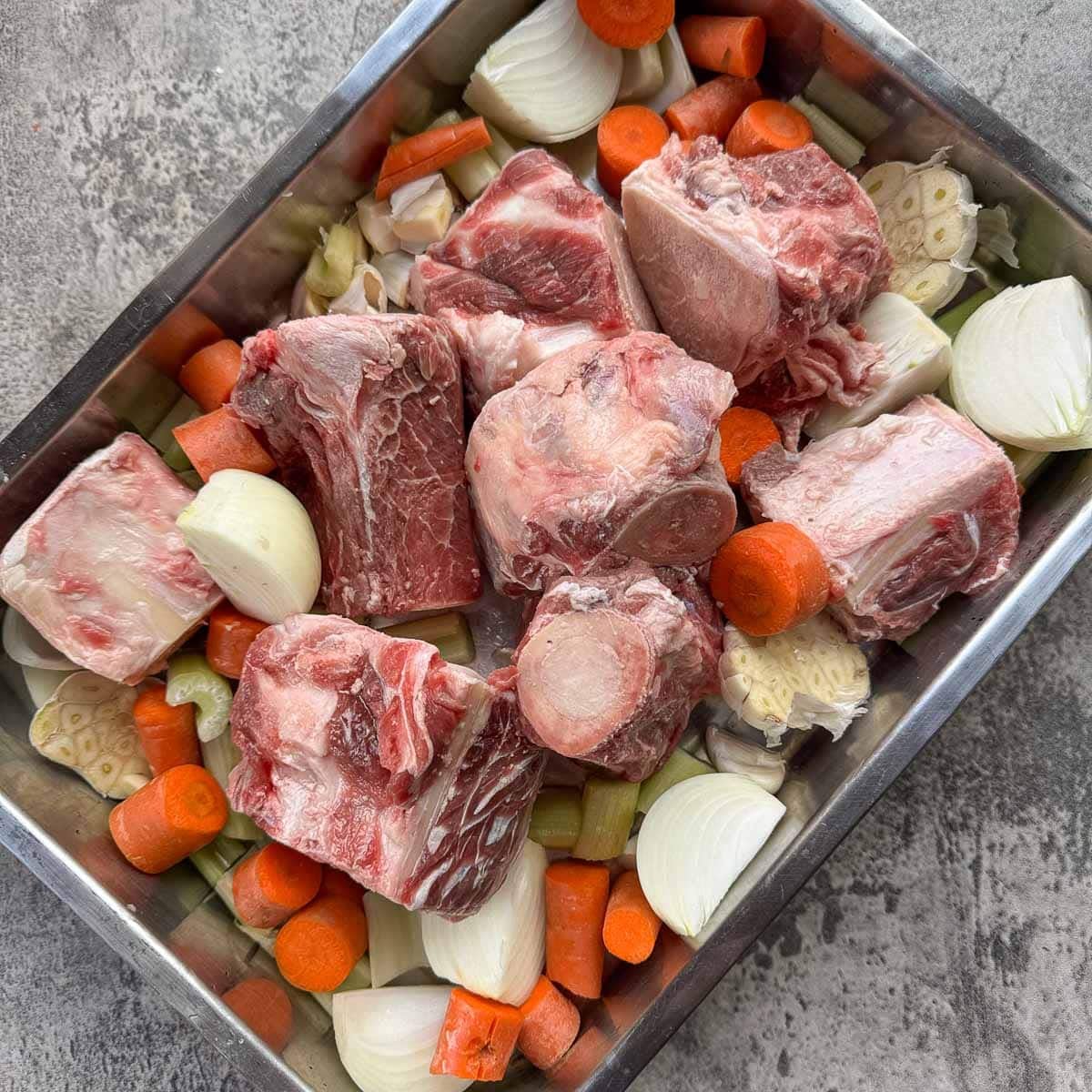
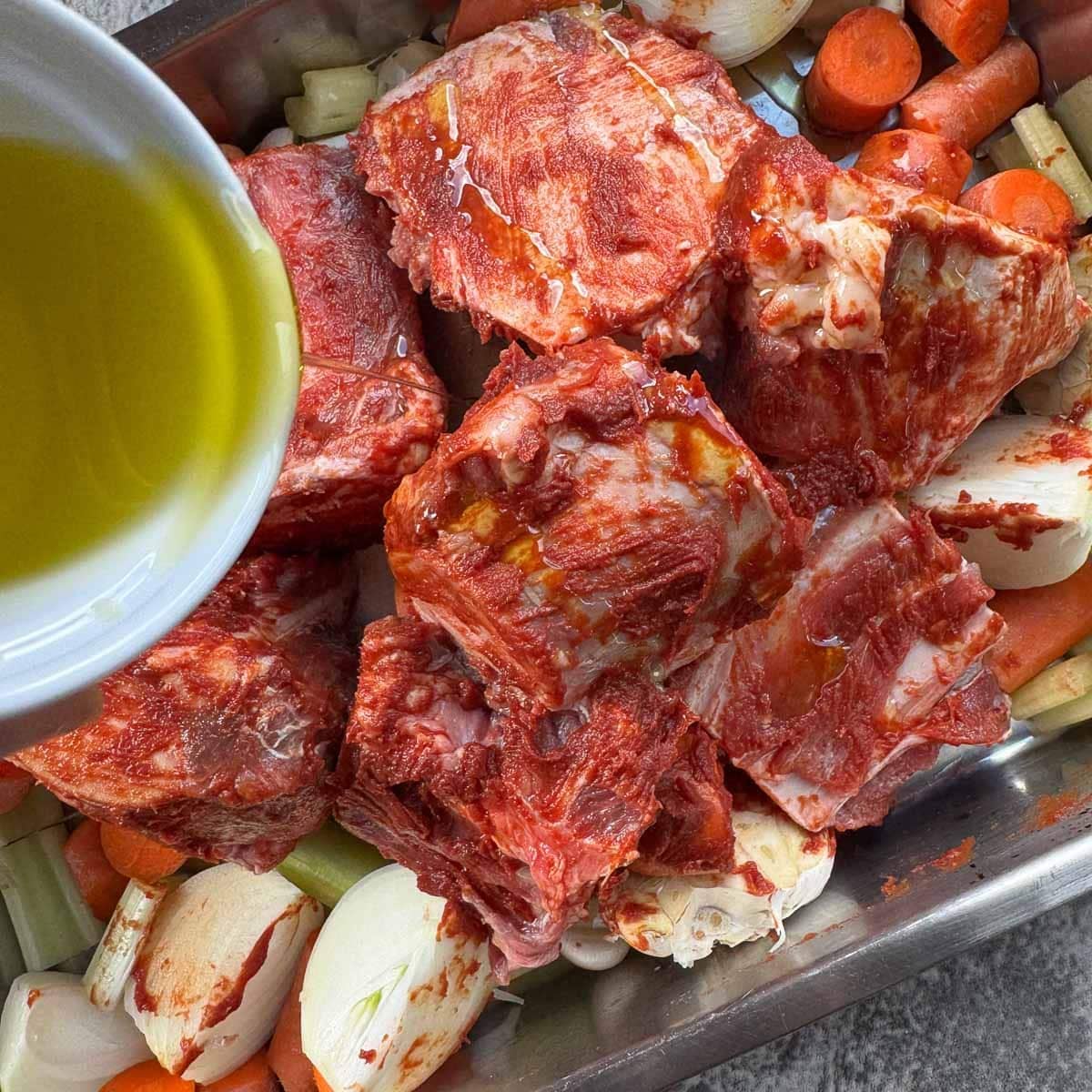
Step 1: Arrange defrosted bones in a deep roasting pan and scatter carrots, celery, onions, and garlic around them. Brush bones with tomato paste on all sides, then drizzle everything with olive oil.
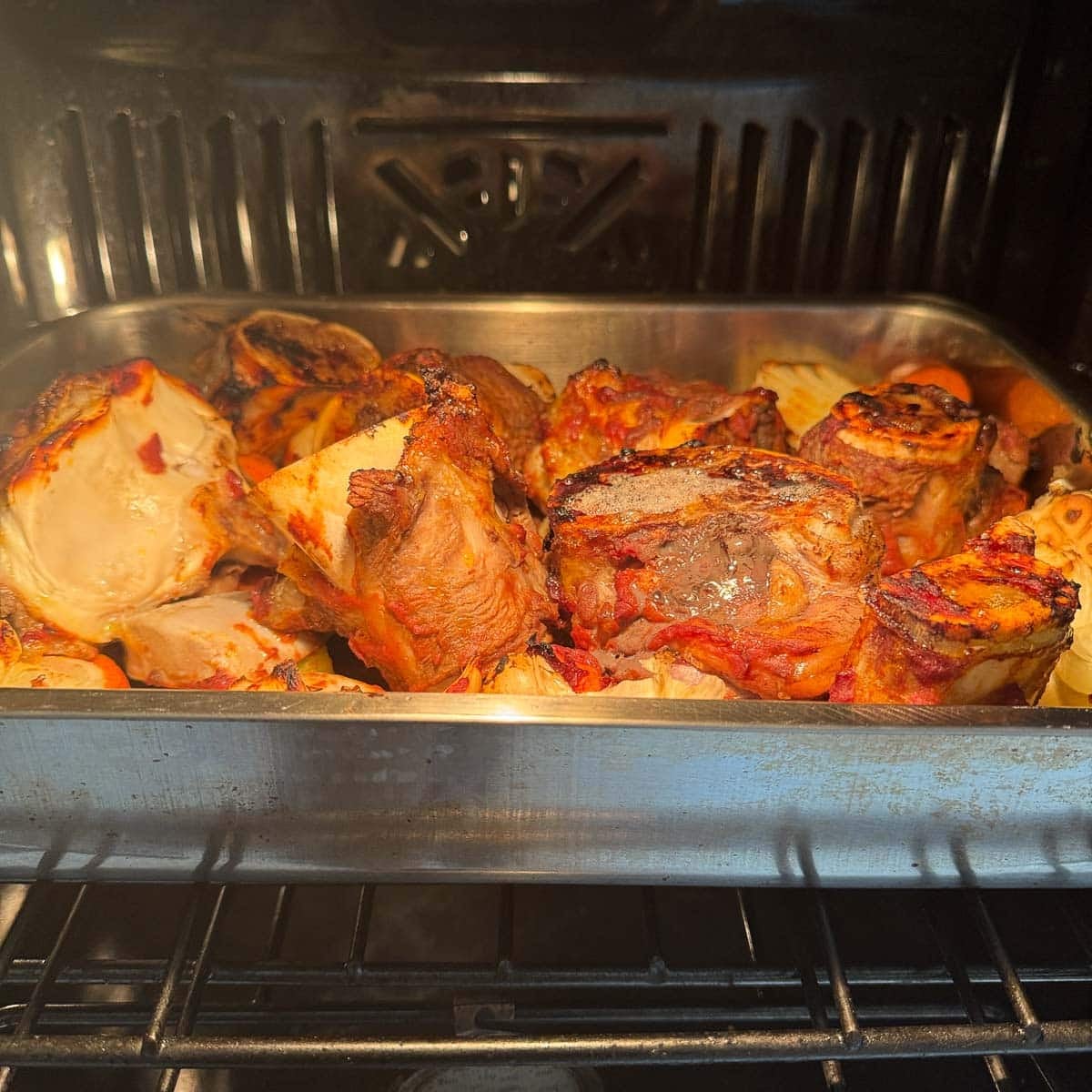
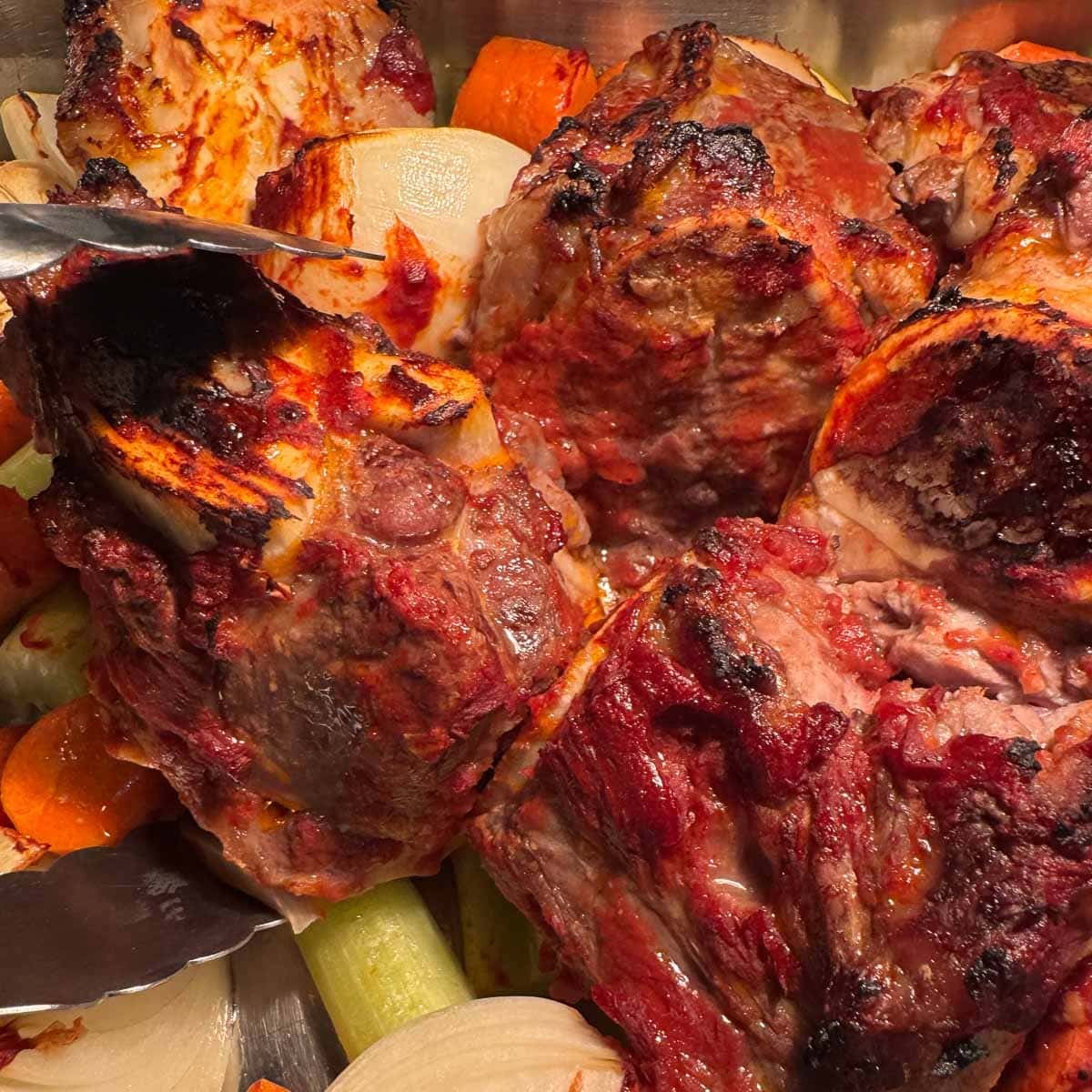
Step 2: Roast bones and veggies in a 425-degree oven for 40 minutes, flipping the bones halfway through.
Step 3: Transfer pan contents to a large crockpot. Use wine to deglaze the roasting pan. Pour wine and pan juices into a large crockpot, along with seasoning, herbs, a splash of vinegar (optional), and water. Bring to a boil on high, then simmer, covered, on low for 12 hours. Skim foam off the surface as needed.
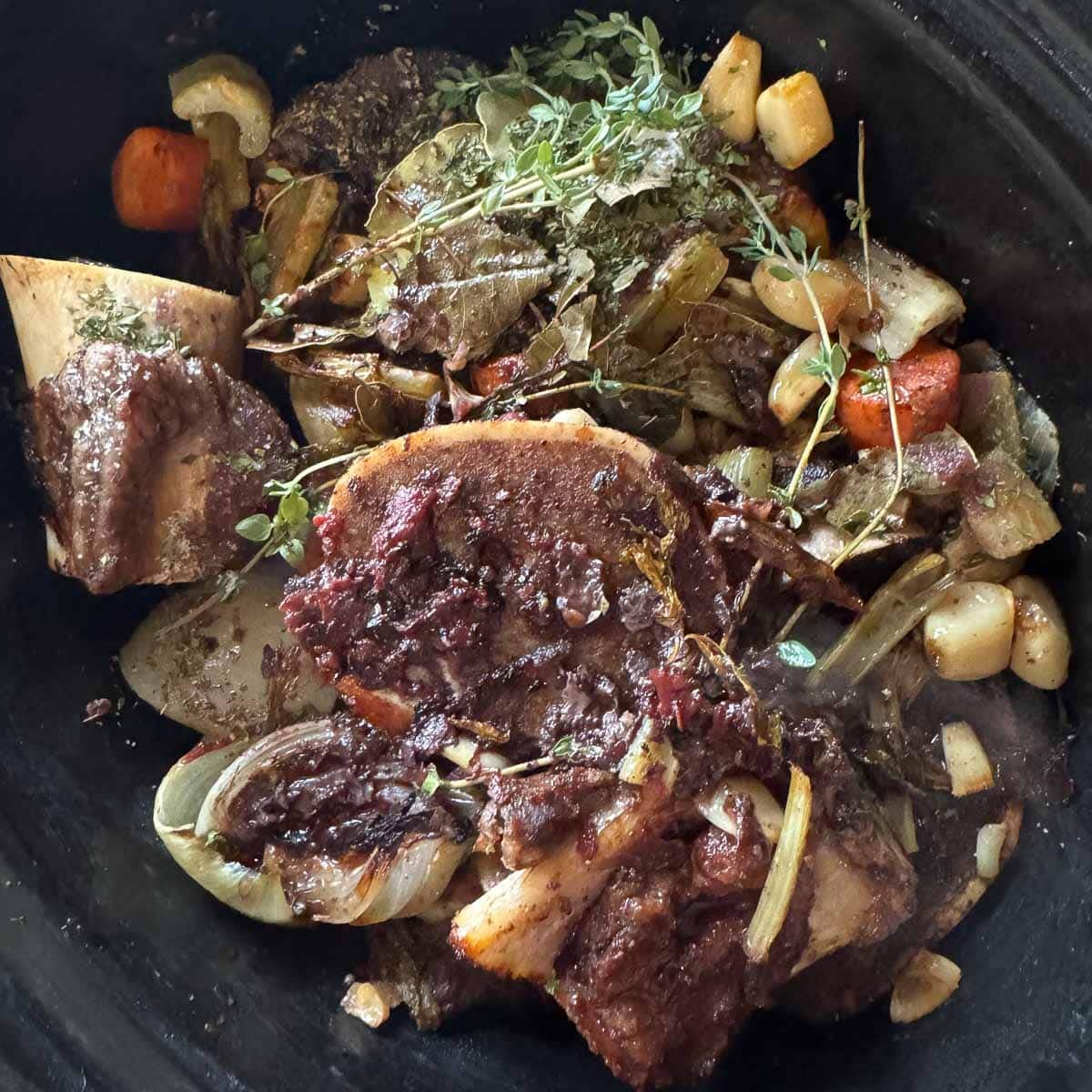
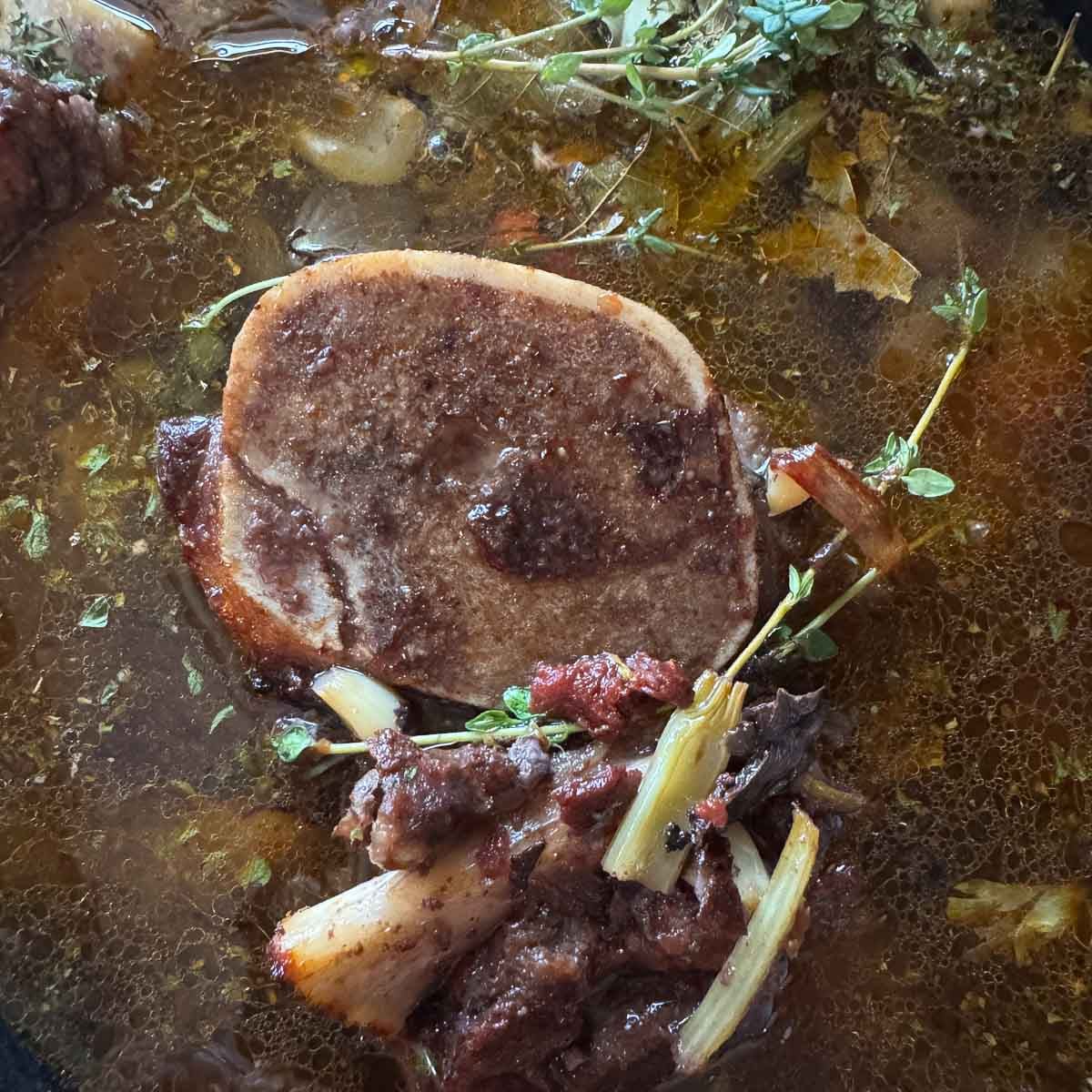
Step 4: Use a slotted spoon or tongs to remove bones and vegetables from the crockpot, then carefully strain the bone broth into a clean pot. Once cool, refrigerate to allow the fat to solidify on the surface, then scrape it off and either discard it or save it for cooking.
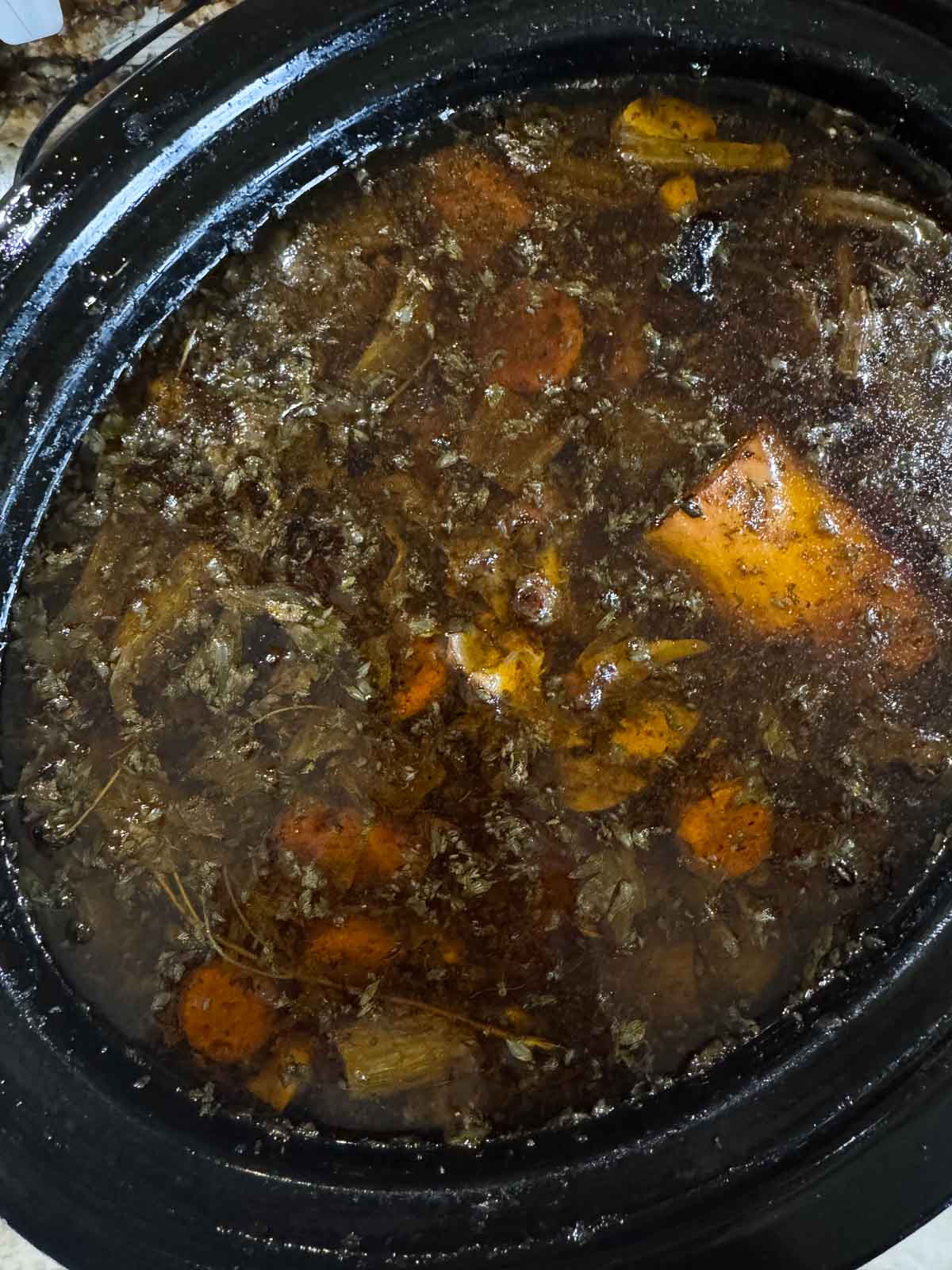
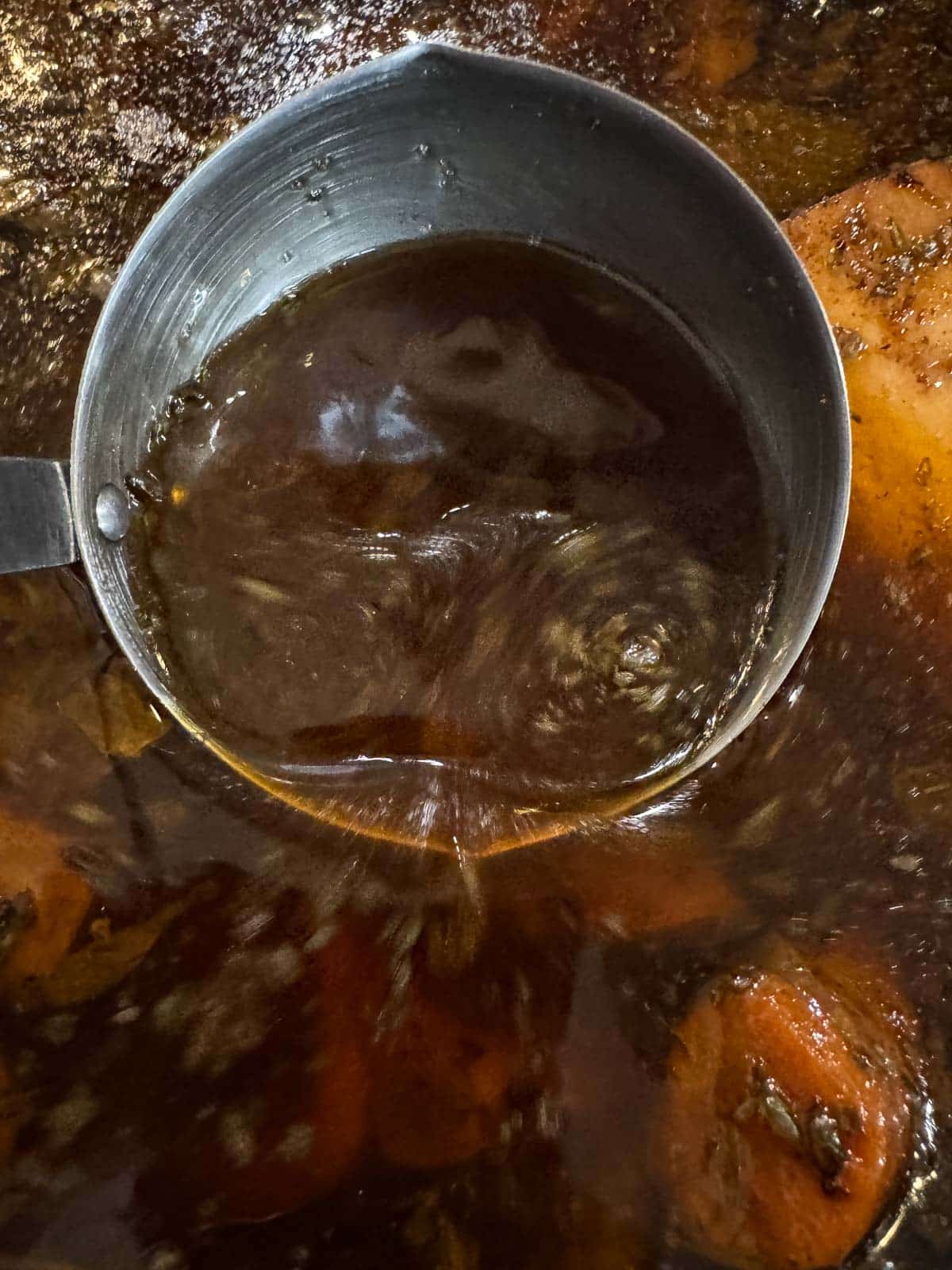
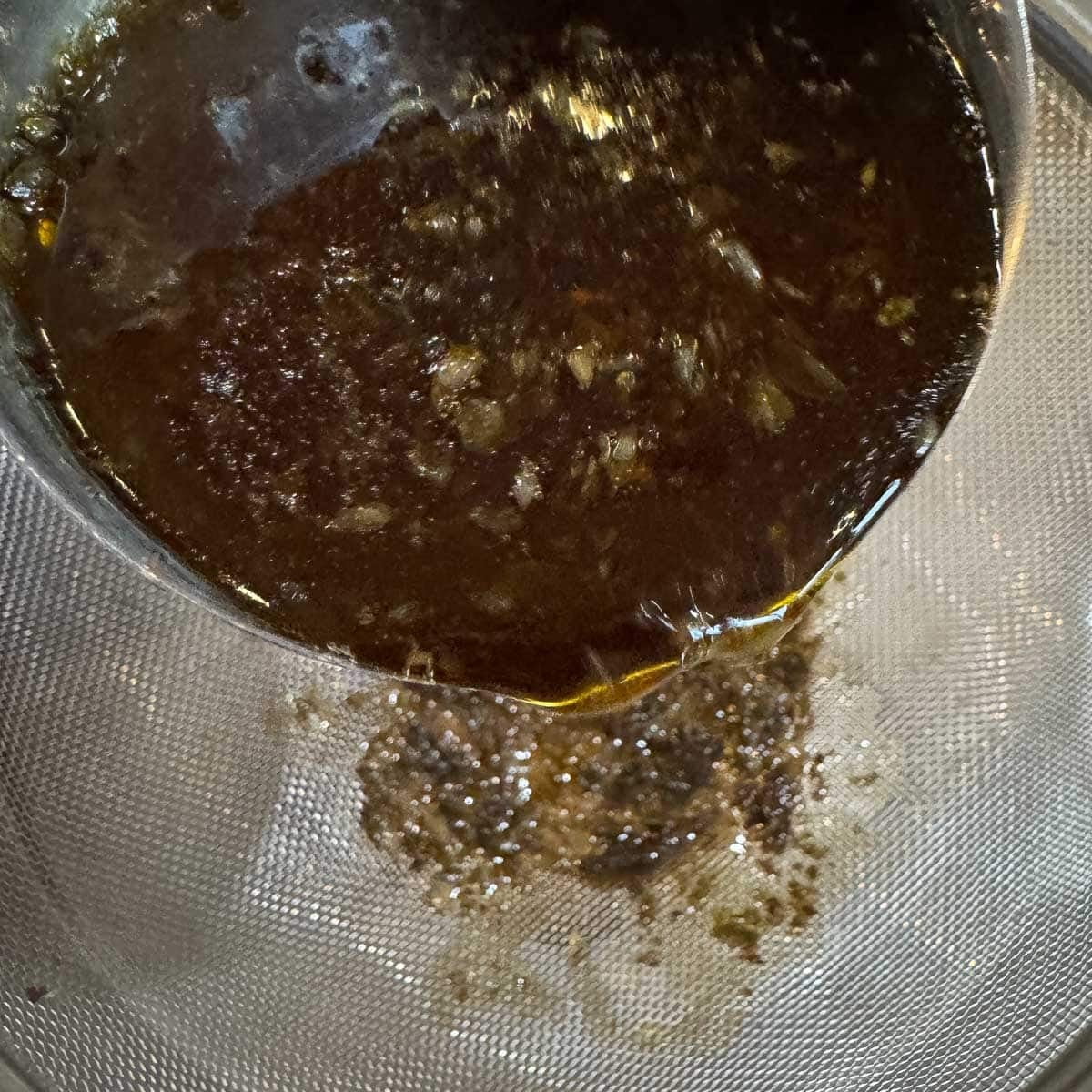
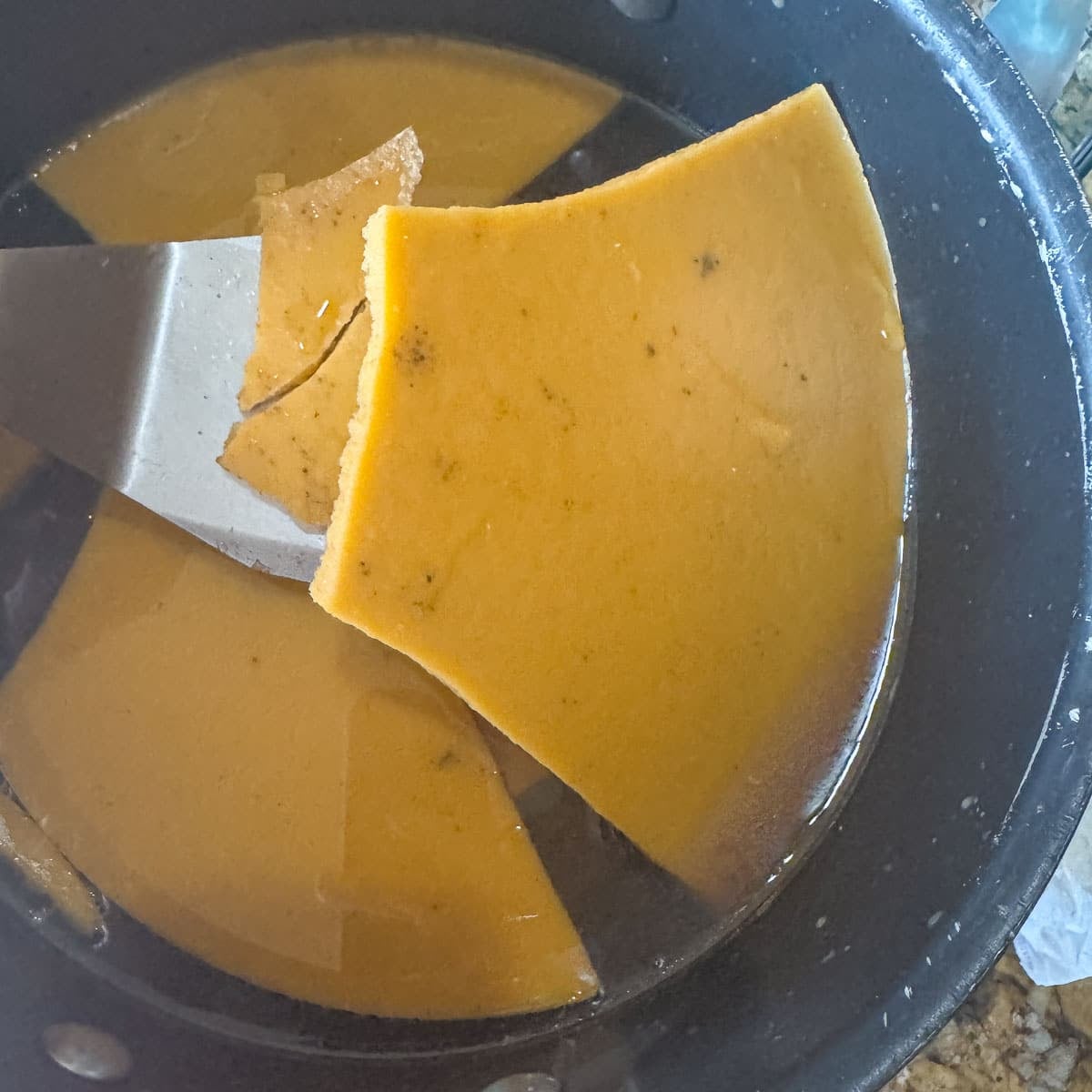
Pro Tips: When preparing bone broth during cold winters, you can leave the covered pot on the porch until the fat solidifies. This is especially helpful when you have no room in the fridge for a large stockpot.
Don't Toss Those Bones Just Yet! Make a Second Batch
After straining your first batch of bone broth, don't toss those bones and veggies just yet! You can get even more goodness out of them by making a second batch of crockpot bone broth.
Simply return the bones and aromatics to your crockpot, cover with fresh water, and simmer for another 10-12 hours. If you want, you can add fresh veggies and herbs. This second batch will be lighter in flavor and color, but still rich in nutrients.
Once finished, strain the broth, let it cool, and refrigerate until the fat solidifies on top; then remove it.
You can keep the first and second batches separate, or combine them for a more balanced flavor, which is what I prefer.
🫙 Storage Suggestions
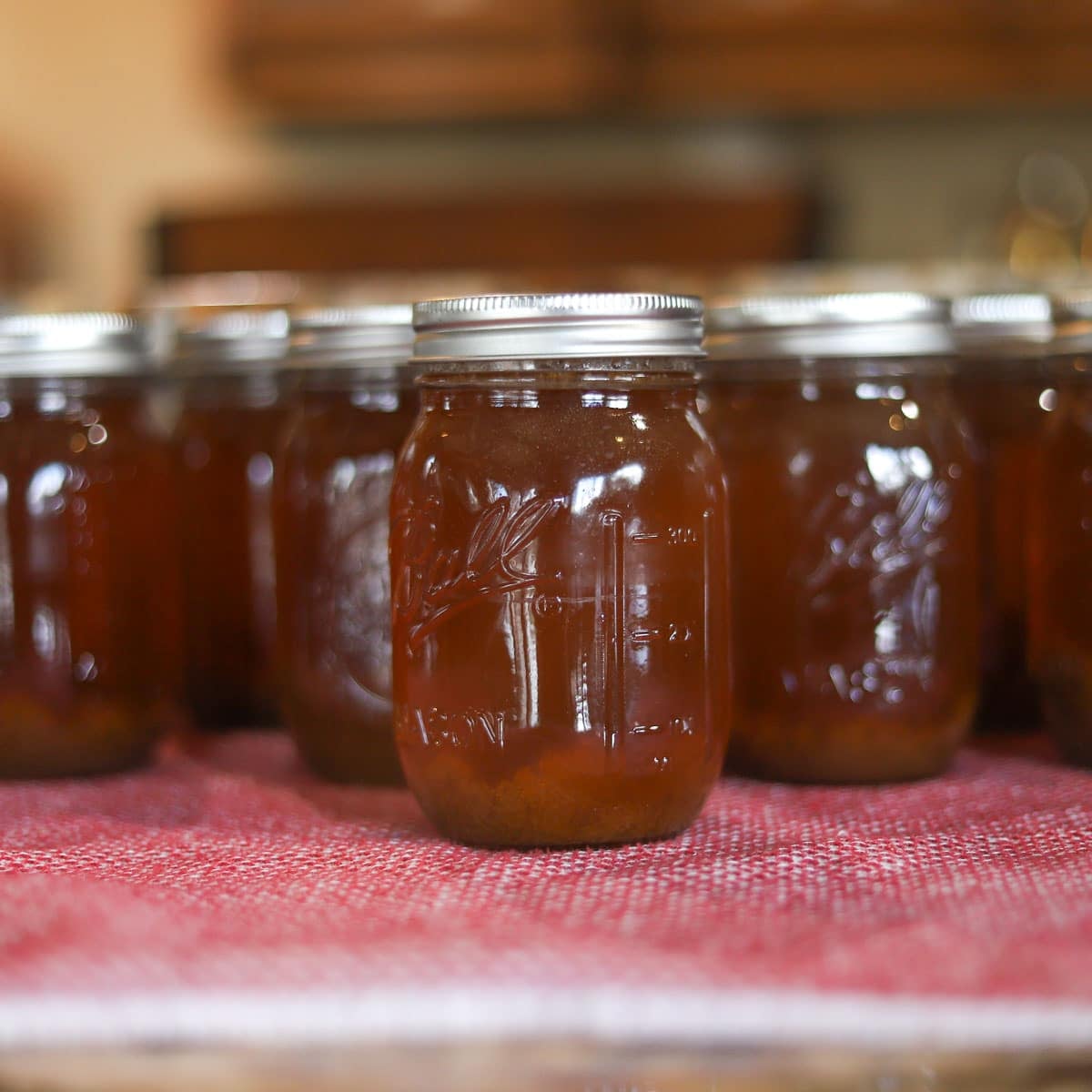
Homemade bone broth can be pressure-canned in mason jars for long storage. Because it's a low-acid food, it's not suitable for water bath canning. Head to Montana Homestead Harvest to learn about pressure canning bone broth.
Alternatively, this crock pot bone broth recipe can be stored in the refrigerator or frozen in freezer bags or ice cube trays.
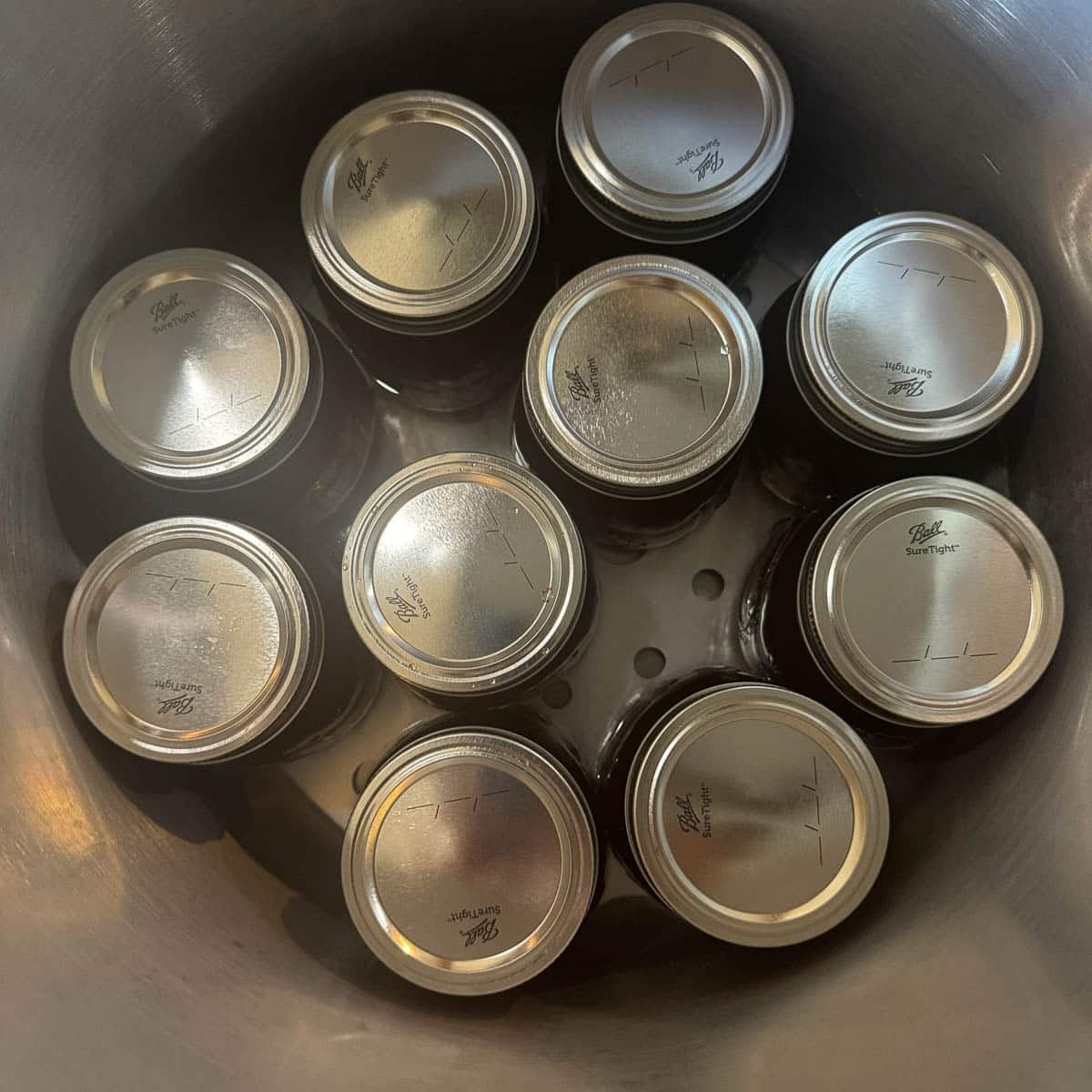
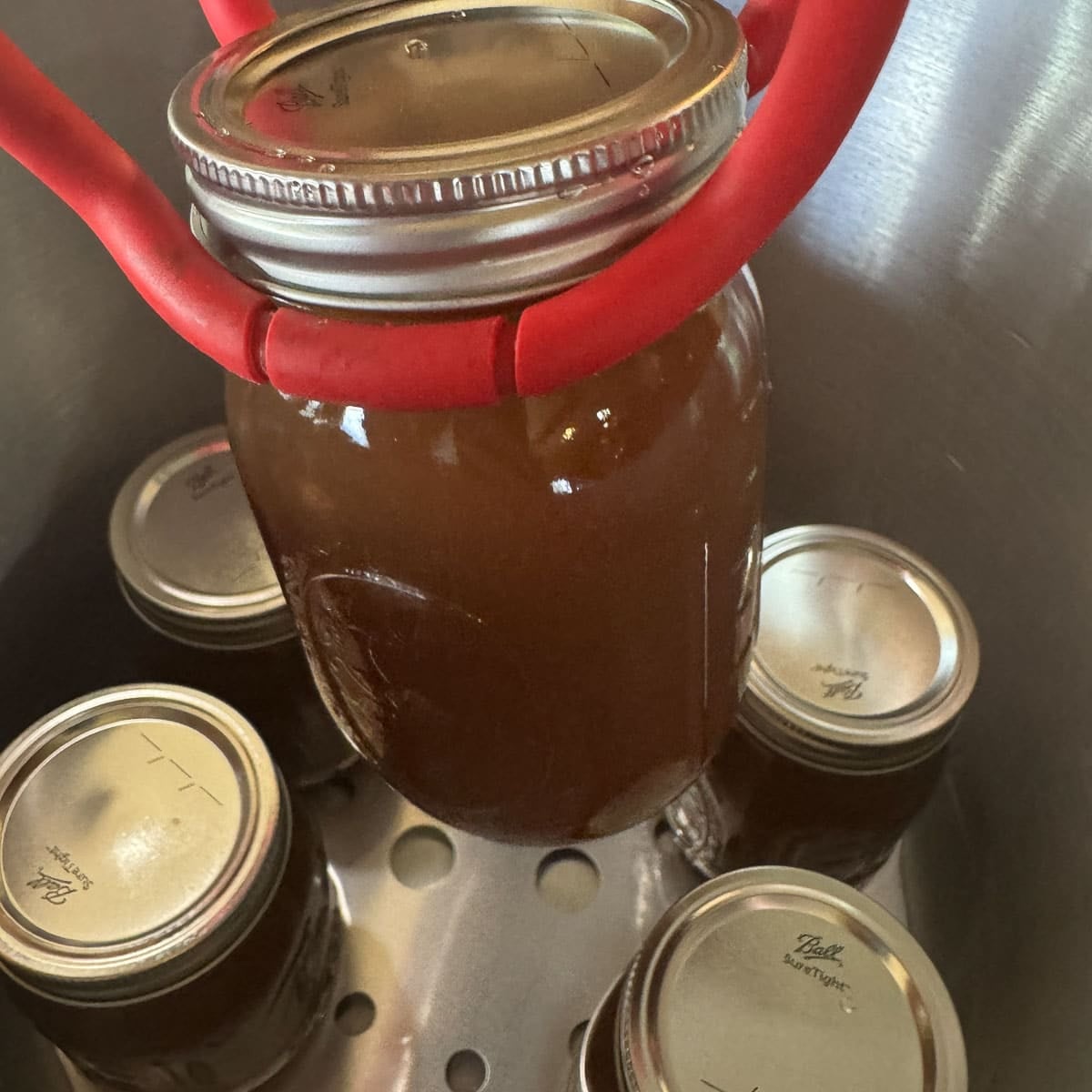
Finally, do not freeze jars of bone broth. When bone broth freezes, it expands. If the jar is filled too full, the expanding liquid has nowhere to go, and the glass can crack or shatter. Been there, done that, not fun!
🍵 Ways to Enjoy Bone Broth
As mentioned already, beef bone broth is excellent for sipping, especially when you're feeling under the weather. It also adds a ton of flavor to elk chili, prawn risotto, crock pot chili verde, Swiss chard soup, and other soups and stews.
🤷🏻♀️ Recipe FAQs
Knuckles or joints (for gelatin) + marrow bones (for richness) + something meaty like oxtail or shank (for flavor).
Bone broth can support fracture healing, but it's not a cure-all. It contains collagen, amino acids, and minerals that help support tissue repair and overall bone health. However, healing a fracture also depends on getting enough protein, calcium, vitamin D, and proper medical care. Think of bone broth as a nourishing addition to a balanced diet that supports recovery, rather than a treatment on its own.
Yes, slowly simmering the bones a second time (especially in a slow cooker) extracts even more beneficial compounds from the bones. The second batch can be canned as is or mixed with the first, stronger batch.
Adding a small amount of vinegar, usually apple cider vinegar or white vinegar, helps draw minerals such as calcium, magnesium, and phosphorus out of the bones and into the broth. The acidity gently breaks down the bone structure, making the broth more nutrient-rich. Don't worry, you won't taste the vinegar in the finished broth, especially after long, slow cooking. A tablespoon or two per pot is all you need.
If you don't use the right kind of bones, the bone broth won't gel. To ensure this does not happen, choose a combination of the following: oxtails, knuckles, and femur bones.
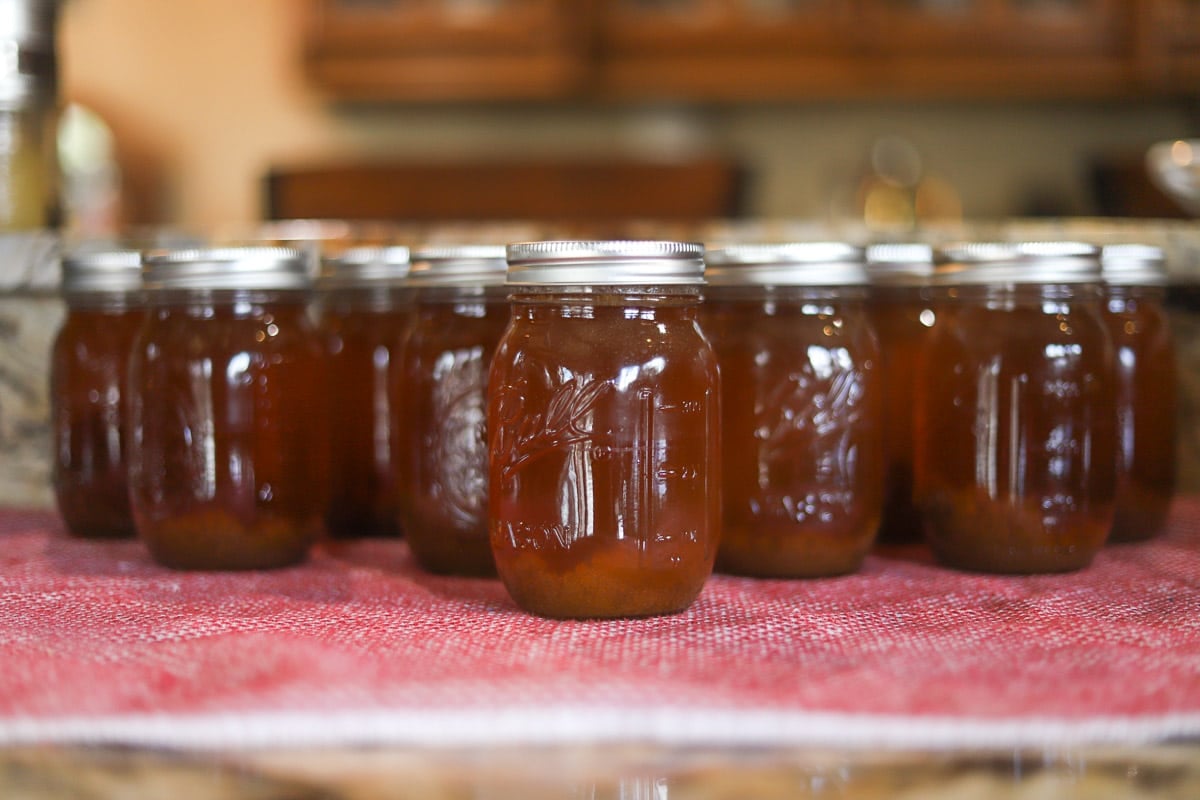
It's completely normal for bone broth to separate as it cools and sits. The cloudy layer or sediment at the bottom is made up of dissolved minerals and proteins like collagen that naturally settle over time. None of this means your broth has gone bad; it's actually a sign you extracted a lot of goodness from the bones.
👨🍳 Pro Tips
- This bone broth is naturally gluten-free when made with gluten-free tomato paste and wine, so it's safe for those avoiding gluten.
- Keep a gallon freezer bag in your freezer for beef bones, chicken carcasses, and vegetable scraps. Once the bag is full, you'll have everything you need to make a large batch of bone broth.
- Roasting beef bones at 425°F for 40 minutes before making broth gives the broth a much richer color and flavor. This step is especially helpful if you plan to use the broth in soups and gravies.
- Don't worry if the broth jells. High-quality bone broth often turns into a jelly-like consistency when refrigerated. That just means the collagen was successfully extracted from the bones, which is exactly what you want.
- Don't forget to label the jars with the contents and the date. Even though properly canned broth can last a long time, it's best used within 2 years for the best flavor and quality.
- Beef fat from bone broth can be used for cooking or added to homemade pet food.

🍅 Related Recipes
If you enjoy this crockpot bone broth recipe, here are some other recipes you may enjoy!

Did you make this recipe?
📖 Recipe
Would you like to save this recipe?
Crockpot Beef Bone Broth Recipe
Ingredients
Equipment
Method
- Arrange defrosted bones in a deep roasting pan and scatter carrots, celery, onions, and garlic around them. Brush bones with tomato paste on all sides, then drizzle everything with olive oil.
- Roast bones and veggies in a 425-degree oven for 40 minutes, flipping the bones halfway through.
- Transfer pan contents to a large crockpot. Use wine to deglaze the roasting pan. Pour wine and pan juices into a large crockpot, along with seasoning, herbs, a splash of vinegar (optional), and water. Bring to a boil on high, then simmer, covered, on low for 12 hours. Skim foam off the surface as needed.
- Use a slotted spoon or tongs to remove bones and vegetables from the crockpot, then carefully strain the bone broth into a clean pot. Once cool, refrigerate to allow the fat to solidify on the surface, then scrape it off and either discard it or save it for cooking.
- See blog post for making a second batch with the same bones. Otherwise, this recipe will yield 4 pints instead of 8.
- Homemade bone broth can be pressure-canned in mason jars for long storage. Because it's a low-acid food, it's not suitable for water bath canning. Head to Montana Homestead Harvest to learn about canning bone broth.
Nutrition
Notes
- Nutrition information is an estimate and will vary depending on the type of bones used, cooking time, and how much fat is removed from the broth.
- When preparing bone broth during cold winters, you can leave the covered pot on the porch until the fat solidifies. This is especially helpful when you have no room in the fridge for a large stockpot.
- Keep a gallon freezer bag in your freezer for beef bones, chicken carcasses, and vegetable scraps. Once the bag is full, you'll have everything you need to make a large batch of bone broth.
- Roasting beef bones at 425°F for 40 minutes before making broth gives the broth a much richer color and flavor. This step is especially helpful if you plan to use the broth in soups and gravies.
- Don't worry if the broth jells. High-quality bone broth often turns into a jelly-like consistency when refrigerated. That just means the collagen was successfully extracted from the bones, which is exactly what you want.
- Don't forget to label the jars with the contents and the date. Even though properly canned broth can last a long time, it's best used within 2 years for the best flavor and quality.
- Beef fat from bone broth can be used for cooking or added to homemade pet food.
Hilda Sterner says
I hope you try this beef bone broth soon & come back & let us know what you think!