

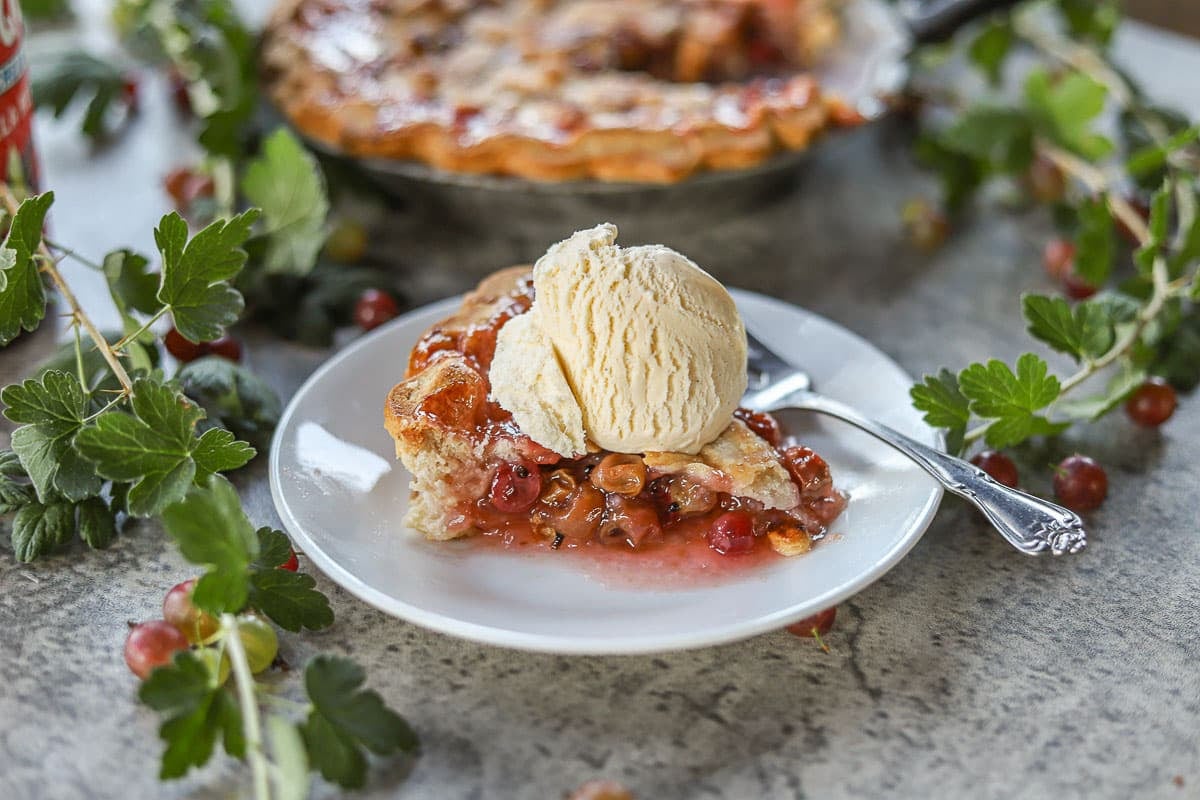
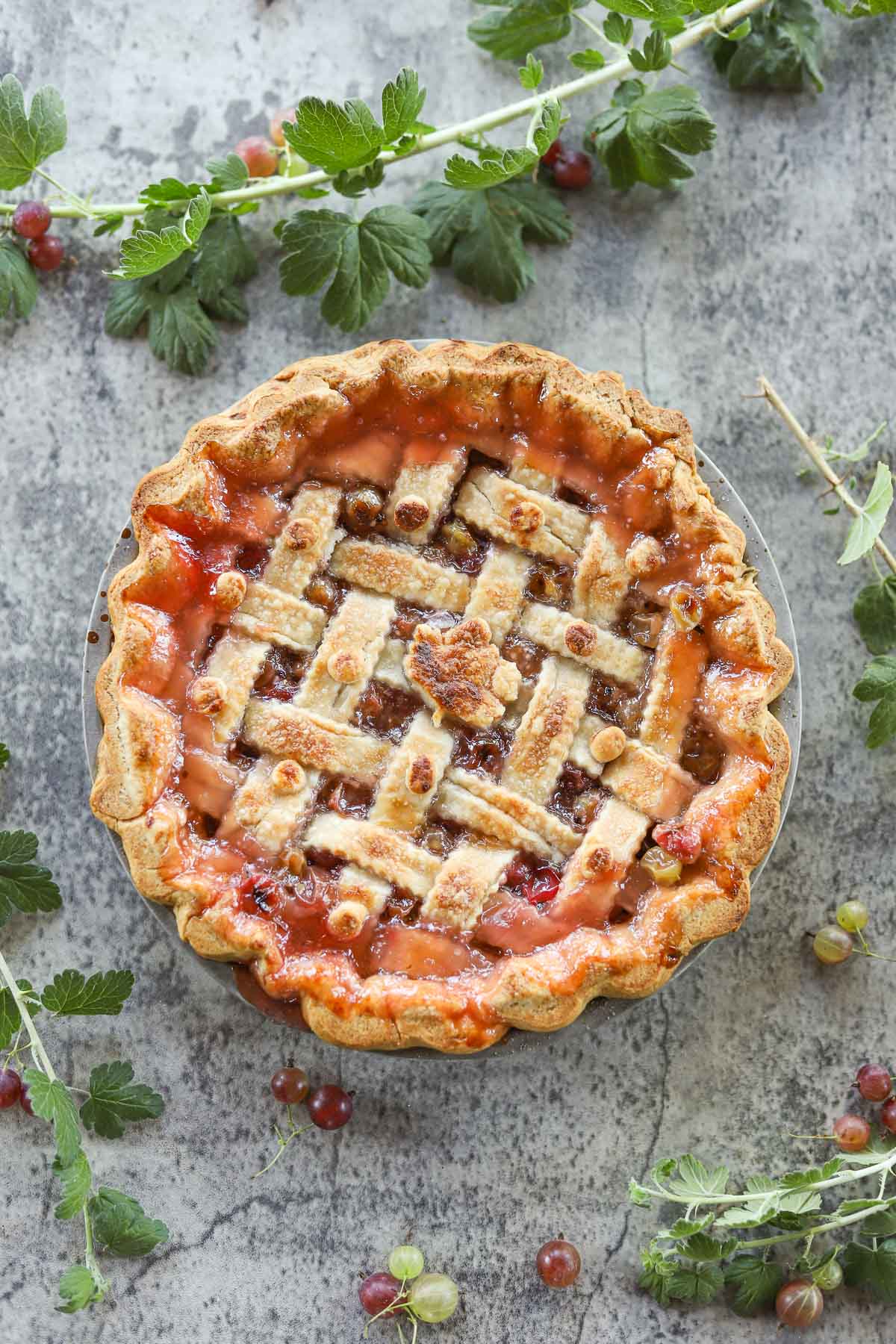
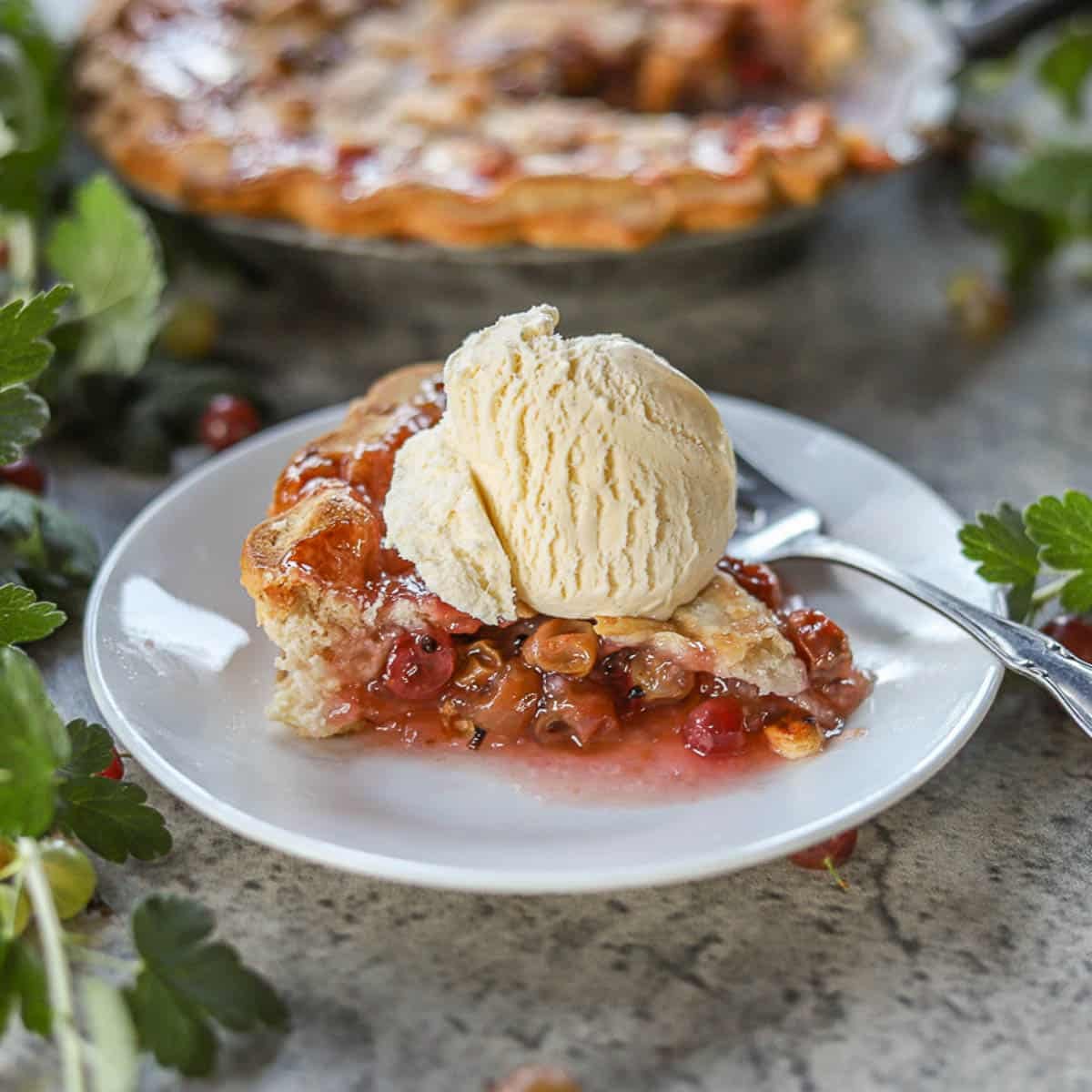
If you have gooseberries and aren't sure what to make, this gooseberry pie recipe is a great place to start! Gooseberry pie is a classic summer dessert that perfectly balances sweet and tart flavors. Serve it on its own or topped with a scoop of vanilla ice cream. And if you have any gooseberries left, try my gooseberry jam!
Would you like to save this recipe?
What would you do if a friend asked you to come pick gooseberries from their loaded gooseberry bush? I don't know about you, but when my friend Lori invited me over, I jumped at the chance! I have a gooseberry bush too, but this year it produced more thorns than gooseberries.
Once I had a bag full of gooseberries, I had to decide what to make. It was a toss-up between gooseberry wine and gooseberry pie. But in the end, I had enough for this pie and a gooseberry-strawberry wine.
If you've never had gooseberry pie before, imagine the sweet-tart flavor of rhubarb pie, but with a subtle fruity twist. If you're a fan of my rhubarb pie recipe, I think you'll love this one too!
Jump to:
🔖 Ingredients & Substitutions
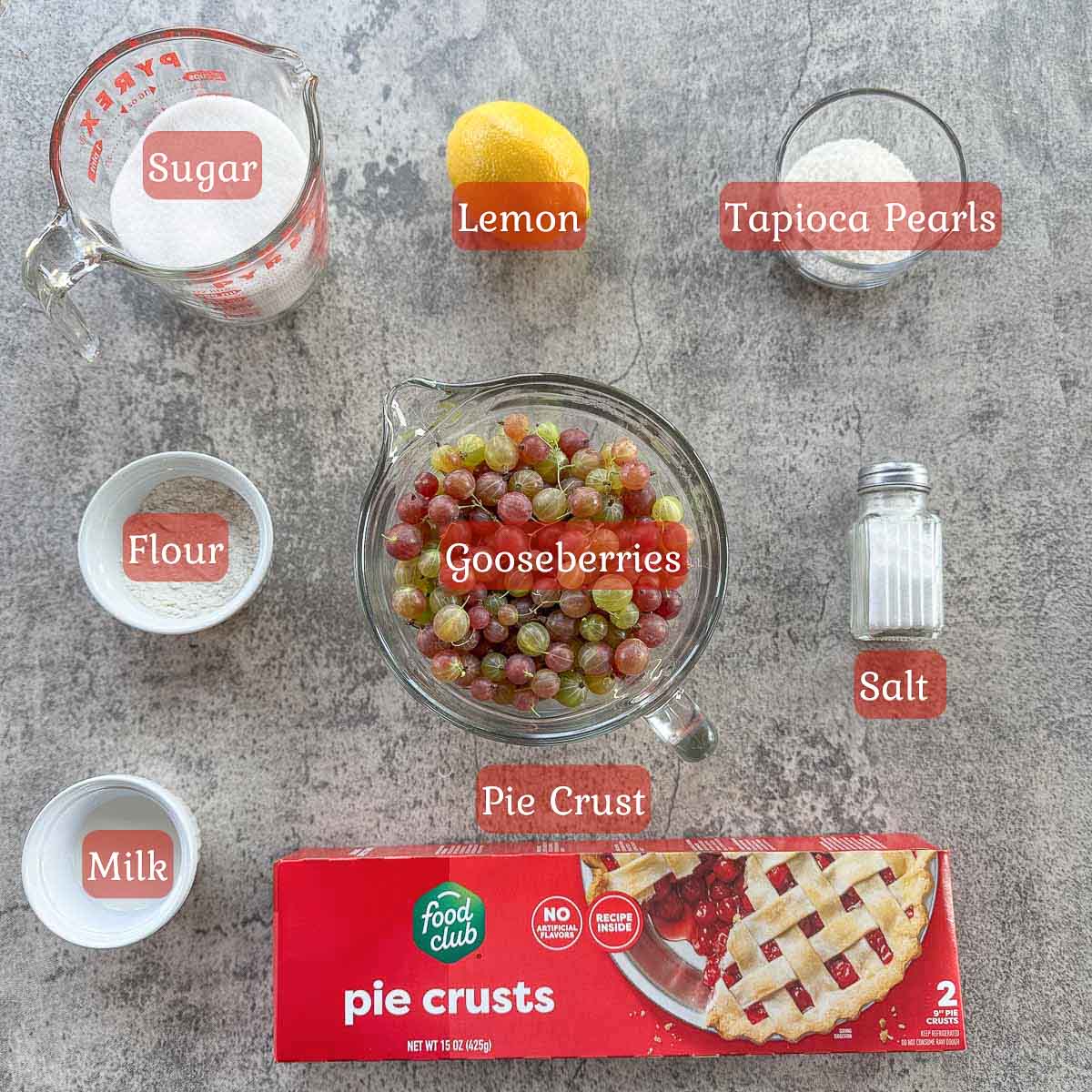
- Gooseberries: 4 cups of ripe gooseberries. I had a combination of red and green gooseberries.
- Pie Crust: Two pie crusts; one for the bottom crust, and one to cut into strips to make a lattice top.
- Sugar: Granulated sugar
- Tapioca Pearls: To thicken the filling.
- Citrus: Lemon juice and zest to add brightness and to help thicken the filling.
- Milk: Whole milk to brush the lattice top before baking the pie.
*See recipe card for complete list of ingredients.
🥧 How to Make Gooseberry Pie
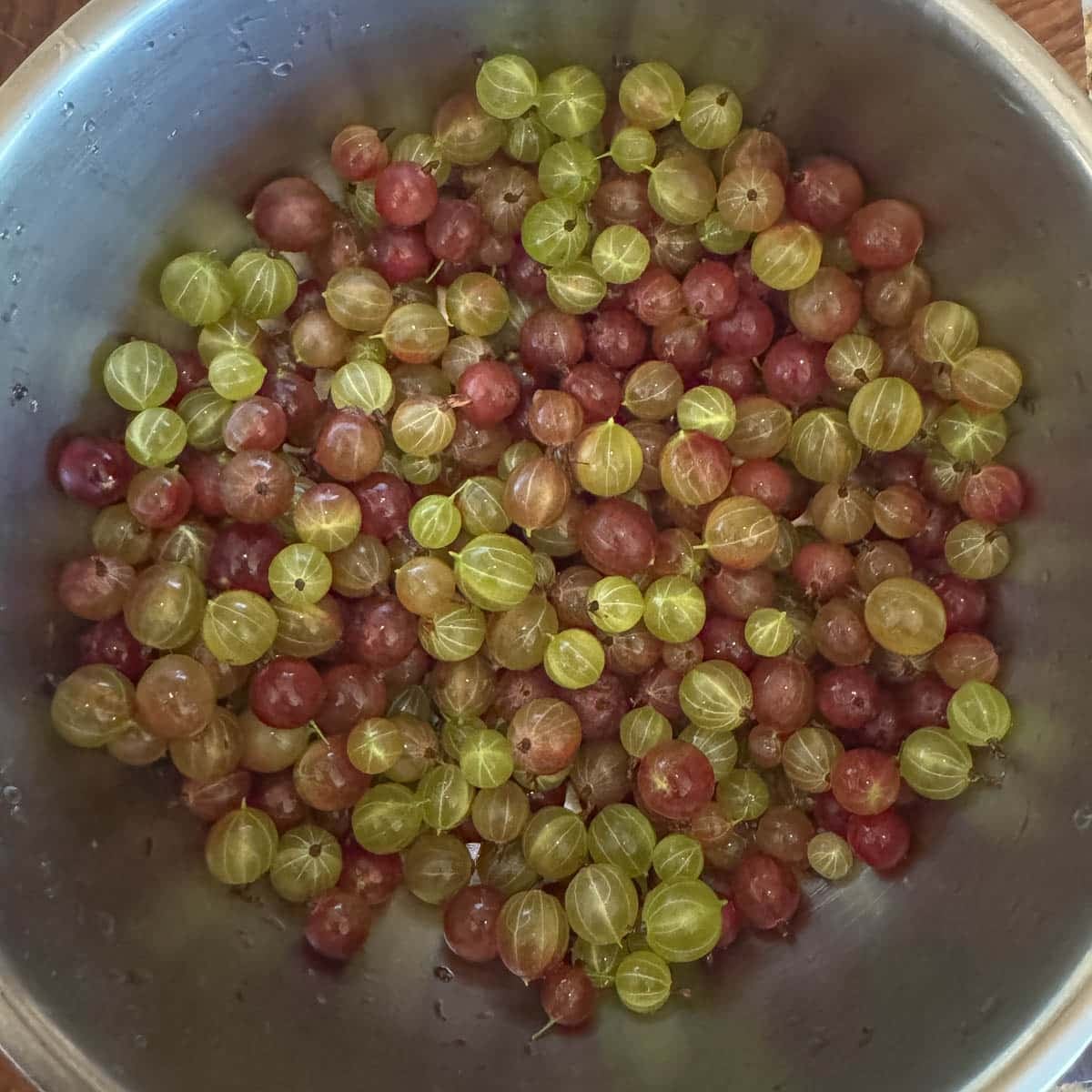
Step 1: Remove the stems from the gooseberries, then rinse. Add gooseberries to a medium saucepan with sugar, reserving 2 teaspoon for sprinkling over the top crust. Add lemon juice, zest, salt, and water. Cook over low heat for 5 to 10 minutes, or until sugar dissolves and gooseberries begin to collapse. Transfer mixture to a bowl and allow it to cool. Once it's no longer hot, stir in tapioca pearls.
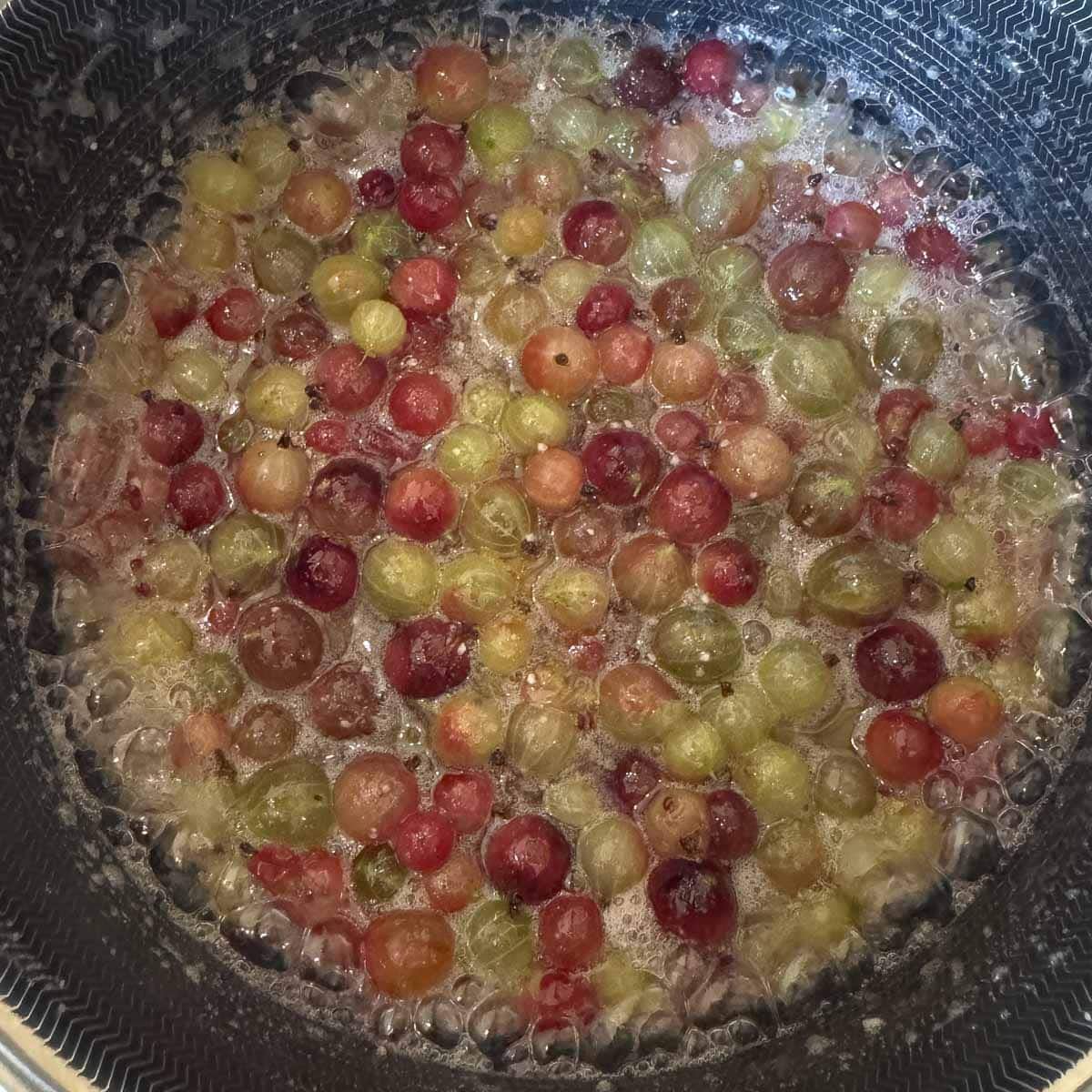
Pro Tip: Normally, you'd let the filling rest for about 15 minutes to give the tapioca pearls time to absorb some of the liquid. However, since weaving a lattice crust typically takes 10 to 15 minutes, you can pour the filling directly into the pie shell and let the tapioca hydrate while you assemble the lattice.
Step 2: Fit one pastry crust into a 9-inch pie plate, leaving a ½-inch overhang around the edges. Trim excess dough with kitchen shears, then sprinkle the flour over the bottom of the unbaked crust before pouring in the pie filling.
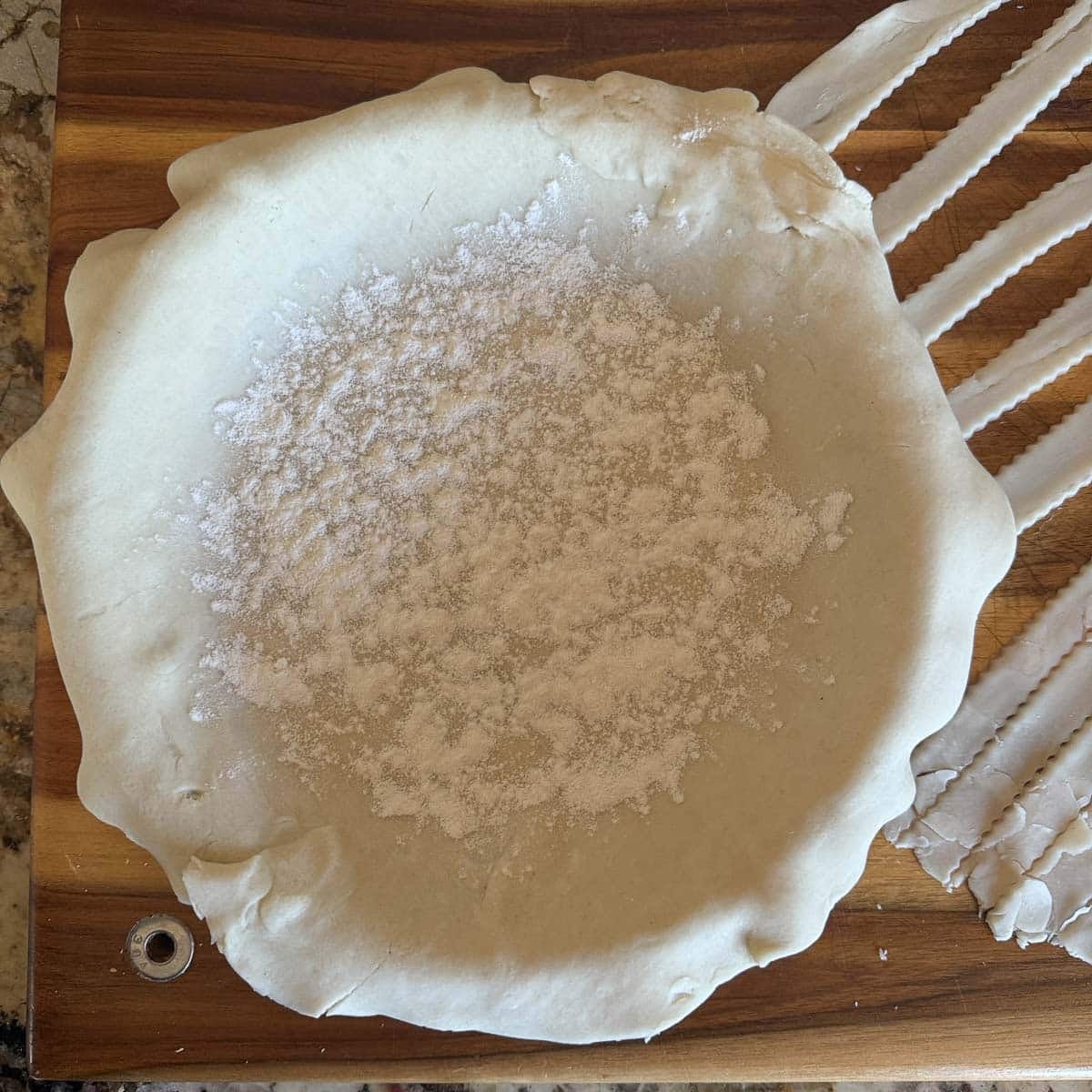
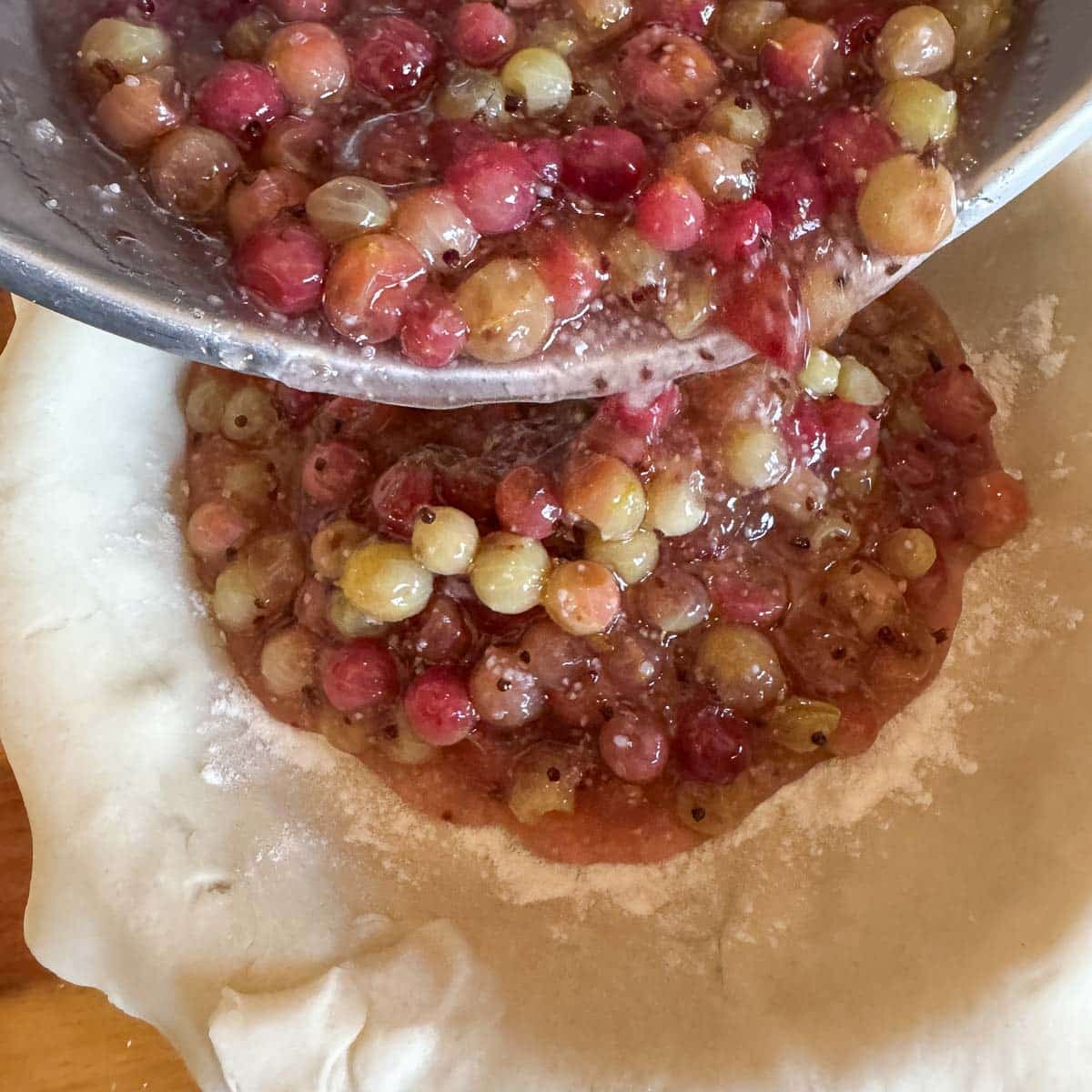
Step 3: Roll out the second crust, then cut it into ½-inch to ¾-inch strips. Weave the strips over and under one another to create a lattice pattern over the top of the pie. Trim any excess dough, then crimp the edges to seal. Brush the lattice with milk, then sprinkle with reserved sugar.
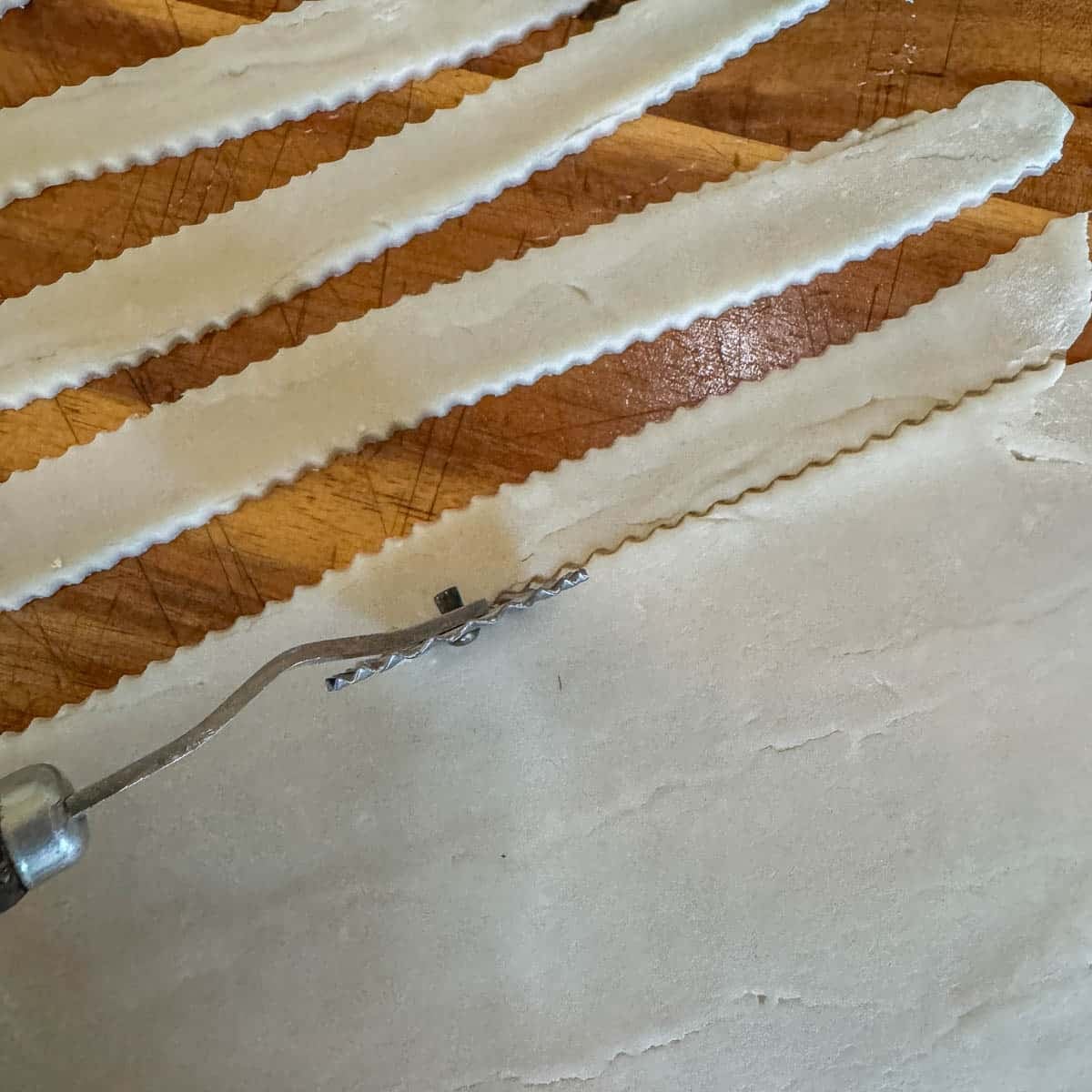
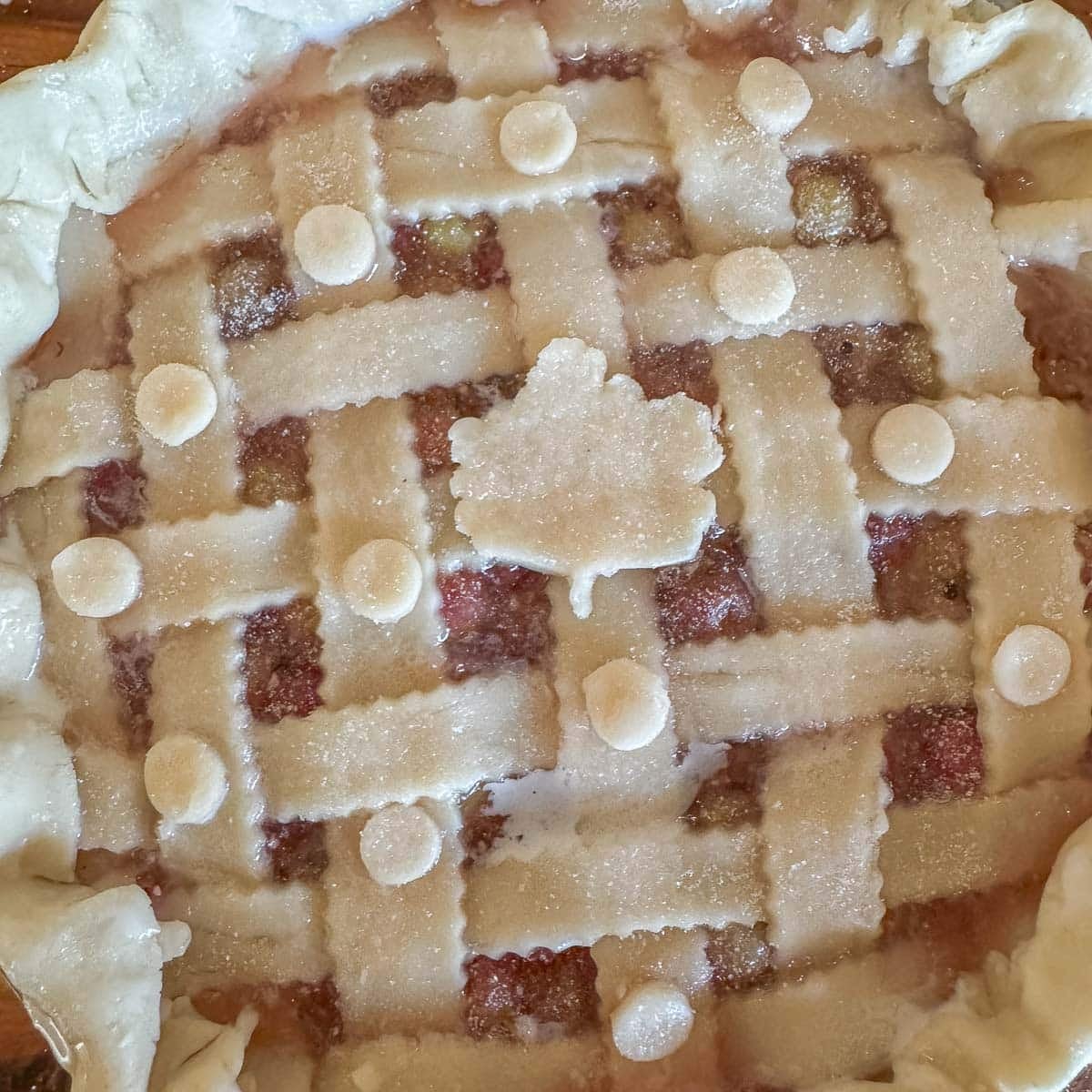
Step 4: Place the pie pan on a baking sheet to catch any drips, then cover the edges with foil or a pie shield to prevent over-browning. Bake on the middle rack of a preheated 400°F oven for 10 minutes. Reduce the oven temperature to 375°F and continue baking for 30 minutes, or until the filling is bubbling vigorously through the lattice and has thickened.
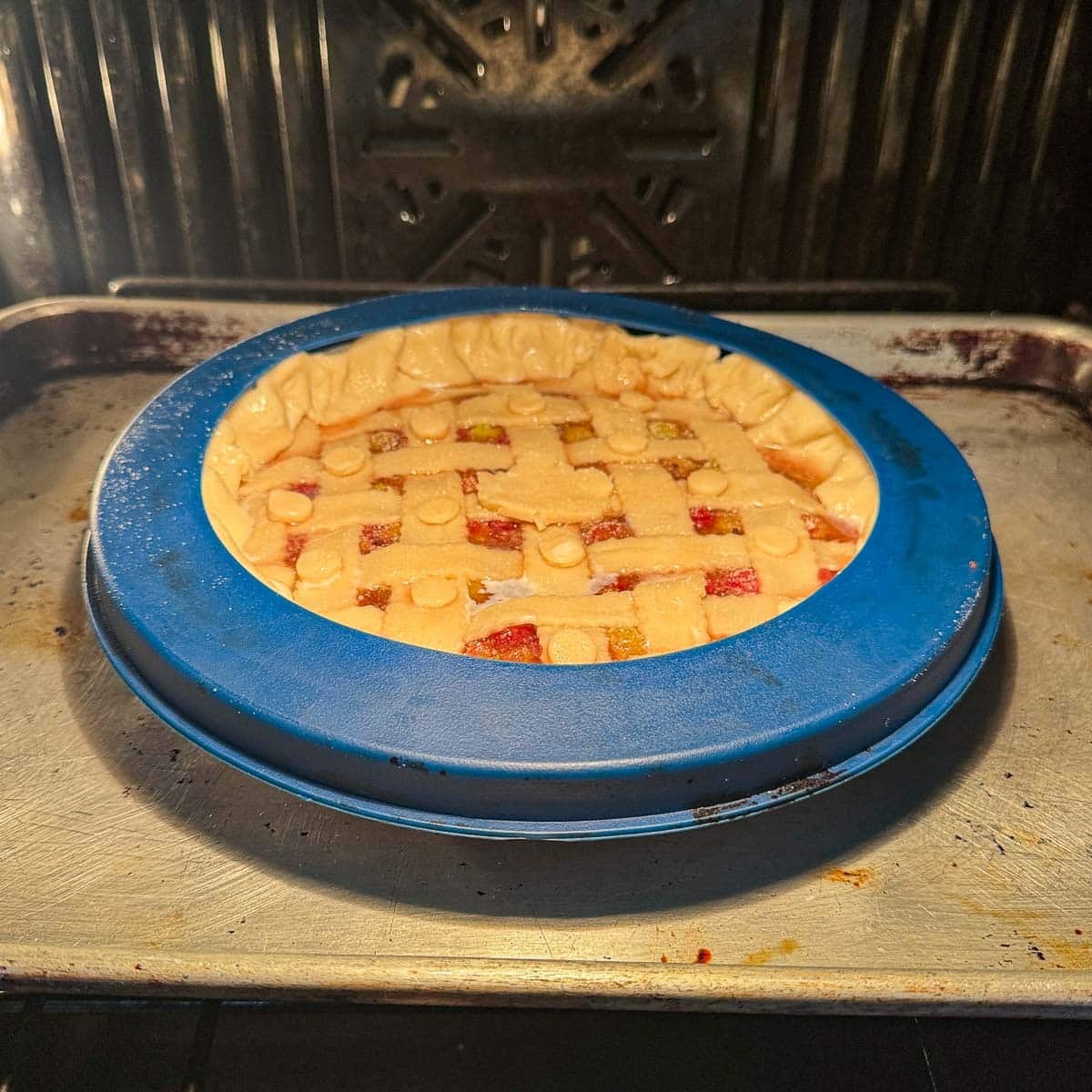
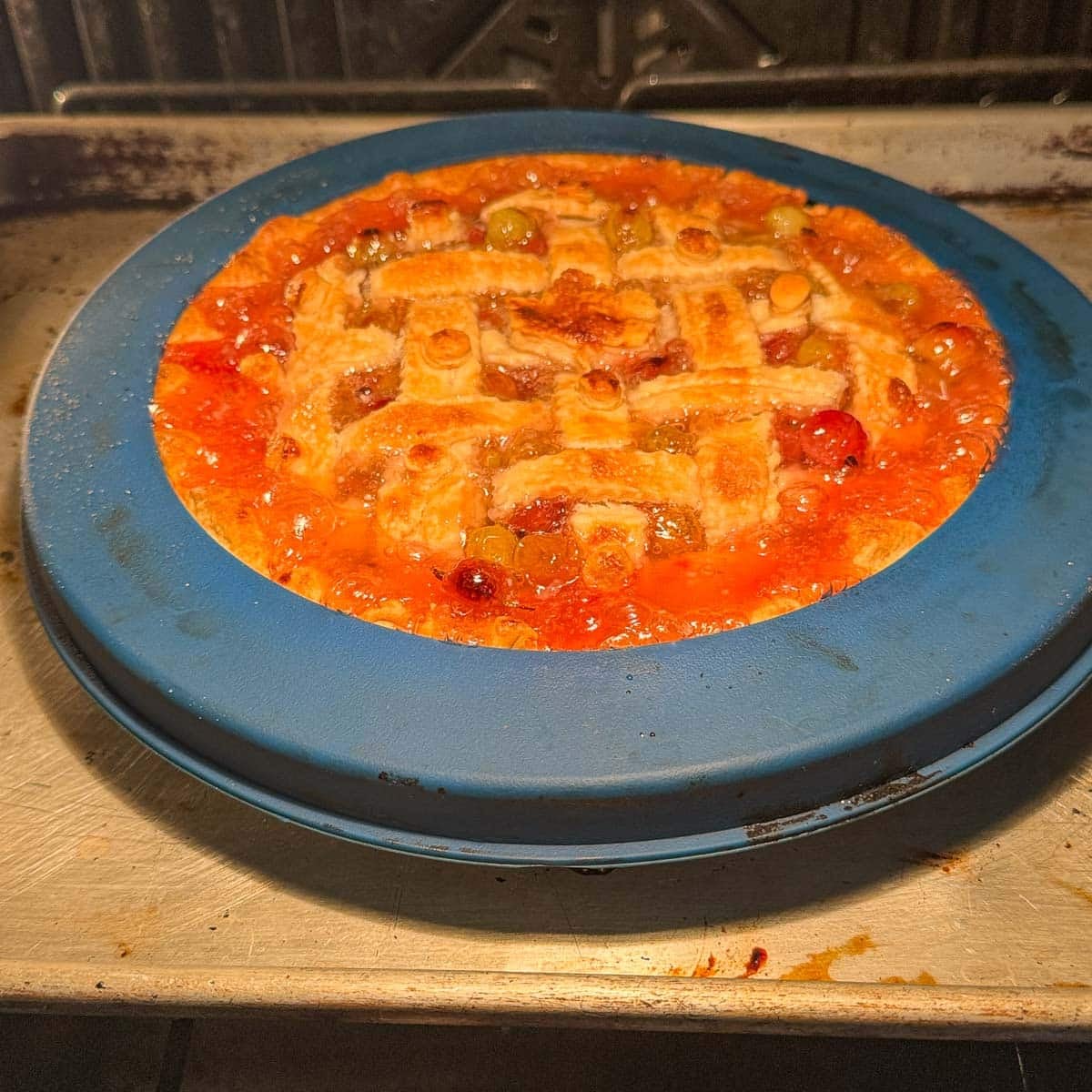
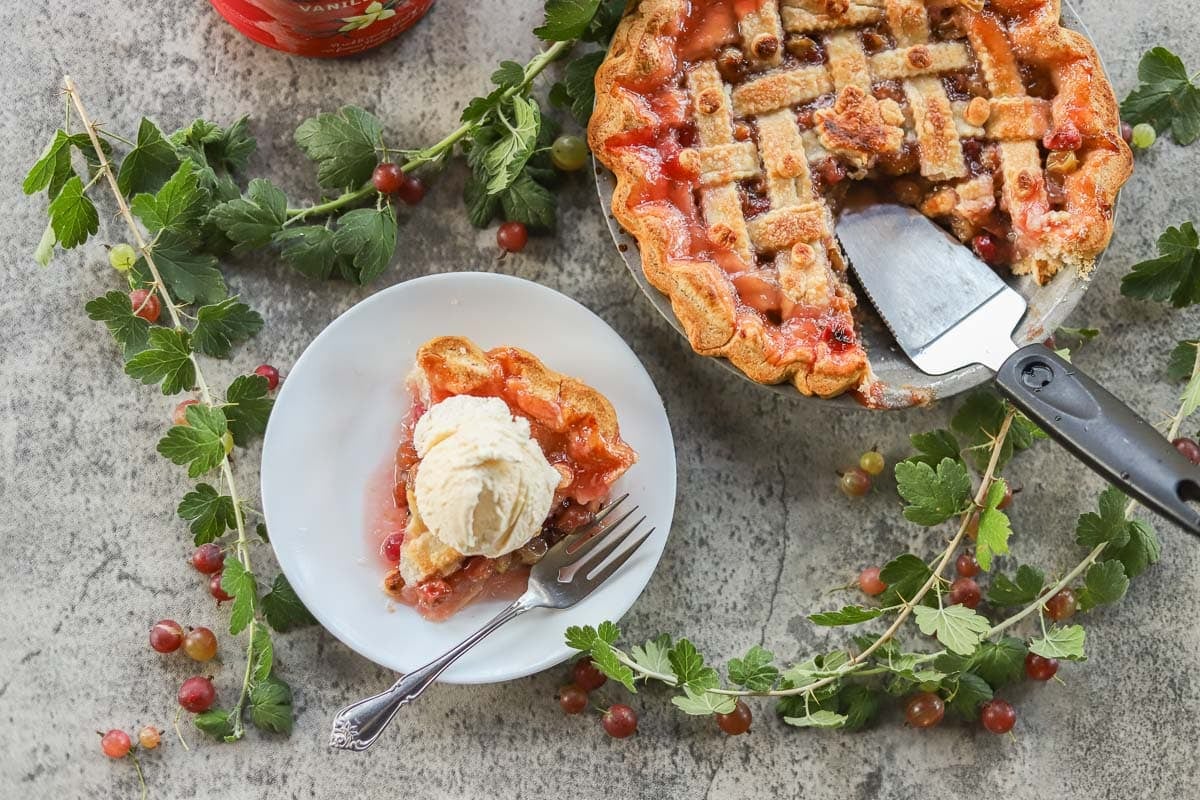
Step 5: Allow the pie to cool completely at room temperature, then refrigerate for a few hours, or until fully set. Serve with a scoop of vanilla ice cream.
🍓 Variations
- Add 1 cup of strawberries or raspberries for a sweeter filling.
- Sprinkle with coarse sanding sugar over the crust instead of granulated sugar for extra sparkle and crunch.
- Add ½ teaspoon of cinnamon or cardamom to complement the tart berries.
- Substitute orange zest and juice for lemon zest and juice for a slightly different citrus flavor.
Recipe FAQ's
Can I leave the stems and tails on gooseberries?
Yes. While many recipes recommend removing the stems and ends, I removed the stems but left the ends on. Once the berries are cooked, you'll never know the difference, and it saves you a lot of time!
Do you need to peel gooseberries?
No. Gooseberries have thin skins that soften during cooking, so there's no need to peel them.
Can I use frozen gooseberries?
Yes, frozen gooseberries can be used to make gooseberry pie. You can add them while still frozen, or thaw and drain them first to remove excess liquid. However, you'll need to add extra thickener to account for the extra liquid.
Why is my gooseberry pie runny?
A runny pie is usually caused by not using enough thickener, underbaking the pie, or slicing it before the filling has had time to cool and set.
How should I store gooseberry pie?
Cover the pie with foil and store it in the refrigerator for up to 4 days. Serve chilled, at room temperature, or warm individual slices before serving.
👩🏼🍳 Pro Tips
- Use ripe gooseberries because they are sweeter and require less sugar.
- Don't skip the flour and tapioca. They work together to thicken the filling and help prevent a runny pie.
- Chill the dough for 10 to 15 minutes if it becomes too soft to weave. Cold dough is much easier to handle.
- You can use the leftover dough pieces to decorate the top of the pie.
- If the crust reaches your desired golden brown before the filling is done, loosely cover the pie with foil for the remaining baking time.
More Delicious Pie Recipes
If you enjoy this gooseberry pie recipe, check out these other yummy pies!

Did you make this recipe?
📖 Recipe
Would you like to save this recipe?
Ingredients
Equipment
Method
- Remove the stems from the gooseberries, then rinse. Add gooseberries to a medium saucepan with sugar, reserving 2 teaspoons for sprinkling over the top crust. Add lemon juice, zest, salt, and water. Cook over low heat for 5 to 10 minutes, or until sugar dissolves and gooseberries begin to collapse. Transfer mixture to a bowl and allow it to cool. Once it's no longer hot, stir in tapioca pearls.
- Fit one pastry crust into a 9-inch pie plate, leaving a ½-inch overhang around the edges. Trim excess dough with kitchen shears, then sprinkle the flour over the bottom of the unbaked crust before pouring in the pie filling.
- Roll out the second crust, then cut it into ½-inch to ¾-inch strips. Weave the strips over and under one another to create a lattice pattern over the top of the pie. Trim any excess dough, then crimp the edges to seal. Brush the lattice with milk, then sprinkle with reserved sugar.
- Place the pie pan on a baking sheet to catch any drips, then cover the edges with foil or a pie shield to prevent over-browning. Bake on the middle rack of a preheated 400°F oven for 10 minutes. Reduce the oven temperature to 375°F and continue baking for 30 minutes, or until the filling is bubbling vigorously through the lattice and has thickened.
- Allow the pie to cool completely at room temperature, then refrigerate for a few hours, or until fully set. Serve with a scoop of vanilla ice cream.
Nutrition
Notes
- Normally, you'd let the filling rest for about 15 minutes to give the tapioca pearls time to absorb some of the liquid. However, since weaving a lattice crust typically takes 10 to 15 minutes, you can pour the filling directly into the pie shell and let the tapioca hydrate while you assemble the lattice.
- Use ripe gooseberries because they are sweeter and require less sugar.
- Don't skip the flour and tapioca. They work together to thicken the filling and help prevent a runny pie.
- Chill the dough for 10 to 15 minutes if it becomes too soft to weave. Cold dough is much easier to handle.
- You can use the leftover dough pieces to decorate the top of the pie.
- If the crust reaches your desired golden brown before the filling is done, loosely cover the pie with foil for the remaining baking time.
Reyna Stoken says
This pie is so good! Most pie is just too sweet for me, my mom used to make me strawberry rhubarb with less sugar than recommended so it would be tart and perfect with ice cream. This pie reminded me of that, love the tangy, tart yet sweet fruity flavor.
Hilda Sterner says
Oh, I didn't know you liked strawberry rhubarb pie, you should try mine! 👀 Glad you enjoyed this one though!
Hilda Sterner says
We hope you love this gooseberry pie recipe as much as we do!