
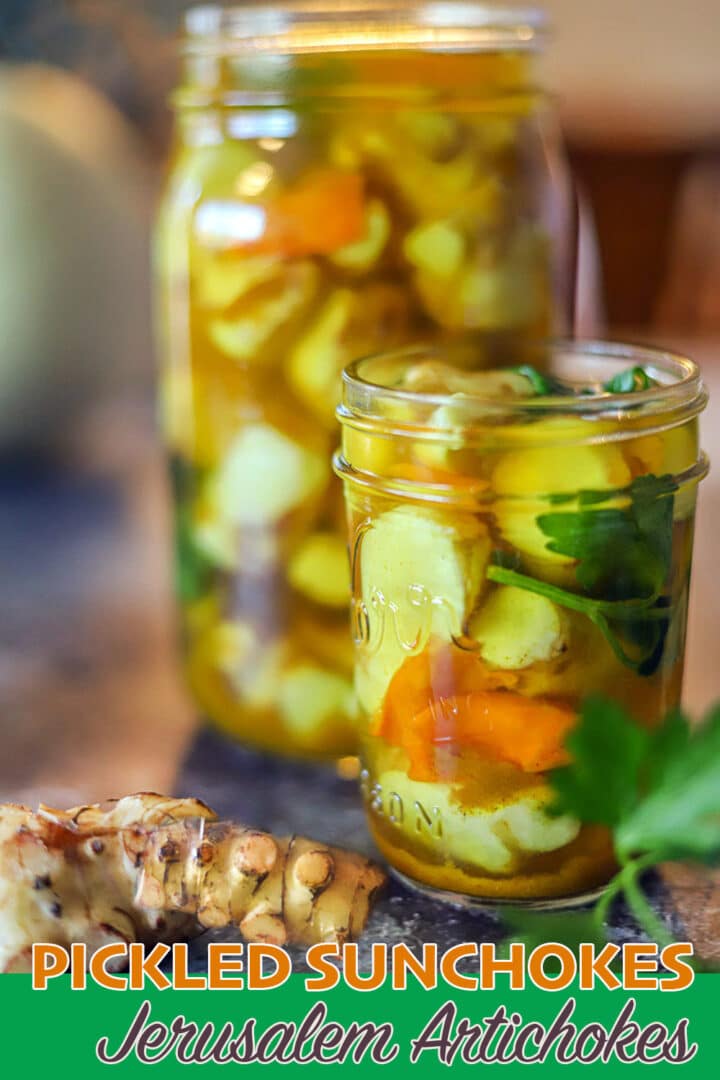
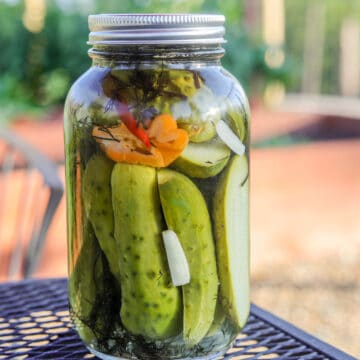
In this Jerusalem artichokes recipe, I'll be sharing my favorite way to enjoy these surprisingly sweet and nutty tubers...pickled! There are many sunchoke recipes online, but this is by far my favorite! Torshi, including pickled artichokes, are served on the side with most Assyrian meals!
Would you like to save this recipe?
"Sunchokes" are called "Khabooysheh't Arah" in Assyrian. This name translates to "Ground Apples." "Earth Apples" also happens to be one of their names in English. Other names include "Sunroot" and "Canada potatoes."
Sometimes Jerusalem artichokes are hard to digest, but pickling them makes them much easier to digest! So if you have some of these yummy tubers on hand and are wondering what to do with them, try this pickled Jerusalem artichoke recipe!
Jump to:
🔖 Ingredients & Substitutions
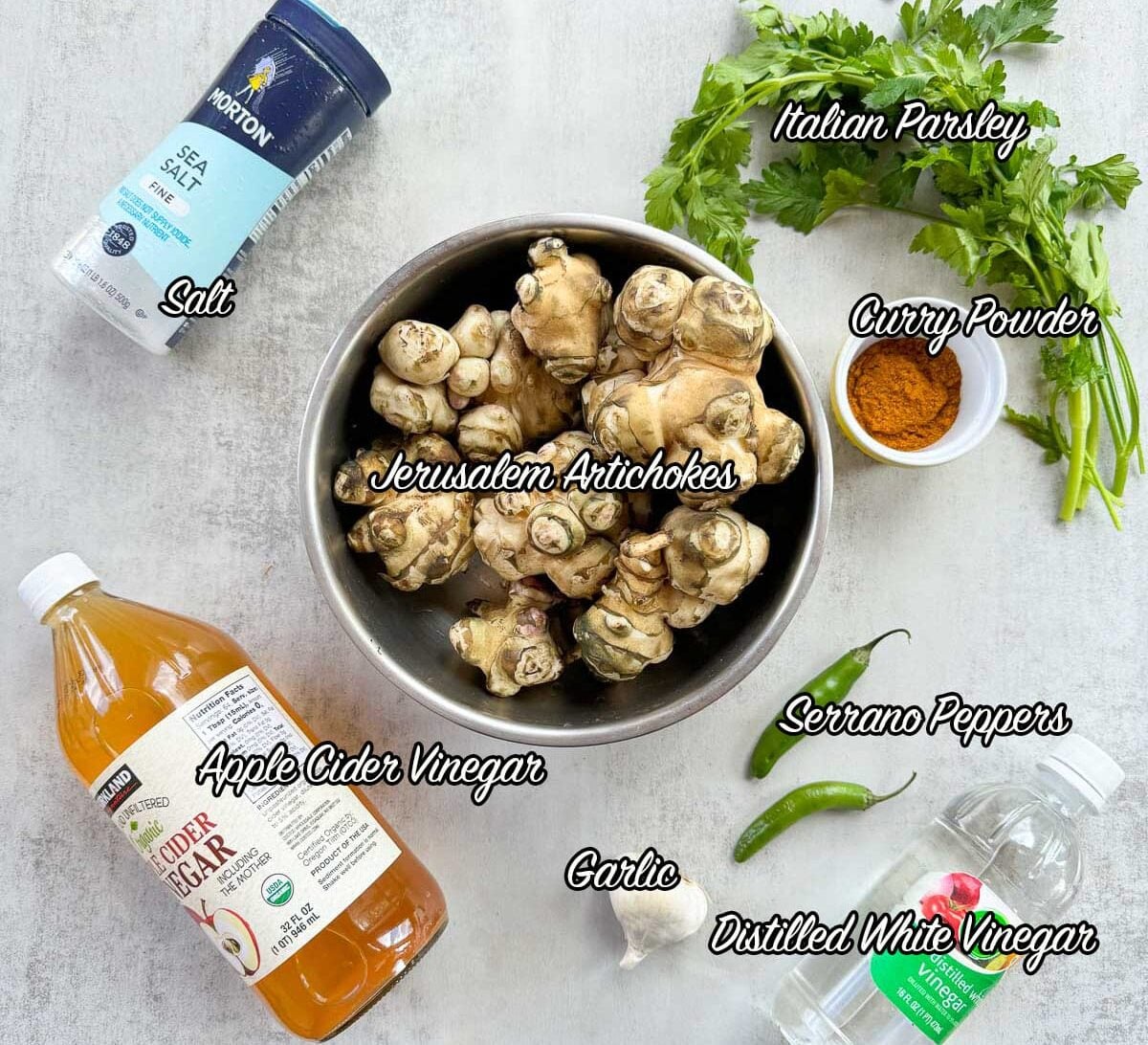
- Sunchokes: Sunchokes can be found in the Fall in some health food stores or ethnic markets. They can be listed as "Sunflower Chokes" or "Jerusalem artichokes." They can also be grown by sticking the tubers into the ground. Once planted, the tubers spread and multiply in number and can be harvested in the Fall.
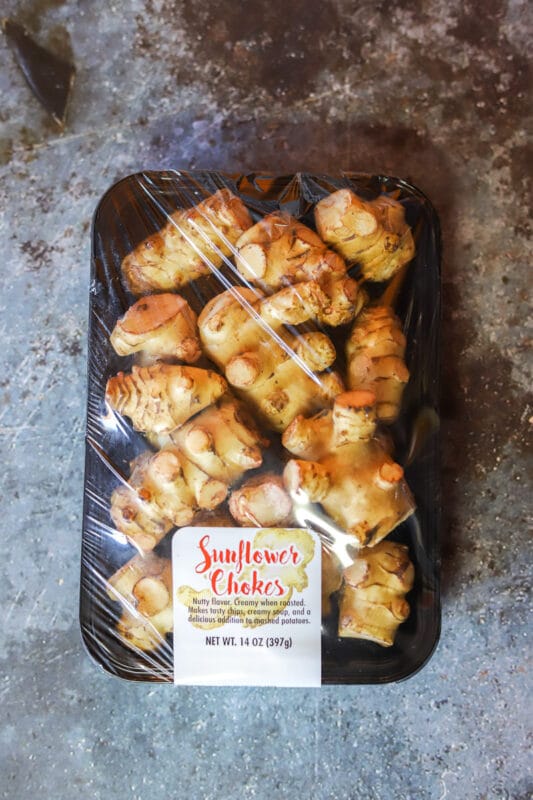
- Curry: Curry powder comes in both hot and mild varieties; either may be used in this recipe.
- Vinegar: I like to use a combination of apple cider vinegar and distilled white vinegar. However, you can choose either one.
- Peppers: Spicy peppers like habaneros are not added traditionally, but I like to add them. Feel free to leave them out.
*See recipe card for a full list of ingredients.
🌻 How to Make Pickled Jerusalem Artichokes
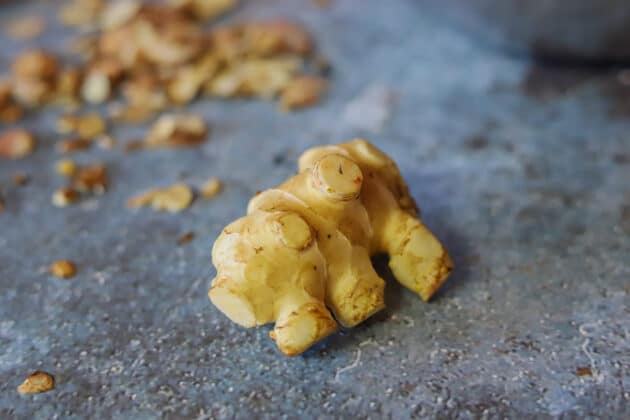
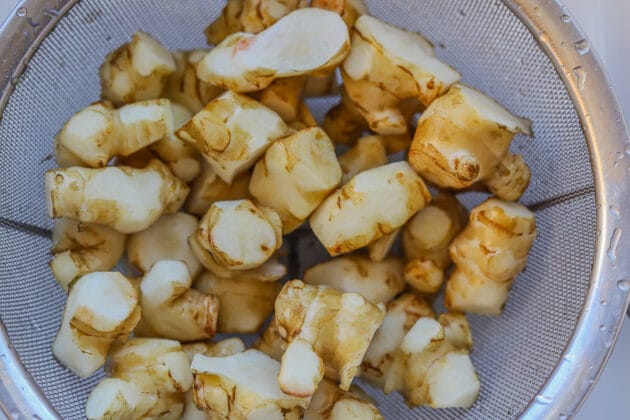
Step 1: Thoroughly clean sunchokes to remove all the soil and dirt. Trim any dark spots or knots off, and peel if needed.
Step 2: Stir half of the salt into one quart (4 cups) of cold water, and mix until the salt is dissolved. Place sunchokes in a large sterilized jar. Cover with the brine solution.


Step 3: Leave the lid untightened to allow the gases to escape. Place the bottle in a dark location for one week.
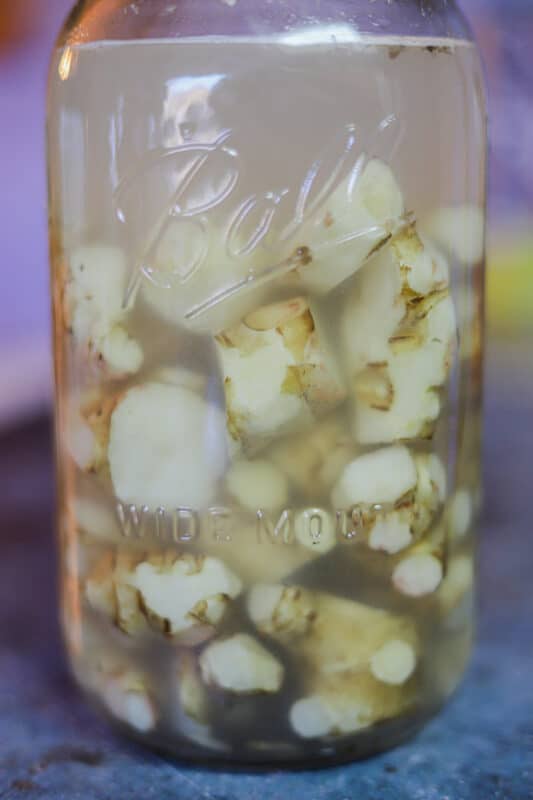
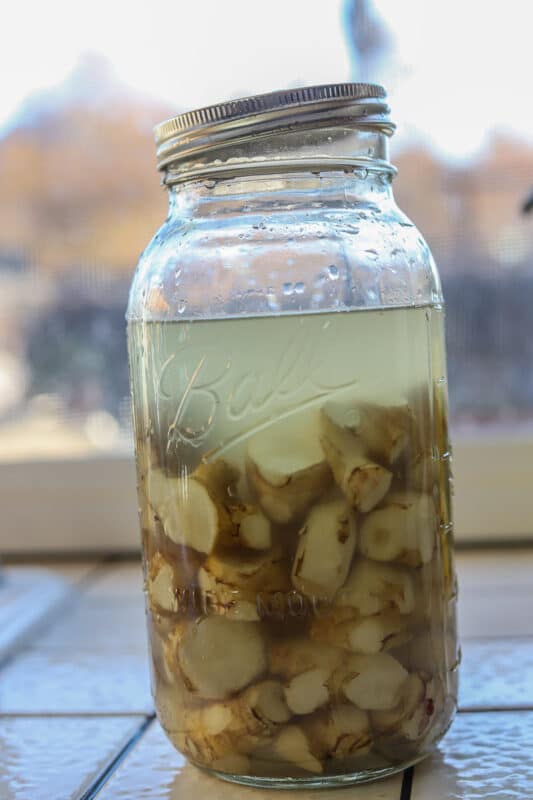
Step 4: Check the bottled sunchokes after three days. There should be a build-up of gases. If not, be patient; it will happen.

Step 5: When the brine does get murky and the gases float to the surface, drain the old brine and make a new batch. Brine the sunchokes for approximately four more days.
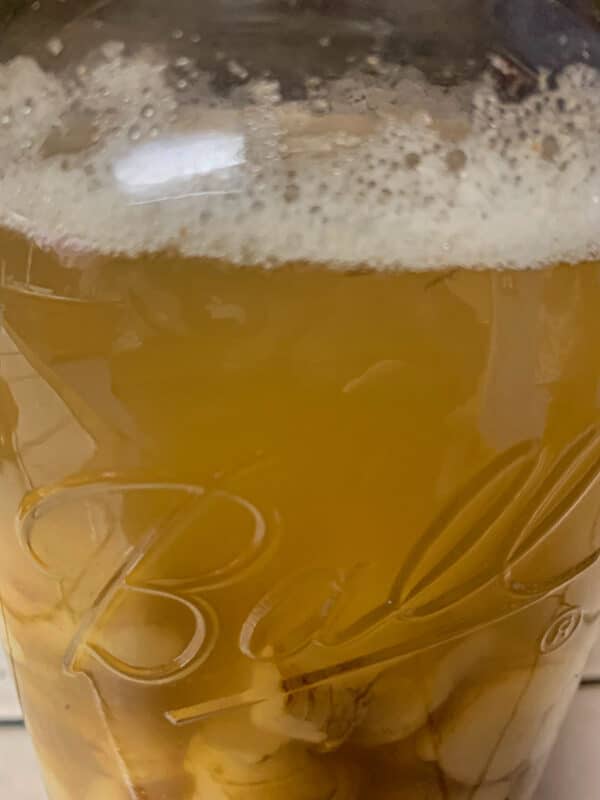
Step 6: Once the sunchokes have been brined for one week, remove them from the brine and rinse them with fresh, cold water.
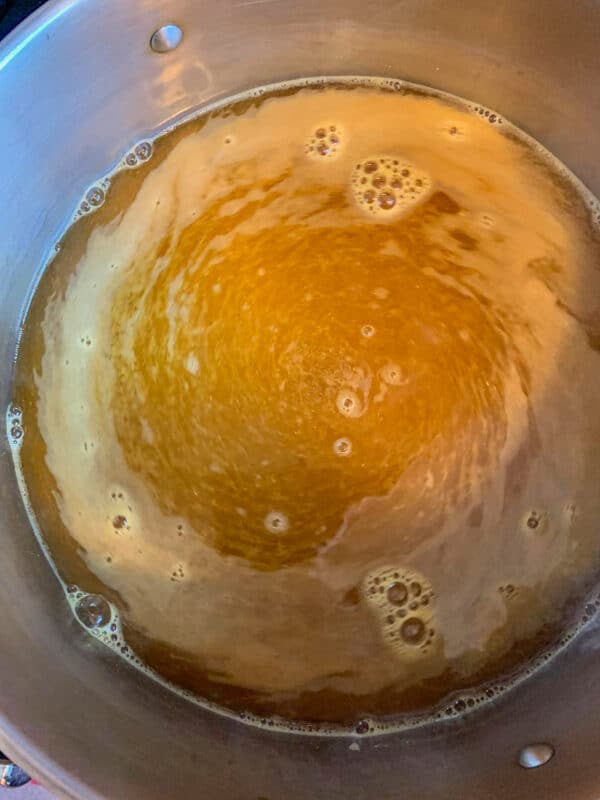
Step 7: Pour vinegar into a saucepan and stir in curry, salt, and sugar. Stir over low to medium heat until salt and sugar dissolve.
Step 8: Stir in garlic, parsley, and chilis (if using) and pour over the Jerusalem artichokes.

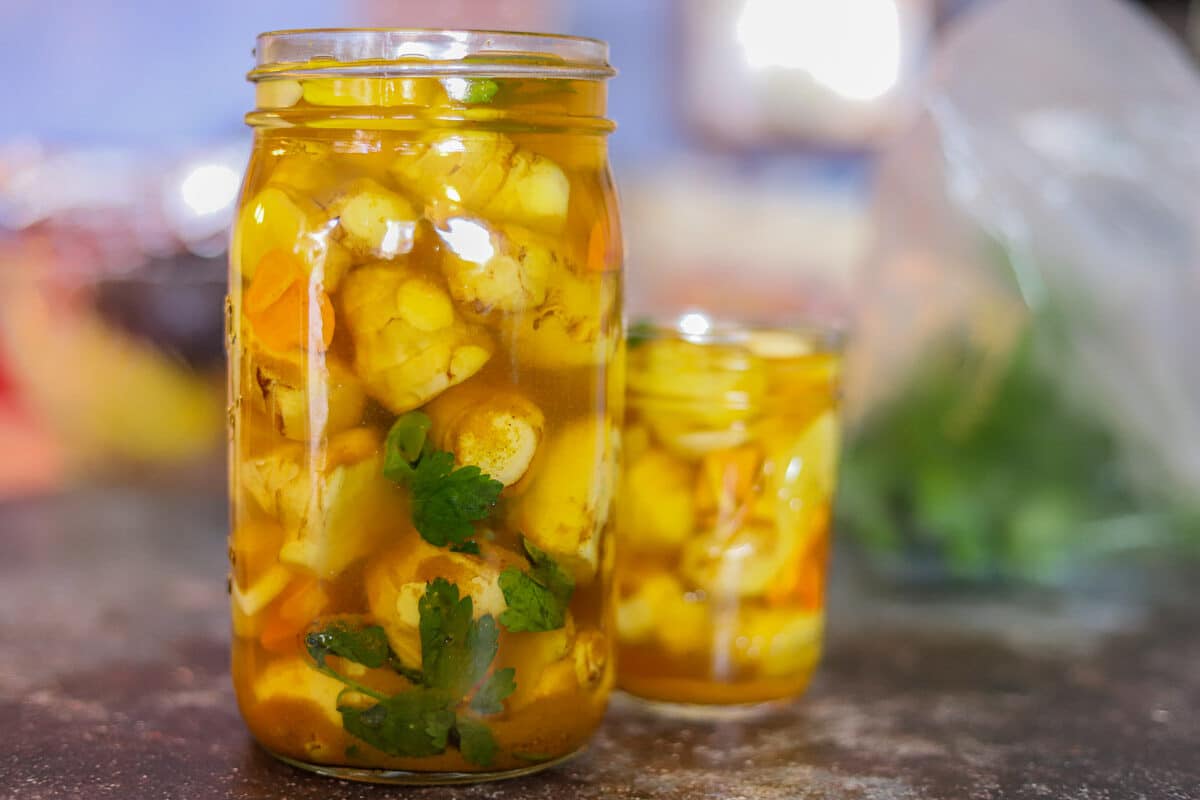
Step 9: Distribute between sterilized jars and store in the refrigerator. Mine yielded two jars (one quart-sized jar and an eight-ounce jar).
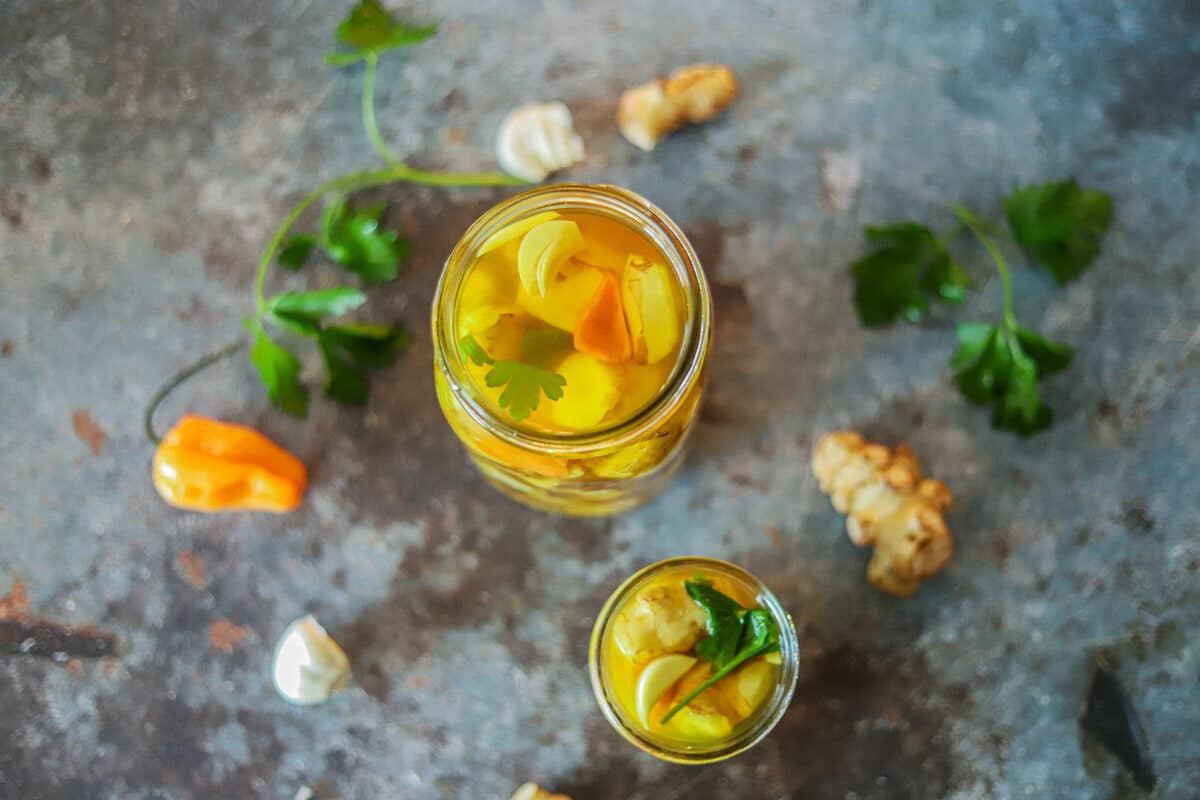
The pickled sunchokes will be ready to eat after three days but will taste better the longer they're allowed to pickle.
🫙 How Long Do Pickled Jerusalem Artichokes Last?
Stored in the refrigerator, pickled Jerusalem artichokes will keep for about 1 to 3 months. Keep the sunchokes covered with the pickling liquid, and always use a clean fork to take them out of the jar. They'll soften a little over time, but the flavor only gets better!
If you notice mold, a slimy texture, or an off smell, throw them out.
💨 Do Jerusalem Artichokes Make You Fart?
Jerusalem "fartichokes" can indeed cause flatulence. This is due to the high content of inulin found in these tasty little tubers. People have known this for a long time! Back in 1621, English botanist John Goodyer wrote that, however they're cooked, Jerusalem artichokes "stir and cause a filthy loathsome stinking wind within the body."
Today we know why: Our bodies can't digest inulin, so bacteria in the gut break it down instead, which produces gas (and sometimes stomach pain).
I've never had issues eating pickled Jerusalem artichokes. After doing a little research, it all made sense. I recall Mom adding the tubers to large containers with salty water after harvesting them. The brine would become very cloudy and gaseous, so it was replaced with fresh brine after a few days.
Mom said that this process was necessary to release the gases from the sunchokes. In the back of my mind, I thought this was an unnecessary step and wanted to hurry the process along, but Mom didn't budge. It turns out Mom was right!
During brining, Lactobacillus bacteria feed on the inulin and turn it into gas. That's what causes the bubbles and cloudy brine in the jar. By the time the pickles are ready to eat, most of the inulin is gone, and the gas escapes from the jar instead of your stomach.
This brining process, also known as lacto-fermentation, has many benefits. This explains why foods like sauerkraut and kimchi are known for their nutritious value and their ability to aid in the restoration of gut health.
Why did I ever doubt my mom? Without knowing the fancy terminology or the science behind it, my mom, and her mom before her, knew how to overcome the gassy effects of sunchokes. Quite impressive, don't you think?
🤷🏻♀️ Recipe FAQs
Jerusalem artichokes are neither artichokes nor are they from Jerusalem. Sometimes they're referred to as "sunchokes."
Jerusalem artichoke is a perennial weed that can grow to be around seven feet tall. A species of sunflower, the plant has beautiful yellow flowers, 2-4 inches in diameter.
The flowers resemble sunflowers, which is why this plant and its tubers are also referred to as sunchokes. Although considered an invasive weed, the plant does have one delicious benefit: the edible tubers that grow beneath it.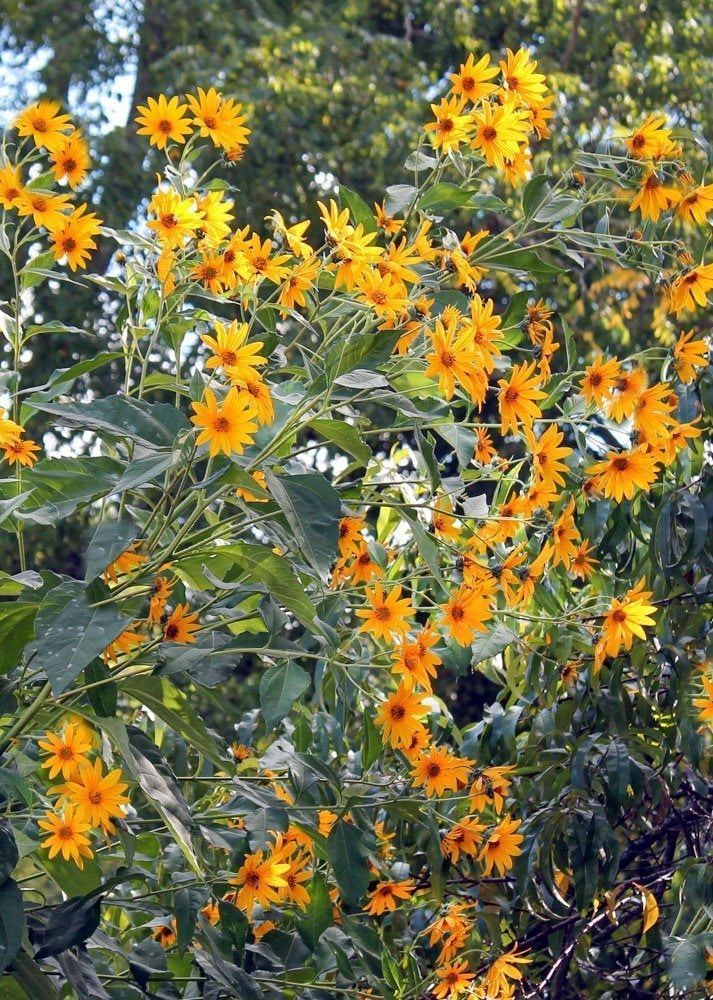
Jerusalem artichokes are similar to potatoes in taste and texture, but sweeter and nuttier. Sunchokes store their carbohydrates as inulin instead of starch, so they're lower in starch than potatoes. The 3- to 4-inch-long tubers can be used in many recipes that call for potatoes.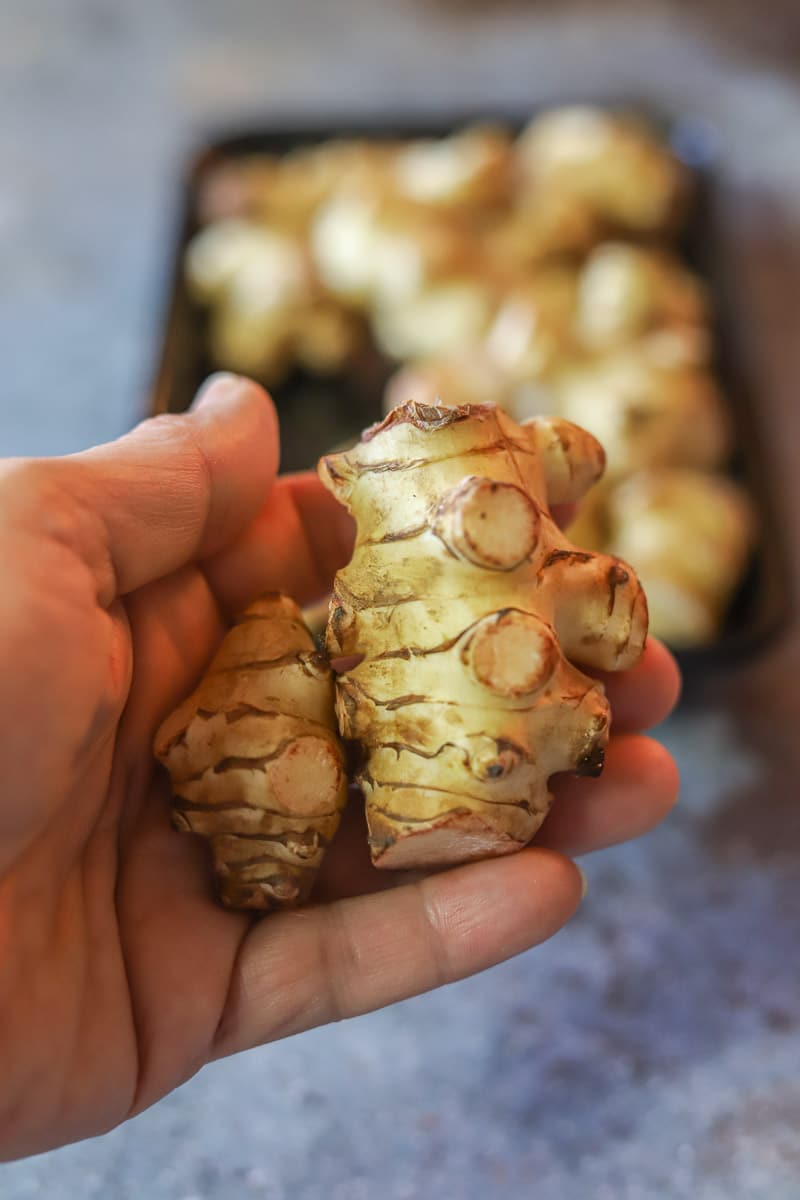
Jerusalem artichokes can be enjoyed both peeled and unpeeled. For the purpose of this pickled Jerusalem artichokes recipe, you can do either. I only peel the areas that are either dark or knotty. If you plan on eating them unpeeled, be sure to scrub them thoroughly with a potato scrub brush.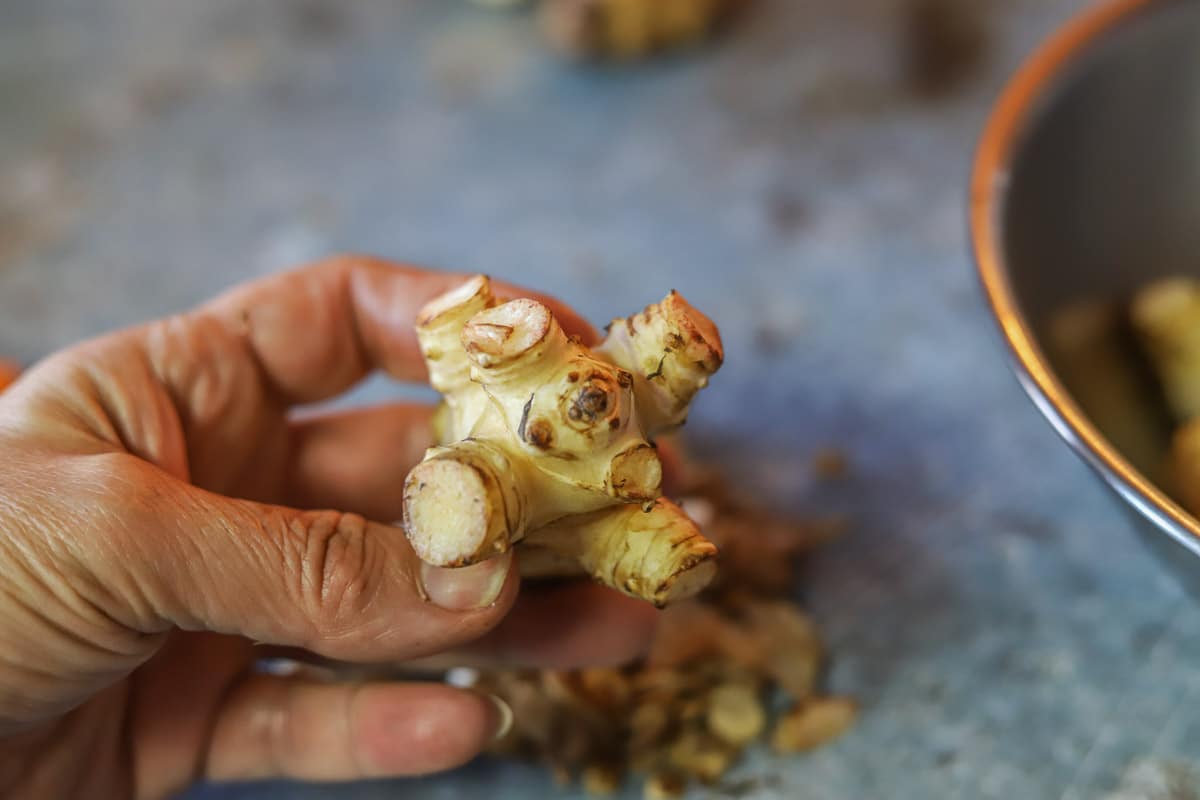
Unlike potatoes, you can eat sunchokes raw. They have a crunchy texture and a mild flavor. Some people slice or julienne the sunchokes and add them to salads for added flavor and crunch.
A word of caution, however. Some people experience stomach distress and flatulence from eating raw sunchokes. Sunchokes can also be roasted, mashed, fried, and scalloped.
In our family, Jerusalem artichokes were only eaten pickled. Mom also pickled green tomatoes, eggplant, and turnips. However, pickled sunchokes have always been my favorite, probably because of their crunchy texture.
In the United States, Jerusalem artichokes usually make their appearance in a few grocery stores in late fall or early winter. They are harvested after the first frost.
Since they are so hard to find in stores, another option is to grow them yourself. The tubers can be purchased from catalogs.
If you can find them locally, you can try planting a few and see how they do. Just be sure to give them plenty of space because they are very invasive. To learn more about growing your own sunchokes, check out this informative article about Growing Jerusalem Artichokes.
👩🏼🍳 Pro Tips
- Never tighten the jar lid during the brining process; the jar can burst as a result of the gases being released from the sunchokes.
- Pickled sunchokes will be ready to eat in as little as three days after pickling them in the vinegar solution. However, the longer they pickle, the more flavor they will absorb.
- These are refrigerator pickles, so keep them in the fridge. If you'd like shelf-stable jars, follow a tested canning recipe and processing time instead.
- If you find the pickling solution too strong, you can replace some of the vinegar with salted water (for refrigerator storage only). Use the ratio found in my pickled carrots recipe.
- Plastic or glass containers are perfect for storing pickles. Before filling them, follow these easy jar sterilization directions.
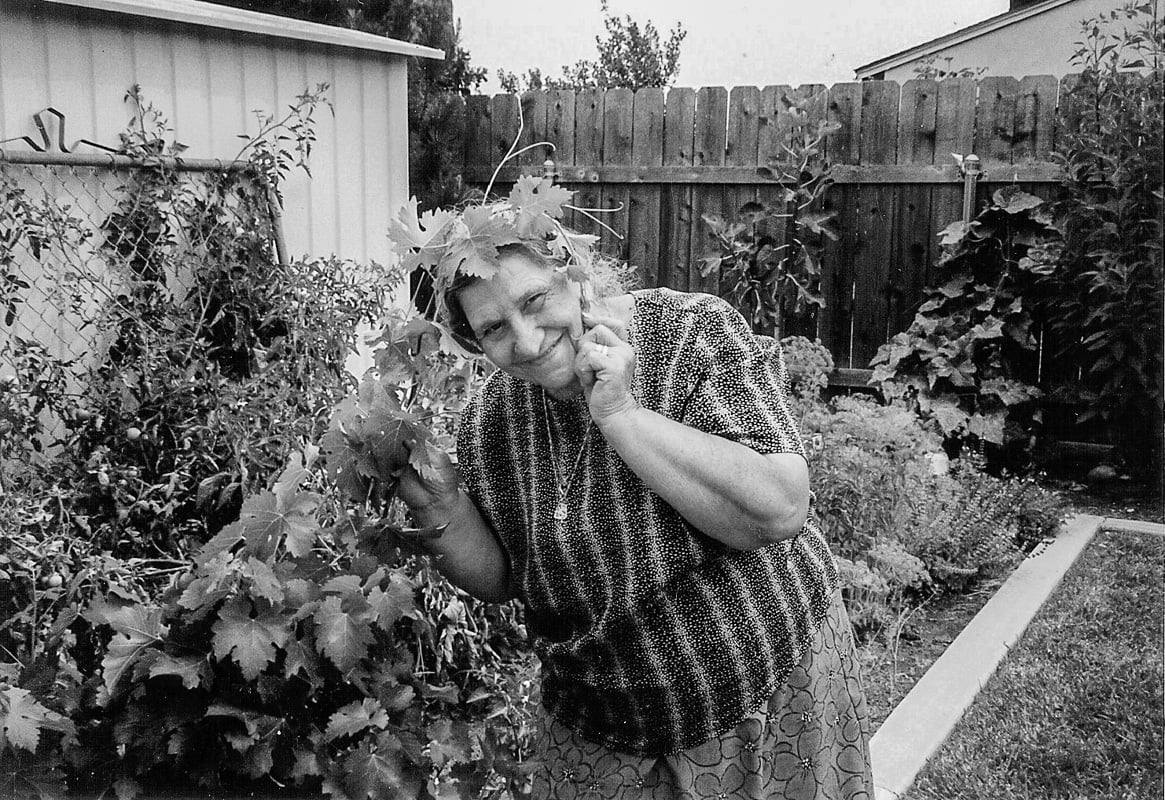
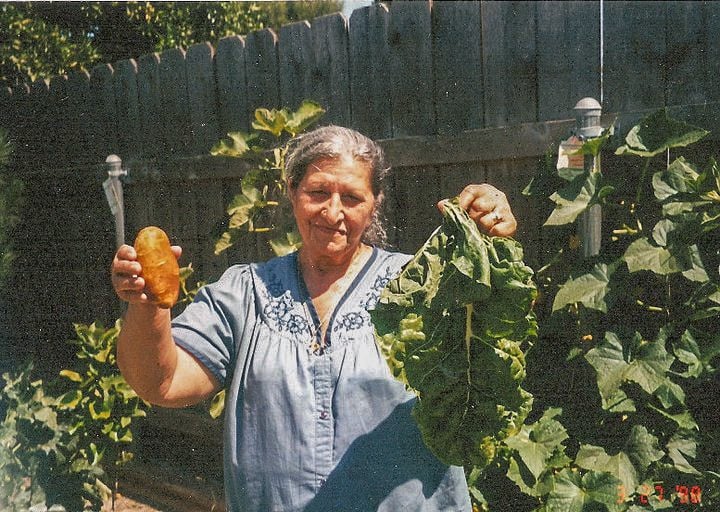
This Jerusalem artichoke recipe will forever remind me of my mom. Not only because she made the BEST pickled sunchokes. No, it's because sunchokes were partially responsible for her developing lymphedema.
Mom wasn't supposed to do anything strenuous with her arm after her lymph nodes were removed (due to breast cancer). Unfortunately, Mom, who loved working in her garden, single-handedly pulled many sunchoke plants from their roots, so she could pickle the tubers.
Her arm swelled almost immediately, and it never went back to normal. So if you enjoy this Jerusalem artichoke recipe, give Mom a little nod, would you?
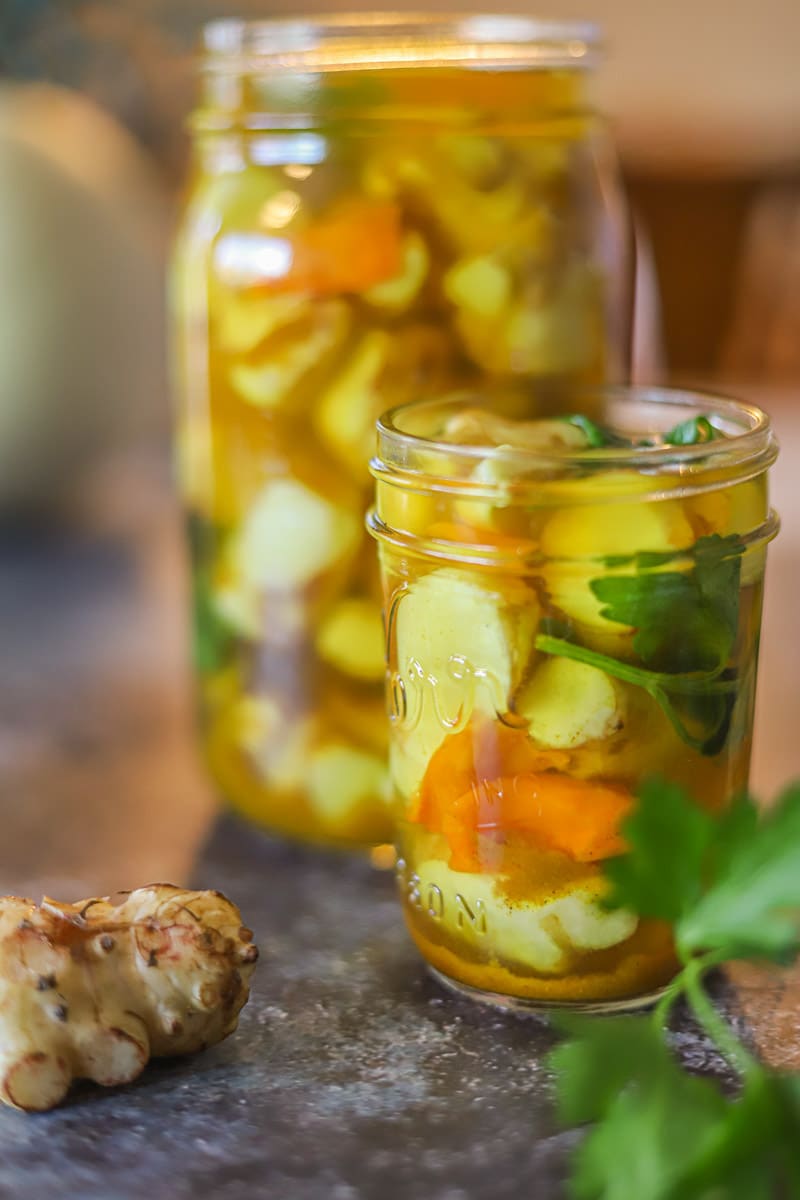
If you enjoy brine-fermenting, try my easy fermented cabbage next!
🥒 More Pickle Recipes
Did you make this recipe?
📖 Recipe
Would you like to save this recipe?

Ingredients
Equipment
Method
- Thoroughly clean Jerusalem artichokes to remove all the soil. Trim any dark spots or knots and peel, as necessary. Cut into 1"-2" chunks.
- Stir half of the salt into a quart of cold water until dissolved. Place artichokes in a clean, sterilized jar. Cover with the brine solution. Leave the lid untightened to allow the gases to escape.
- Place the bottle in a dark location for one week. Check the bottled Jerusalem artichokes after three days.
- When the brine gets murky and gases float to the surface, drain the old brine and make a new batch using the remaining salt. Soak the artichokes in the new brine for four more days.
- Once the Jerusalem artichokes have been brining for at least one week, remove them from the brine and rinse them off with fresh, cold water.
- Pour vinegar into a saucepan and stir in curry, salt, and sugar. Stir over low to medium heat until the salt and sugar dissolve.
- Stir in garlic, parsley, and hot peppers (if using) and pour over the Jerusalem artichokes.
- Distribute between sterilized jars and store in the refrigerator. Mine yielded two jars (one quart-sized jar and an eight-ounce jar).
- The pickled artichokes will be ready to eat after three days, but will taste better the longer they're allowed to pickle.
Nutrition
Video
Notes
- Never tighten the jar lid during the brining process; the jar can burst as a result of the gases being released from the sunchokes.
- Pickled sunchokes will be ready to eat in as little as three days after pickling them in the vinegar solution. However, the longer they pickle, the more flavor they will absorb.
- These are refrigerator pickles, so keep them in the fridge. If you'd like shelf-stable jars, follow a tested canning recipe and processing time instead.
- If you find the pickling solution too strong, you can replace some of the vinegar with salted water (for refrigerator storage only). Use the ratio found in my pickled carrots recipe.
- Plastic or glass containers are perfect for storing pickles. Before filling them, follow these easy jar sterilization directions.
Heidi Yohanna says
i hope my pickles turn out tasty. Unfortunately the sunchokes changed color (turned very dark) when in the salt water. How can this be avoided?
Hilda Sterner says
Hi Heidi,
I've never had that happen. Usually, as the water turns brown the sunchokes get whiter, not darker. You did have them soaking in salted water, right? There's no bad smell or mold I assume, you're just bothered by the color? Maybe you can peel them. Please let me know how it goes!
Heidi says
Hilda, could it be that the sea salt is iodized or that I use well water?
Hilda Sterner says
Hi Heidi, I did look into it further and found that both of the things you mentioned can in fact be the cause. We have well water too, but I guess depending on the number of minerals in your well water, like too much iron, can cause pickles to turn dark in color. This includes using iodized salt. Can the darker part be sliced off or are they dark thoughout?
Suzanne says
I am gonna try this recipe, can't wait. But was wondering if on a batch I could use a package of the bread and butter mix you buy at the store. I am worried while reading about exploding jars because of gases.
Hilda Sterner says
Hi Suzanne, You can, as long as you process them in the salt water first.
Suzanne says
Thank you for the information. Will a week in the brine keep them from forming gases after processing in the sealed jars, or should they be brined longer?
Rachel says
Hi there!
I made the mistake of letting my sunchokes sit in the second brine solution a day or two longer than they should have and there is a layer of mold on the top. The tubers themselves look and smell fine but wondering if you had any insight on this, if I should dump the whole batch to be safe. Thanks!
Hilda Sterner says
If it was me, I would rinse the tubers and add them to new brine, but that's just me. I really don't want to advise you on how to proceed for legal reasons, but that's how I would handle it. I hope that helps.
Ana says
I usually harvest and eat the JA in the spring when I weed out the multiple tubers that reproduced over the previous season. I just put the tubers in the brine and they floated to the surface -- too much air in the tubers? Placed a small bowl in the opening of the jar to push them down and keep the top loose. Hope it still works. Any comments welcome!
Hilda Sterner says
Hi Ana,
As long as you've tried it and works, I say keep doing what you're doing!
Lizzi says
They taste delicious, will plant more sunchokes and preserve them this way again!
Hilda Sterner says
Thank you, Lizzi, enjoy!
Sally Fairey says
I'm going to try this as soon as I get everything together!!
My question is,,,,can you recommend a Curry? There are so many out there I would love to have your recommendation...
Hilda Sterner says
Hi Sally, Thanks for the question. I love Madras Curry. I'm sure you can find it on
Amazon. Good luck!
Sally says
Thanks! I'll go check. My artichokes are brining right along schedule!
Linda Waters says
Love it🥰 Give it a five
Hilda Sterner says
Thanks, Linda, but you didn't give it a 5. You have to click the stars. 😬
Leza says
We grew up eating Jerusalem artichokes raw. Occasionally, now, I’ll cook them for my family, but it’s mainly me eating them. Your recipe sounds *devine*! For sure I’ll be trying it out, especially since I just harvested a bunch from my garden before the ground froze. Thank you so much for posting this treasured recipe!!! 😃❤️
Hilda Sterner says
Did you ever have any discomfort from eating them raw? I love the flavor, but I'm always worried about the stomach upset, so I don't attempt it. Enjoy the recipe. I had a few artichokes that I planted in the ground in the summer, but the chipmunks kept digging them out and eating them. I'm not sure if they left me any. 😩
Leza says
Hi, Hilda! 😃 Nonesoever. 🙂 We never ate huge quantities of it at one time, either, so maybe that’s why. I recently read somewhere about people having gastric upsets and was shocked, as was my mom when I told her. Somewhere else, I read that if you start off eating a little at a time, you can build up tolerance to it. It is an awesome prebiotic that helps feed the probiotics in our gut! 🙂
Oh, no! I’m always afraid the gophers and voles that live in my fenced in garden (their gated community 🙄...) will get mine like they do with everything else..., but they either don’t like Sunchokes, or I now have so much, it’s not noticed. Hopefully they didn’t get it all, and you still have some in your garden! 😎
Tip: all you need are *peelings* that have eyes on them. My dad taught me that. I live in the frozen tundra of NW Wisconsin, now, and started a bunch inside in the winter, a few years ago. They are so easy to grow—*if* the critters leave them alone! 😏
Diane Tames-VanSchenkBrill says
My family grew up eating turshia.
We grew our own Jerusalem Artichokes. I loved learning how to pickle them along with the carrots and green tomatoes and peppers.
Just wanted to let everyone know they sell Jerusalem Artichokes on Amazon by the box!
And I have found them in Amish Market s too.
Thank you for sharing your Assyrian recipes it is our foods that keep the family together.🤗
HildaSterner says
Hi Diane, that is GREAT news! I had no idea you could get them on Amazon. Thanks for letting us know. Also, my mom used to go through the process of brining them first and would then add them to her large container of turshia. You probably know what container I'm referring to... the large white icecream tubs with a red handle. Classic Assyrian move. 😉
Kelly Methey says
Do they taste like jicama? Your description of a potato only different reminded me of it. I love jicama, I have never had a Jerusalem artichoke but have heard of them. I love pickles so I am intrigued...
HildaSterner says
I guess, in a way they can be compared to jicama. If we ever do some coffee, I'll bring you some to try!